What Is a Solitaire Diamond Ring?
A solitaire is a ring set with one diamond and nothing else. Setting styles, real prices, pros and cons, and how to choose one.
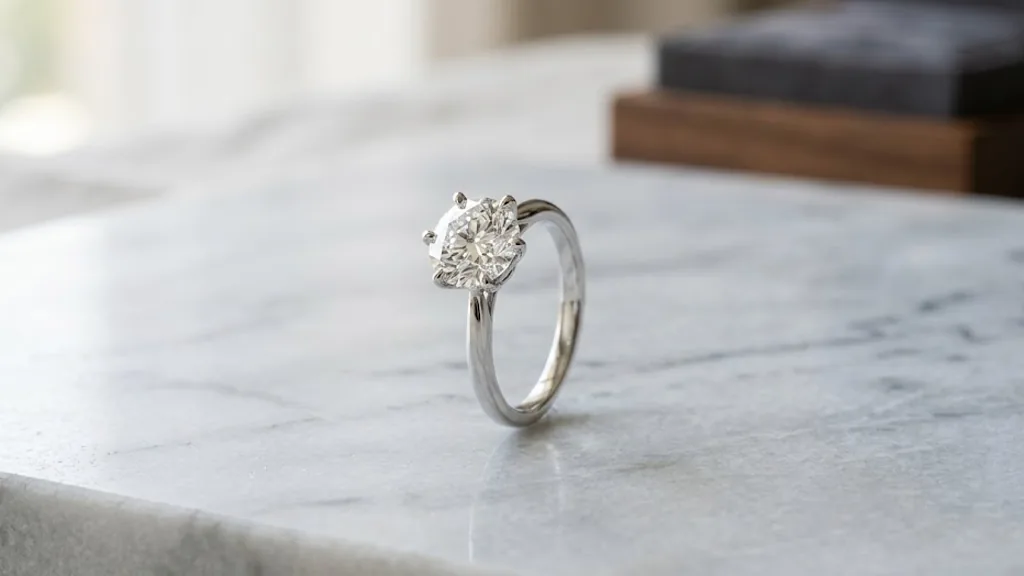
A solitaire diamond ring is a ring set with one diamond and nothing else. No side stones, no halo, no accent diamonds along the band. One stone, held by a plain mount, doing all the work. It is the single most recognised design in jewellery, and it is worth understanding properly before you buy one.
What “solitaire” actually means
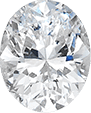
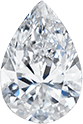
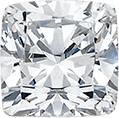
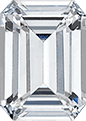
The word comes from the French for “alone” and refers only to the number of stones, not to the shape of the diamond, the metal, or the style of the setting. A solitaire can be round, oval, emerald, pear, marquise, cushion or any other shape. It can be in yellow gold, white gold, rose gold, platinum or silver.
What makes it a solitaire is that there is exactly one gemstone. As soon as you add small stones down the shoulders, it becomes a side-stone ring. Add a ring of tiny stones around the centre and it becomes a halo. Add two flanking stones and it becomes a three-stone ring.
One point of confusion worth clearing up: a solitaire is not necessarily an engagement ring. Solitaire pendants and solitaire earrings use the same principle. But in everyday use, when someone says “a solitaire”, they usually mean an engagement ring.
The parts of a solitaire ring
- The centre stone. The diamond itself. On our rings this is always a lab-grown diamond with a free IGI certificate.
- The head or setting. The small structure that grips the stone. Usually four or six claws, sometimes a bezel.
- The claws (or prongs). The little metal fingers that hold the stone down. Four claws show more of the diamond; six hold it more securely.
- The shank or band. The circle of metal that goes round your finger.
- The gallery. The open space underneath the stone, which lets light in from below.
Setting styles within the solitaire family
| Setting | What it is | Best for |
|---|---|---|
| Four-claw | Four fine prongs at the corners | Showing the maximum amount of diamond |
| Six-claw | Six prongs spaced evenly | Security, and a slightly rounder look |
| Bezel | A rim of metal wrapped around the stone’s edge | Active hands, nurses, gardeners, anyone who knocks things |
| Cathedral | Arches of metal sweeping up to hold the head | A more architectural, elevated look |
| Tension-style | The stone appears suspended between the band ends | A modern, minimal statement |
| Low-set / flush | The stone sits close to the finger | Comfort, and wearing under gloves |
Why people choose a solitaire
The diamond gets all the attention
Nothing competes with it. If you have chosen a stone you love — a particular shape, a particular cut quality — a solitaire is the setting that shows it honestly.
It does not date
Halos, cluster settings and heavily detailed bands all carry the fingerprint of the decade they were made in. A plain solitaire made in 1960 and one made today look substantially the same. That matters if you intend to wear it for fifty years.
It is easy to live with
Fewer stones means fewer places for dirt to collect and fewer settings to fail. A solitaire is quicker to clean at home and cheaper to have checked and maintained.
Wedding bands sit flush against it
A plain solitaire on a straight band will sit neatly against a plain wedding ring with no gap. Rings with elaborate shoulders often need a shaped or curved band made to fit, which limits your choices later.
The honest disadvantages
A solitaire has nowhere to hide. Every millimetre of the diamond is visible, so cut quality, colour and clarity all matter more than they would in a halo where small stones distract the eye.
It also looks smaller than a more elaborate ring at the same total cost. A halo ring with a 0.50ct centre and a surround of small stones will read larger on the hand than a 0.70ct solitaire, even though the solitaire has a better centre stone. Whether that trade is worth making is personal.
And a high-set solitaire can catch on clothing. If that concerns you, look at a bezel or a low-profile setting rather than giving up on the style.
How much does a solitaire cost?
There is no single answer, because almost all of the cost sits in the centre stone. The same mount can hold a 0.30ct diamond or a 2ct diamond, and the price difference is enormous.
What we can give you is real, current figures from our own collection rather than a guess. Correct at the time of writing:
- Solitaire Marquise Cut Engagement Ring — £538
- Solitaire Oval Cut Engagement Ring — £557
- Solitaire Round Cut Engagement Ring in White Gold — £563
- Solitaire Emerald Cut Engagement Ring — £672
Those prices are achievable because the stones are lab-grown. A lab-grown diamond is the same material as a mined one — the same carbon, the same hardness, the same optical behaviour — grown in a controlled facility rather than dug out of the ground. Any market comparison you read should always state whether it is quoting lab-grown or natural prices, because the two are not comparable.
How to choose a good solitaire
Put cut first. Of the four Cs, cut has the largest effect on how a diamond looks. A well-cut stone one grade lower in colour will outshine a poorly cut stone one grade higher, every time.
Do not overbuy clarity. If you cannot see an inclusion without magnification, you are paying for something you will never look at. Judge with your eyes at normal viewing distance.
Match colour to metal. A slightly warm stone looks perfectly white in yellow or rose gold and can look tinted in platinum. Choosing the metal first can save you money on the stone.
Buy just under the round numbers. Prices step up at 0.50ct, 1.00ct and so on. A 0.90ct stone is only a fraction of a millimetre narrower than a 1.00ct one but costs noticeably less.
Check the claws. Fine claws show more diamond but need checking every year or two. Bezels need almost no maintenance.
Frequently asked questions
Is a solitaire the same as an engagement ring?
No. Solitaire describes a design — one stone alone. Engagement ring describes a purpose. Most solitaires are sold as engagement rings, but a solitaire can equally be a gift, an anniversary ring or a right-hand ring.
Can you add stones to a solitaire later?
Often yes. A jeweller can add a halo, replace the plain band with a diamond-set one, or reset the stone in an entirely new mount. It is easier and usually cheaper than people expect. We take on this work as a bespoke commission with no extra design cost.
Which diamond shape suits a solitaire best?
All of them, but a solitaire is least forgiving of a poor cut, so it rewards shapes that are cut consistently well. Round is the safest choice. Oval, emerald and marquise all look striking alone — just check the symmetry carefully, because there is nothing to distract from it.
Is a solitaire boring?
Only if the stone is unremarkable. A solitaire in an unusual shape — a Solitaire Hexagon Cut Engagement Ring, for instance — is anything but plain. The style is simple; the stone need not be.
How do I clean a solitaire at home?
Warm water, a drop of washing-up liquid, a soft toothbrush, five minutes. Brush behind the stone as well as on top, because that is where the film that dulls a diamond collects. Rinse and pat dry with a soft cloth.
Where to go from here
Browse the full engagement ring collection or filter to round cut rings if you want the classic. Everything is hand-made in solid gold or platinum in North Harrow, with a free IGI certificate on the centre stone, free insured UK delivery and 30 days to return it.
More guides on this topic
Ready to find your perfect ring?
Explore our lab-grown diamond collection or book a virtual appointment with our team.