How Much Should You Spend on a Diamond Engagement Ring?
Forget months of salary. A practical way to set your budget, what drives the price, and what each budget band really buys.
Somebody, at some point, will tell you that you should spend a month’s salary on an engagement ring. Or two months. Or three. These rules feel like received wisdom handed down through generations.
They are not. They came from twentieth-century diamond advertising, and they were written to sell diamonds, not to help you plan your finances. You are under no obligation to any of them.
Here is a more useful way to arrive at a number.
Where the “months of salary” rule came from
In the mid-1900s, De Beers advertising in the United States suggested a month’s salary as a guide for what to spend on an engagement ring. The suggested figure crept upward over the following decades, and a version of it landed in Britain and stuck.
It was a marketing suggestion, not a measured figure and not a tradition. Nobody surveyed happy couples and discovered that two months’ salary was the sweet spot. A copywriter picked a number that sounded serious.
Treat it exactly as you would treat any other advertising slogan: interesting, but not instructions.
A better way to set your budget
Work from your actual life, in this order.
- Start with what you can pay outright. If buying the ring means high-interest borrowing, the budget is too high. Nothing about this purchase is improved by starting married life in debt over it.
- Subtract what the rest of the year needs. The engagement ring is the first of several costs — wedding bands, the wedding itself, possibly a honeymoon. Rings are usually the smallest of these, so do not let the first purchase eat the others.
- Ask what she actually wants. This is the step people skip, and it is worth more than every rule of thumb combined. Plenty of people would genuinely rather have a modest ring and a deposit on a flat.
- Then set the number, and shop within it. A firm ceiling makes shopping easier, not harder. It turns an infinite decision into a manageable one.
One more principle worth holding on to: nobody has ever looked at a ring and known what it cost. They see the shape, the sparkle and how well it is made. Those things are much more controllable than price.
What actually drives the price
Understanding the levers means you can move money to where it shows.
| Factor | Effect on price | Effect on how it looks |
|---|---|---|
| Lab-grown vs natural stone | Very large | None — same material, same appearance |
| Carat weight | Large, and rises faster than size does | Moderate — width grows slowly |
| Cut quality | Moderate | Very large — this is where sparkle lives |
| Shape | Moderate — round costs most per carat | Large |
| Colour and clarity grades | Moderate | Small, above the point where flaws are invisible |
| Metal (silver, gold, platinum) | Moderate | Small, but affects durability and upkeep |
| Setting complexity | Moderate | Large — halos and pavé transform a ring |
Read that table for a moment and the strategy becomes obvious. The two factors with the biggest price impact — the stone’s origin and its carat weight — have the least effect on how the ring looks. The factors that change how it looks most, cut and setting, cost comparatively little.
That is the whole game. Choose a lab-grown stone, protect the cut quality, spend on the setting, and let carat weight take what is left.
What our rings actually cost
Rather than talk in abstractions, here is our real range. At the time of writing, our engagement rings run from about £503 to around £1,237, hand-made in solid gold, platinum or sterling silver, with a lab-grown centre stone and a free IGI certificate included.
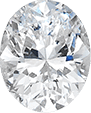
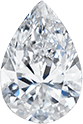
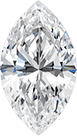
At the entry end, a stackable pear cut engagement ring is a genuine, certificated diamond engagement ring at a price that surprises people. A solitaire marquise cut engagement ring gives you the longest, most eye-catching stone shape at a similar level, and a solitaire oval cut engagement ring is the classic elongated choice. All prices correct at the time of writing.
We are not going to tell you those figures represent the whole market. Natural diamond rings of comparable size cost dramatically more, and that difference is precisely the point of choosing lab-grown.
What each budget band realistically buys
Guidance for lab-grown diamond rings, which is what we sell. Natural diamond rings sit at a considerably higher level for the same specification, and any figures here would be wrong for them.
| Budget | What is realistic |
|---|---|
| Under £500 | A smaller certificated centre stone, simple setting, silver or slimmer gold |
| £500 – £800 | A proper solitaire in solid gold; classic shapes; excellent value territory |
| £800 – £1,200 | Larger centre stone, or a halo, three-stone or hidden-halo setting; platinum becomes comfortable |
| £1,200+ | Substantial centre stone with detailed setting work, or bespoke design |
Five ways to spend less without a lesser ring
- Choose lab-grown. Same hardness, same sparkle, same certificate, considerably less money. This is the single biggest saving available.
- Buy just under a milestone weight. A 0.90ct stone costs noticeably less than a 1.00ct and measures about a tenth of a millimetre narrower. It is invisible.
- Pick an elongated shape. Pear, marquise and oval cost less per carat than round and look larger on the hand.
- Use a halo. Small diamonds around a modest centre stone add far more visible size per pound than a bigger centre stone does.
- Stop paying for grades nobody can see. Once inclusions are invisible to the naked eye, paying for a higher clarity grade buys you a nicer certificate, not a nicer ring.
Frequently asked questions
Is there an average amount people spend in the UK?
Figures get quoted constantly, but they come from surveys with small samples and commercial sponsors, so we will not repeat one as if it were fact. Averages also tell you nothing useful — they are pulled upward by a small number of very expensive rings.
Is it bad to spend less than £1,000?
No. Most of our engagement rings sit below that, and they are solid gold or platinum with certificated lab-grown diamonds. Cheap and inexpensive are different words.
Should I tell her what I spent?
Your call, but there is rarely a good reason to. The number is far less interesting to her than the ring.
Is it worth spending more for a natural diamond?
Only if the origin genuinely matters to you or resale value is a real priority. Optically and physically the two are the same material. We have compared them properly in our guide to lab-grown versus natural diamonds.
What if I want something specific and cannot find it in budget?
Talk to us. We design bespoke rings at no extra design cost, and it is often cheaper to make exactly what you want than to buy something close to it.
Do I need to budget for a wedding band too?
Yes, and it is worth thinking about early — some engagement ring shapes need a curved or shaped band to sit flush, which is easier to plan for than to fix later.
Start with a number, then browse
Decide your ceiling before you look, then browse the full engagement ring collection within it. If you want the most visible ring per pound, start with the pear cut rings. Everything comes with free insured UK delivery and 30 days to return it.
Ready to find your perfect ring?
Explore our lab-grown diamond collection or book a virtual appointment with our team.