
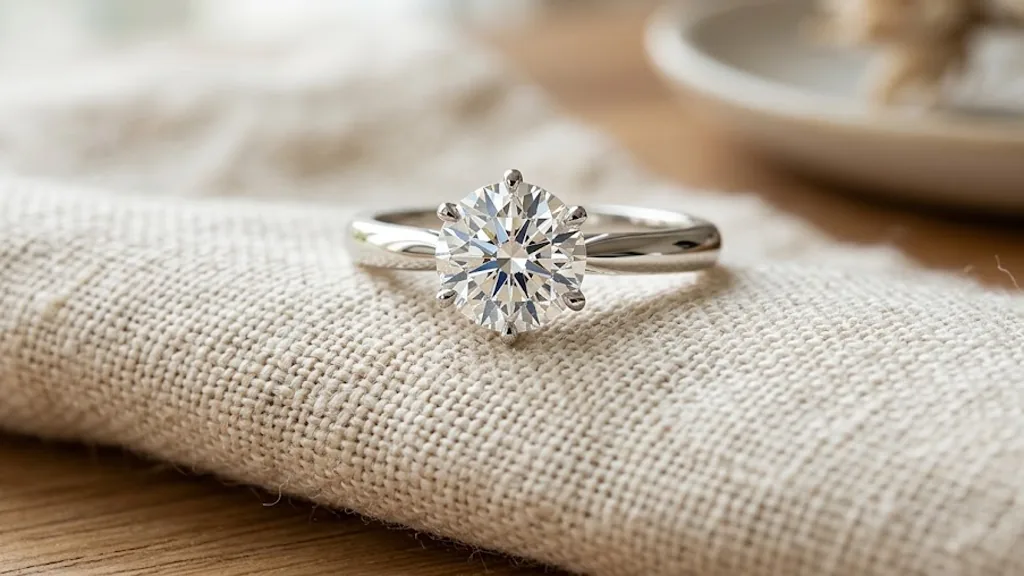
Round Diamond Size Guide: How Many Carats Is a 6mm or 4mm Round Diamond?
A 6mm round diamond is about 0.80ct and a 4mm is about 0.25ct. Full mm-to-carat chart plus what really makes a stone look bigger.
Two numbers describe a round diamond, and they are easy to confuse. Carat is weight. Millimetres are width. Diamonds are sold by carat, but what you see on the finger is millimetres. This guide converts between the two, answers the two most common specific questions — how many carats a 6mm round is, and how big a 4mm round is — and explains why round diamonds often look bigger than they are.
The quick answers
- A 6mm round diamond is roughly 0.80ct — usually somewhere between 0.75ct and 0.85ct.
- A 4mm round diamond is roughly 0.25ct, or a quarter of a carat.
- A 1ct round diamond measures roughly 6.5mm across.
Each of those is a range rather than a fixed figure, because carat measures weight and two stones of the same width can be cut to different depths. A deeper stone weighs more without looking any bigger from above — which is exactly why you should read the millimetre measurements on a certificate, not just the carat weight.
Round diamond mm to carat chart
| Diameter (mm) | Approximate carat weight | Typical use |
|---|---|---|
| 2.0mm | 0.03ct | Pavé accent stones |
| 2.5mm | 0.06ct | Eternity band stones |
| 3.0mm | 0.10ct | Small side stones |
| 3.5mm | 0.16ct | Side stones, small studs |
| 4.0mm | 0.25ct | Small solitaire, studs |
| 4.5mm | 0.36ct | Delicate solitaire |
| 5.0mm | 0.50ct | Popular half-carat solitaire |
| 5.5mm | 0.65ct | Solitaire |
| 6.0mm | 0.80ct | Solitaire, halo centre |
| 6.5mm | 1.00ct | The classic one-carat |
| 7.0mm | 1.25ct | Substantial centre stone |
| 7.5mm | 1.50ct | Large centre stone |
| 8.0mm | 2.00ct | Statement stone |
| 9.0mm | 2.75ct | Very large statement stone |
These are working approximations used across the trade, not measured figures for any individual diamond. Always check the actual measurements printed on the certificate.
How big is a 4mm round diamond, really?
Four millimetres is genuinely small, and the honest way to explain it is with something you can hold.
A standard hole punch makes a 6mm hole in a sheet of paper. A 4mm diamond is noticeably narrower than that — about two thirds of its width. A grain of uncooked rice is roughly 6mm long, so a 4mm stone is shorter than a grain of rice. The head of a dressmaker’s pin is close to 4mm across.
On a finger, a 4mm round reads as a neat, understated stone. It is not a statement piece and it is not trying to be. It is a very common size for stud earrings, for the side stones in a three-stone ring, and for a delicate solitaire on a slim band.
Should you consider a 4mm centre stone?
It suits some people extremely well: anyone with small hands, anyone who works with their hands, anyone who prefers understated jewellery, and anyone who would rather put budget into the metal and craftsmanship than the carat weight.
If you like the delicacy but want a little more presence, a halo — a ring of small stones surrounding the centre — will make a modest stone read considerably larger. Our Halo Round Cut Engagement Ring shows the effect, at £707 at the time of writing.
Is 6mm a good size for an engagement ring?
A 6mm round, at around 0.80ct, sits in a sensible spot. It is unmistakably a proper centre stone, it looks generous on most hands, and it costs meaningfully less than a full carat because prices step up sharply at the round carat weights.
That last point is worth understanding. Diamond prices jump at the psychological thresholds — 0.50ct, 1.00ct, 1.50ct, 2.00ct — because so many buyers ask for exactly those numbers. A stone at 0.90ct can cost noticeably less than one at 1.00ct while being almost indistinguishable to the eye, since the difference in width is a fraction of a millimetre. Buying just under a threshold is one of the few genuinely reliable ways to save money on a diamond.
Do round diamonds look bigger?
This one needs unpicking, because the answer depends on what you are comparing.
Compared with other shapes at the same carat weight: no
Round is roughly average for face-up size. Elongated shapes beat it comfortably. A 1ct marquise, pear or oval spreads its weight across a longer outline and covers more finger than a 1ct round. A 1ct cushion or asscher, cut deeper, covers less.
| Shape at 1ct | Approximate face-up dimensions |
|---|---|
| Marquise | around 10.0mm x 5.0mm |
| Pear | around 8.5mm x 5.5mm |
| Oval | around 7.7mm x 5.7mm |
| Emerald | around 7.0mm x 5.0mm |
| Round | around 6.5mm diameter |
| Cushion | around 5.5mm x 5.5mm |
Compared with other shapes in real life: often yes
Here is the part the charts miss. A round brilliant returns more light than any other shape, and a stone that throws off more light draws the eye and reads larger than its measurements suggest. Brightness is a size signal. A dull, poorly cut oval can look smaller than a brilliant, lively round of the same width.
So a well-cut round often appears bigger than a mediocre fancy shape with more surface area. If you want the largest-looking stone, the honest advice is: choose an elongated shape and insist it is well cut. Surface area without light return is a poor trade.
Things that make any stone look bigger
- A halo. The single most effective trick. A ring of small stones can make a centre stone read a size or two larger.
- A slim band. The narrower the shank, the larger the stone looks by contrast. A wide band swallows a stone.
- Fine claws rather than heavy ones. Less metal covering the edge means more visible diamond.
- A high setting. Lifting the stone off the finger lets light in from the sides and makes it read larger.
- Cleanliness. Not a trick — a fact. A clean diamond looks bigger because it looks brighter.
Round rings in our collection
Round is our biggest group, with twenty designs. The Solitaire Round Cut Engagement Ring in White Gold is the purest expression of the shape at £563 at the time of writing, and the slim band makes the stone look as large as it possibly can.
For something quieter still, the Minimalist Round Cut Engagement Ring is £587 at the time of writing. For more width across the finger without a bigger centre stone, the 5 Stone Round Cut Engagement Ring spreads five stones along the band.
Frequently asked questions
How many carats is a 6mm round diamond?
Around 0.80ct, typically between 0.75ct and 0.85ct depending on how deeply the stone is cut. A shallow-cut 6mm stone can weigh less; a deep-cut one can weigh more without looking any larger.
How many millimetres is a 1 carat round diamond?
About 6.5mm across. Anything much smaller than 6.4mm at 1ct suggests the stone is cut deep and is hiding weight underneath.
Is a 4mm diamond too small for an engagement ring?
Not at all. It is a quarter-carat stone, which is a perfectly normal choice, particularly on smaller hands or with a halo. The size of a ring says nothing about the commitment behind it.
Why do two 1 carat diamonds look different sizes?
Because carat is weight. A deep-cut diamond hides weight below the setting and looks smaller from above; a well-proportioned one puts more of its weight where you can see it. This is why cut quality affects apparent size as much as carat does.
Does a lab-grown diamond come in the same sizes?
Yes. A lab-grown diamond is chemically and optically the same material as a mined one, cut by the same cutters to the same proportions. A 6.5mm lab-grown round weighs about 1ct, exactly as a mined one does. Ours come with a free IGI certificate confirming the measurements.
Where to go from here
Browse the full round cut collection or the wider engagement ring range. If price is what is driving your size decision, our guide to whether square diamonds are cheaper than round explains where the savings actually are.
Ready to find your perfect ring?
Explore our lab-grown diamond collection or book a virtual appointment with our team.











