What Clarity of Diamond Is Eye Clean?
Eye clean usually starts around VS2 to SI1. The clarity scale explained, and why shape and size change where the line sits.
“Eye clean” is the single most useful phrase in diamond buying, and it is not a grade. You will not find it on any certificate. It is a practical description: a diamond is eye clean when you cannot see anything inside it with normal vision, at normal viewing distance, in normal light.
Getting this right is where most of the savings are in a diamond purchase. Buy the lowest clarity grade that is still eye clean, and you keep every pound that would otherwise disappear into perfection nobody can see. Here is how to find that line.
What clarity is actually measuring
Diamonds form with tiny natural features inside them. Those internal features are called inclusions — a minute crystal of another mineral, a feather-shaped internal fracture, a hazy patch called a cloud, or a thin dark line called a needle. Marks on the outside surface are called blemishes. Together they make up a diamond’s clarity.
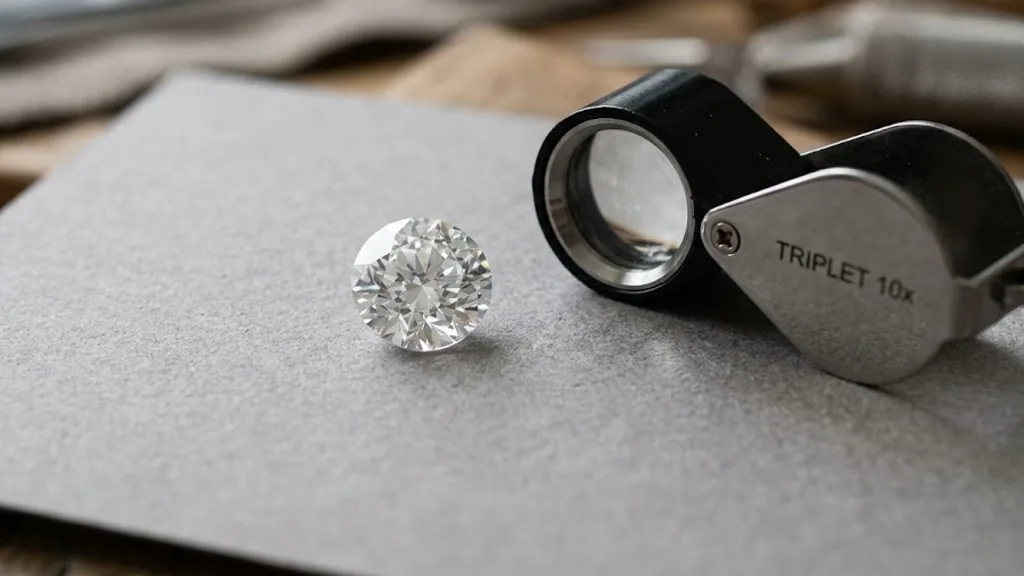
Grading is done by a trained gemmologist at 10x magnification — a standard jeweller’s loupe. That is a crucial detail. The whole scale is built around what a professional can see with a lens, not what you can see with your eyes. Which is exactly why so many people overpay.
The clarity scale in plain words
| Grade | Full name | What it means in practice | Eye clean? |
|---|---|---|---|
| FL | Flawless | No inclusions or blemishes at all at 10x. Extremely rare. | Always |
| IF | Internally Flawless | No inclusions inside; possibly a tiny surface mark. | Always |
| VVS1 / VVS2 | Very, Very Slightly Included | A grader with a loupe has real difficulty finding anything. | Always |
| VS1 / VS2 | Very Slightly Included | A grader finds inclusions without much effort at 10x. You will not. | Almost always |
| SI1 | Slightly Included | Clear at 10x. Often invisible to the eye, but depends on the stone. | Usually — check it |
| SI2 | Slightly Included | Obvious at 10x. Sometimes eye clean, sometimes not. | Sometimes — must check |
| I1 / I2 / I3 | Included | Visible without magnification. I2 and I3 can also dull the sparkle. | No |
Read that table and the answer starts to appear. Eye clean typically begins somewhere around VS2 to SI1. Above VS2, you are effectively guaranteed. At SI1 you are usually fine but should look. At SI2 it is genuinely a coin toss. Below that, no.
Why “it depends” is the honest answer
Two SI1 diamonds can look completely different. Four things decide it.
Where the inclusion sits. This matters more than the grade. An inclusion directly under the table — the big flat facet on top — sits in your line of sight and gets reflected around the stone. The same inclusion near the girdle, the outer rim, can be hidden by a claw and never seen again. Certificates include a plotted diagram showing exactly where the inclusions are, and it is worth learning to read it.
What type it is. A white or transparent crystal is far less visible than a black carbon spot of the same size. A pale feather can be nearly invisible; a dark needle at the same grade can catch your eye immediately.
How big the diamond is. Clarity grading already accounts for size, but your eyes do not care about that. On a 0.5 carat stone everything is small and hard to see. Stretch the same grade over a 2 carat stone and the inclusion is physically larger and much easier to spot. The bigger the diamond, the higher the clarity grade you need for the same result.
What shape it is. This is the one people miss, and it is the biggest single variable.
Shape changes everything
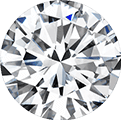
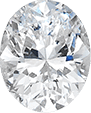
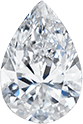
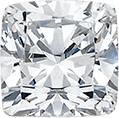
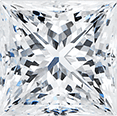
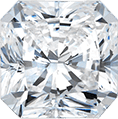
Diamond cuts fall into two families. Brilliant cuts — round, oval, pear, marquise, cushion, radiant, heart — use lots of small triangular and kite-shaped facets that scatter light in every direction. That busy, flashing light is excellent at hiding inclusions.
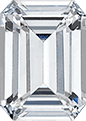
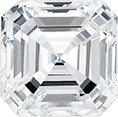
Step cuts — emerald, Asscher, baguette — use long, straight, parallel facets arranged like steps, with a large open table. Instead of scattering light they produce broad flashes and a clear window straight into the stone. There is nowhere for an inclusion to hide. People describe it as looking into a hall of mirrors, and anything inside gets repeated.
| Shape | Family | Lowest grade usually eye clean |
|---|---|---|
| Round | Brilliant | SI1, often SI2 in smaller sizes |
| Oval, pear, marquise | Brilliant | SI1 |
| Cushion, radiant, heart | Brilliant | SI1 |
| Emerald | Step cut | VS2, sometimes VS1 above 1.5 carats |
| Asscher | Step cut | VS2 |
| Baguette | Step cut | VS2 — though these are small, which helps |
So the honest headline is: for a round or oval, SI1 is normally enough. For an emerald or Asscher, do not go below VS2. That single adjustment is worth more than any other clarity advice we can give you.
How to check a diamond yourself
You do not need equipment. You need a method.
Hold the stone about 25 to 30 cm from your eyes — normal reading distance — face-up, in ordinary indoor light rather than a bright spotlit display. Look straight down through the table. Move it slowly and let the light change. If you find nothing in ten seconds, it is eye clean for practical purposes, because that is more attention than the diamond will ever get again.
Two traps. First, jewellery shop lighting is designed to make diamonds sparkle, and sparkle hides inclusions — always check in dull light too. Second, if you go looking with a loupe, you will find something in almost any stone below VVS, and then you will not be able to unsee it. Decide which test you are applying before you start.
What we do about it
Every centre stone we set at CarbonstoneUK comes with a free IGI certificate, so the grade and the inclusion plot are yours to inspect rather than something you have to take on trust. We also check every stone face-up before it goes anywhere near a setting, and if a technically eye-clean grade has landed badly in a particular stone, we say so and swap it.
Shape-wise, a brilliant cut gives you the most room to save. Our Solitaire Round Cut Engagement Ring is the most forgiving combination there is — a round brilliant scatters light so effectively that a well-placed SI1 disappears entirely. The Halo Round Cut Engagement Ring goes further, ringing the centre stone with small diamonds that add extra flash around the edge and draw the eye outward.
If you want an emerald cut, budget for the clarity it demands. Our Solitaire Emerald Cut Engagement Ring shows exactly why: that long open table is the whole appeal of the shape, and it is also the reason you cannot cut corners on clarity here. Browse the full emerald cut collection or the wider engagement ring range to compare shapes side by side.
Frequently asked questions
Is eye clean an official grade?
No. It is a practical term used across the trade, but no laboratory certifies it and there is no agreed testing distance. That is why you should treat “eye clean” claims as an invitation to look for yourself rather than as a guarantee.
Is VS2 always eye clean?
In the overwhelming majority of cases, yes, across every shape and size you are likely to buy. A very large emerald cut with an inclusion sitting badly under the table is the rare exception. If you want a grade you can buy without checking, VS2 is it.
Can I save money by going to SI2?
Sometimes, and in a small round brilliant it can work beautifully. But SI2 is where the range of outcomes gets wide, so it is only sensible if you or someone you trust looks at the actual stone. Buying an SI2 sight unseen from a list of grades is how people end up disappointed.
Do lab-grown diamonds have inclusions too?
Yes. Lab-grown diamonds are real diamonds grown in controlled conditions, and they form with their own inclusions just as mined stones do. They are graded on the identical FL-to-I3 scale by the same laboratories, so everything on this page applies to them without change.
Does the setting affect whether a diamond looks eye clean?
It can help. Claws can be positioned over an inclusion near the edge. A halo of small stones adds surrounding sparkle that pulls attention outward. A bezel — a rim of metal all the way around — covers the girdle completely. None of these fix an inclusion in the middle of the table, but for edge inclusions they are genuinely useful.
The practical takeaway: aim for VS2 in a step cut, SI1 in a brilliant cut, and always look at the stone rather than the paperwork. Every ring we make is hand-made in solid gold or platinum, ships with free insured UK delivery, and comes with 30 days to return it if it does not look right in your own light.
More guides on this topic
Ready to find your perfect ring?
Explore our lab-grown diamond collection or book a virtual appointment with our team.