Diamond Clarity Grades Explained: The Full Scale from FL to I3
Every diamond clarity grade from Flawless to I3 explained in plain English, plus which grade is worth paying for by diamond shape.
Clarity is the part of a diamond certificate that confuses buyers most. It is written as a short code — VS1, SI2, VVS2 — and nobody explains what the letters stand for. This guide walks the whole scale from top to bottom, in plain English, and tells you where the sensible money actually sits.
Everything below applies equally to lab-grown and natural diamonds. Both are crystallised carbon, both form tiny internal features as they grow, and both are graded on exactly the same scale by the same laboratories.
What clarity actually measures
As a diamond crystal grows, tiny features get trapped inside it or form on its surface. The internal ones are called inclusions. The surface ones are called blemishes. Clarity is simply a grader’s judgement of how many there are, how big they are, where they sit and how easy they are to spot.
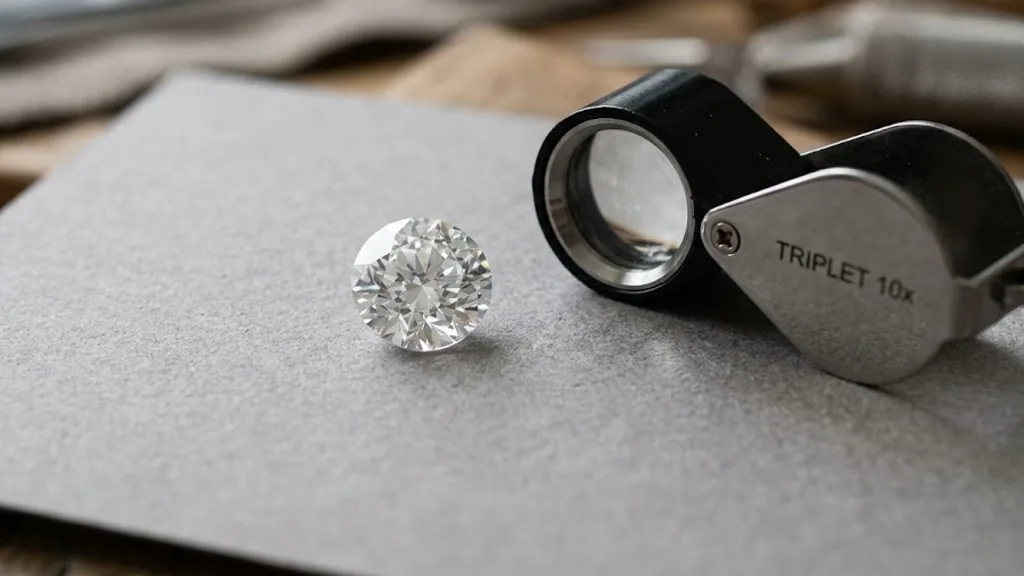
The single most important thing to understand: clarity is judged at 10x magnification, through a jeweller’s loupe or microscope — not with the naked eye. A grade that sounds alarming on paper can be completely invisible when the ring is on a hand at arm’s length.
The full diamond clarity scale
The scale used by IGI, GIA and every other serious laboratory has eleven grades in six families. Here it is from the top down.
| Code | Full name | What a grader sees at 10x | Eye-clean? |
|---|---|---|---|
| FL | Flawless | No inclusions and no blemishes at all | Yes |
| IF | Internally Flawless | No inclusions; only tiny surface marks | Yes |
| VVS1 | Very Very Slightly Included 1 | Inclusions extremely difficult to find | Yes |
| VVS2 | Very Very Slightly Included 2 | Inclusions very difficult to find | Yes |
| VS1 | Very Slightly Included 1 | Inclusions difficult to find | Yes |
| VS2 | Very Slightly Included 2 | Inclusions somewhat easy to find | Almost always |
| SI1 | Slightly Included 1 | Inclusions noticeable to a grader | Usually |
| SI2 | Slightly Included 2 | Inclusions easy for a grader to see | Sometimes |
| I1 | Included 1 | Obvious inclusions | Rarely |
| I2 | Included 2 | Prominent inclusions | No |
| I3 | Included 3 | Heavy inclusions that may affect durability | No |
Note the pattern. FL down to VS1 are all defined by how hard the inclusions are to find under magnification. From SI2 downwards, the wording changes to how obvious they are. That shift is the real dividing line on the scale.
Reading the grades one family at a time
FL and IF — the top
Flawless means a trained grader could not find anything, inside or out, at 10x. Internally Flawless means the inside is clean and only a faint surface mark — often a tiny polish line — keeps it from FL. Both are genuinely rare, and both carry a price premium that has nothing to do with how the diamond looks on a finger.
VVS1 and VVS2 — near-perfect
Both grades mean a grader had to hunt. The difference between the two is mostly where the inclusion sits: VVS1 features are typically at the edge or under the crown where they hide, VVS2 features are more likely to sit near the centre of the table (the flat top facet). Nobody without a loupe will ever tell them apart.
VS1 and VS2 — the sweet spot for most buyers
VS means a grader finds inclusions without much trouble at 10x, but they are still small. In practice VS1 and VS2 stones are eye-clean in ordinary wear. This is where a great many sensible buyers land, because you stop paying for perfection you cannot see.
SI1 and SI2 — value, with a caveat
SI stands for Slightly Included. An SI1 is usually eye-clean; an SI2 is a coin toss and depends entirely on the individual stone. SI grades can be excellent value, but they are the point at which you should stop buying by the certificate alone and start looking at the actual diamond.
I1, I2 and I3 — the bottom
Included grades have inclusions you can see without any magnification at all. At I2 and I3 the inclusions can be large enough to weaken the stone, particularly if a feather (a small internal fracture) reaches the surface near a girdle or a corner. We do not use these grades in our rings.
Which grade should you actually buy?
There is no single right answer, because it depends on the shape and the size of the stone. But there is a very reliable rule of thumb in the trade — a working guideline rather than a measured figure:
| Diamond type | Sensible clarity target | Why |
|---|---|---|
| Round, oval, cushion, pear under 1ct | VS2 to SI1 | Brilliant faceting scatters light and hides small inclusions |
| Round or oval 1.5ct and above | VS1 to VS2 | A larger table gives inclusions more room to show |
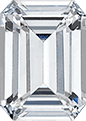
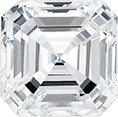
| Emerald, Asscher, baguette (step cuts) | VS1 or better | Long open facets act like windows straight into the stone |
| Small accent stones in a pavé or eternity band | SI is fine | Each stone is a few millimetres across; nothing shows |
The step-cut row matters more than people expect. In a solitaire emerald cut engagement ring, the broad parallel facets behave like clear glass, so a small inclusion that would vanish in a round brilliant sits there in plain sight. In a solitaire round cut engagement ring in white gold, the same inclusion would be broken up by dozens of reflecting facets.
At the other end, clarity barely registers on tiny stones. On a stackable round cut full eternity band, every diamond is small enough that clarity differences are academic — cut quality and how evenly the stones are set matter far more.
Where clarity sits among the other Cs
Clarity is one of four grades on a certificate: carat, colour, clarity and cut. If you are balancing a budget, most experienced jewellers would put cut first, because cut is what creates sparkle, then decide colour and clarity together, then settle on carat weight.
Spending heavily on clarity while accepting a mediocre cut is the most common expensive mistake we see. A well-cut SI1 will out-sparkle a poorly cut VVS2 every single time, at a fraction of the cost.
How we handle clarity at CarbonstoneUK
Every centre stone we set comes with a free IGI certificate, so the clarity grade is independently assessed rather than something we assert ourselves. Our rings are hand-made in solid gold and platinum in North Harrow, London, with free insured UK delivery and 30-day returns.
If you have a clarity grade in mind that is not shown on a listing, tell us — we can source to a specification, and bespoke design carries no extra design cost.
Frequently asked questions
Is a higher clarity grade always a better diamond?
No. Once a diamond is eye-clean, further clarity improvements are invisible in normal wear. Beyond that point you are paying for a laboratory description, not for anything you or anyone else will ever see.
What does “eye-clean” mean exactly?
It means no inclusion is visible to a person with normal vision looking at the diamond face-up from roughly 20 to 30 centimetres away. It is a practical description, not an official grade, and different sellers apply it slightly differently.
Do lab-grown diamonds use the same clarity scale?
Yes, exactly the same eleven grades from the same laboratories. Lab-grown diamonds contain inclusions too — they are grown crystals, not glass — though the type of inclusion can differ slightly from mined stones.
What are SI3 and other grades I have seen advertised?
Some grades appear in trade advertising but not on the official IGI or GIA scale. SI3 is the best-known example. If you see a grade that is not in the table above, ask which laboratory issued it before you buy.
Can a clarity grade change over time?
No. Inclusions are locked inside the crystal and do not grow or move. The only way a stone’s clarity changes is physical damage — a hard knock chipping a facet edge, for instance — which is a different matter from the original grade.
Choosing yours
If you take one thing from this guide, make it this: buy the lowest clarity grade that is still eye-clean in the shape you have chosen, and put the money you save into cut quality or carat weight instead.
You can browse the full range of lab-grown diamond engagement rings or, if you prefer to start from a shape, look at our emerald cut collection where clarity choices matter most.
More guides on this topic
- What Is VVS Clarity in Diamonds? VVS1 and VVS2 Explained
- What Is the Highest Diamond Clarity? Flawless, IF and VVS1 Explained
- What Is the Best Cut and Clarity of Diamond?
- What Does Diamond Clarity I3 Mean? The Bottom of the Scale, Explained
- What Is the Most Expensive Diamond Clarity?
- Is Colour or Clarity More Important in a Round Diamond?
Ready to find your perfect ring?
Explore our lab-grown diamond collection or book a virtual appointment with our team.