What Is a 1 Carat Old European Cut Diamond Worth?
What an old European cut is, how it differs from a modern round, and what really drives the value of a 1 carat stone.
Old European cut diamonds have quietly become one of the most sought-after things in jewellery. They turn up in antique shops, in inherited rings, and increasingly in modern engagement rings made to look a hundred years old. And the question that follows is always the same: what is a 1 carat old European cut actually worth?
There is no single number, and anyone who gives you one without seeing the stone is guessing. But there is a sensible way to think about it, and by the end of this you will know what drives the price up and down, and roughly where a 1 carat stone sits.
What is an old European cut?
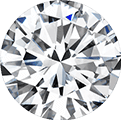
An old European cut is a round diamond cut by hand, mostly between the 1890s and the 1930s, before electric cutting equipment and modern optical science standardised the shape. It is the direct ancestor of today’s round brilliant.
The differences are easy to spot once you know what to look for:
- A small table. The table is the flat facet on the very top of a diamond. On an old European cut it is noticeably small, sometimes half the width you would see on a modern stone.
- A tall crown. The crown is the sloping part between the table and the widest point. Old cuts have a high, steep crown, which is what produces their distinctive chunky flashes of light.
- A deep pavilion. The pavilion is the cone-shaped bottom half. Old cuts are deep, which means more of the carat weight is hidden below the setting.
- An open culet. The culet is the point at the very bottom. On old cuts it is often flattened into a small facet, which you can see as a tiny circle when you look straight down through the table. Modern stones almost always come to a sharp point.
- Hand-cut asymmetry. Facets are rarely identical. Many old European cuts are very slightly off-round.
How that changes the way it looks
A modern round brilliant is engineered to return as much white light as possible, which reads as bright, fine, fast sparkle. An old European cut does something different. Its small table and deep body break light into big, slow, coloured flashes — the effect people describe as “candlelight” sparkle, because that is roughly the lighting these stones were cut for.
| Old European cut | Modern round brilliant | |
|---|---|---|
| Cut by | Hand, roughly 1890–1930 | Machine, to optical formulas |
| Table (top facet) | Small | Large |
| Culet (bottom point) | Often flat and visible | Pointed, not visible |
| Sparkle character | Broad, chunky, colourful flashes | Fine, bright, rapid scintillation |
| Face-up size per carat | Smaller — weight sits in the depth | Larger for the same weight |
| Best in | Soft, warm, low light | Bright and mixed lighting |
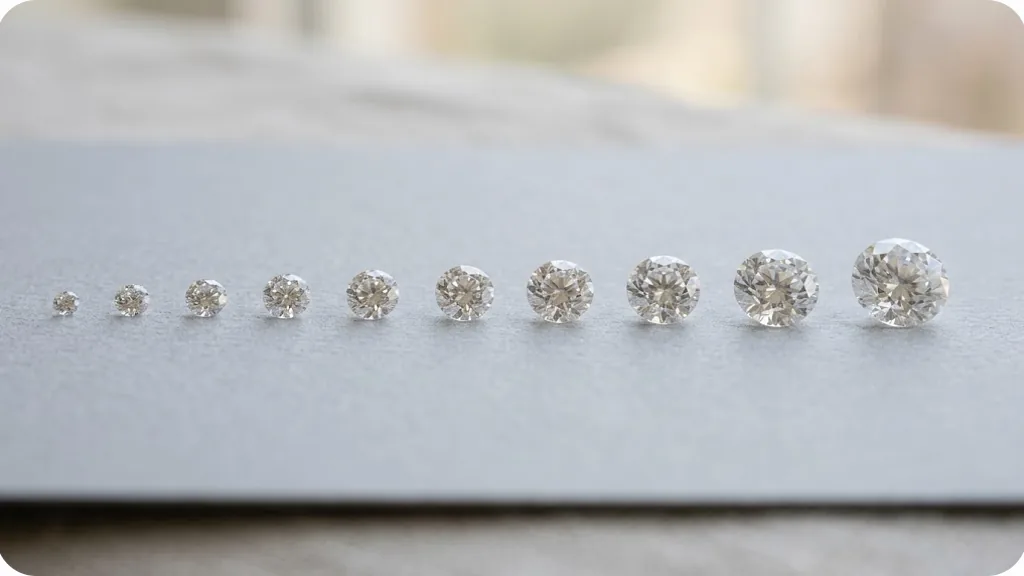
That last row about size is important for value. Because an old European cut carries so much of its weight underneath, a 1 carat old cut typically looks smaller face-up than a 1 carat modern round. You are paying for weight you cannot see.
What a 1 carat old European cut is worth — the honest answer
These stones are traded as antiques, not as commodities. Two 1 carat old European cuts can differ in price by several times over. What moves the number:
Colour. Diamonds are graded from D (completely colourless) down to Z (a clearly visible tint). Most surviving old European cuts sit somewhere in the middle — often in the I to M range — because the rough available at the time was warmer and because a small table shows warmth. A genuinely colourless old cut is rare and priced accordingly.
Clarity. Clarity describes the tiny natural marks inside a diamond, called inclusions. The scale runs FL and IF (flawless and internally flawless), then VVS1 and VVS2, VS1 and VS2, SI1 and SI2, and finally I1 to I3, where inclusions are visible without magnification. Old cuts were not selected for clarity the way modern stones are, so VS and SI grades are common.
Whether it is certified. An independent laboratory report adds meaningful value, because it settles the argument about grades. Many antique stones have never been certified.
Chips and wear. A hundred-year-old diamond has usually been worn. Small chips on the girdle — the outer edge — are common and reduce value.
Whether it is still in its original mounting. An intact period ring by a known maker can be worth considerably more than the stone alone.
As a broad guide only, a loose 1 carat natural old European cut in a middling colour and clarity generally trades in the low thousands of pounds, with well-graded, certified, undamaged examples running to several times that. A stone still set in an original Edwardian or Art Deco mount is valued as an antique piece rather than as a diamond. If you need a firm figure for insurance or probate, you need a written valuation from a qualified valuer who has the stone in hand — not an online estimate.
The lab-grown alternative, and why the sums look different
Here is where the picture changes completely. A lab-grown diamond is chemically and optically the same material as a mined one — same hardness, same sparkle, same grading scales — just grown in a matter of weeks rather than dug out of the ground. Lab-grown prices have fallen substantially over recent years as growing capacity has increased.
That means an antique-style stone cut in the old European proportions from lab-grown rough costs a fraction of what a genuine period stone costs, and you get to choose the colour and clarity rather than accept whatever survived. If what you love is the look — the small table, the fat flashes, the soft glow — a lab-grown old European cut delivers it. If what you love is the history, it does not, and no amount of money will change that. Both are perfectly good reasons to buy. Just be clear with yourself which one you are buying.
What we can do at CarbonstoneUK
We do not hold old European cut diamonds in ready-made stock. What we do hold are the antique-inspired shapes and settings that live in the same world, and we make old cut pieces to order.
Our Vintage Round Cut Engagement Ring in Yellow Gold is the closest thing we make to a period ring — warm metal, detailed shoulders, and a round centre stone that reads as heirloom rather than contemporary. For the low-set, softly domed silhouette common in older rings, the Bezel Cushion Cut Engagement Ring in Platinum uses a rubbed-over rim of metal instead of claws, which is very much how antique stones were held.
If it is the genuinely antique cutting style that appeals, look at the Bezel Rose Cut Eternity Band in Sterling Silver. A rose cut is even older than the old European — flat underneath, domed on top with triangular facets — and gives that same quiet, glassy antique light.
Browse the whole round diamond collection or the wider engagement ring range for ideas. And if you want an actual old European cut, we will make the ring bespoke at no extra design cost — hand-made in solid gold or platinum in our North Harrow, London workshop, with a free IGI certificate on the centre stone.
Frequently asked questions
Is an old European cut the same as an old mine cut?
No, though they are close relatives. An old mine cut is the earlier of the two and is squarish or cushion-shaped rather than round, with the same small table, high crown and flat culet. The old European cut is what happened when cutters gained the equipment to make that style properly round.
Are old European cuts less sparkly than modern diamonds?
Less sparkly is the wrong word — differently sparkly is fairer. A modern brilliant returns more total light, so it is brighter under shop lighting. An old cut gives fewer, larger, more colourful flashes, which many people find more characterful. In candlelight or evening light, plenty of people prefer the old cut outright.
Should I have an inherited old European cut recut into a modern round?
Almost never. Recutting destroys the very thing that makes the stone valuable and desirable, and it costs weight. If the stone is chipped, a light repolish that preserves the old proportions is usually the better route. Get a specialist opinion first.
Can a lab-grown diamond be cut in the old European style?
Yes. The proportions are simply instructions to a cutter, and they can be applied to lab-grown rough just as easily as to mined rough. The result looks like an old European cut because it is one — it just is not a hundred years old.
Why does a 1 carat old cut look smaller than a 1 carat modern round?
Because carat is a measure of weight, not size, and old cuts are deep. More of the weight sits below the girdle where you cannot see it. If face-up size matters most to you, you will get more visible diamond per pound from a modern cut.
Old European cuts reward people who want a diamond with a bit of quietness to it. Whether you buy a genuine antique or have one cut fresh, the thing to spend your attention on is the stone in front of you — the proportions, the flat culet, the way it behaves when you move it — far more than any number on a page.
More guides on this topic
Ready to find your perfect ring?
Explore our lab-grown diamond collection or book a virtual appointment with our team.