What Is the Difference Between Round and Princess Cut Diamonds?
Round versus princess cut: size, price, sparkle and durability compared, plus the setting a princess cut must have.
Round and princess are the two most brilliant diamond shapes you can buy. One is a circle, the other is a square, and beyond that they are closer cousins than most people realise — both are cut to scatter as much light as possible.
The differences that matter are size for your money, price, how safely they wear, and what sort of setting each one needs. Here is all of it in plain English.
The two shapes in one sentence each
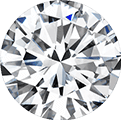
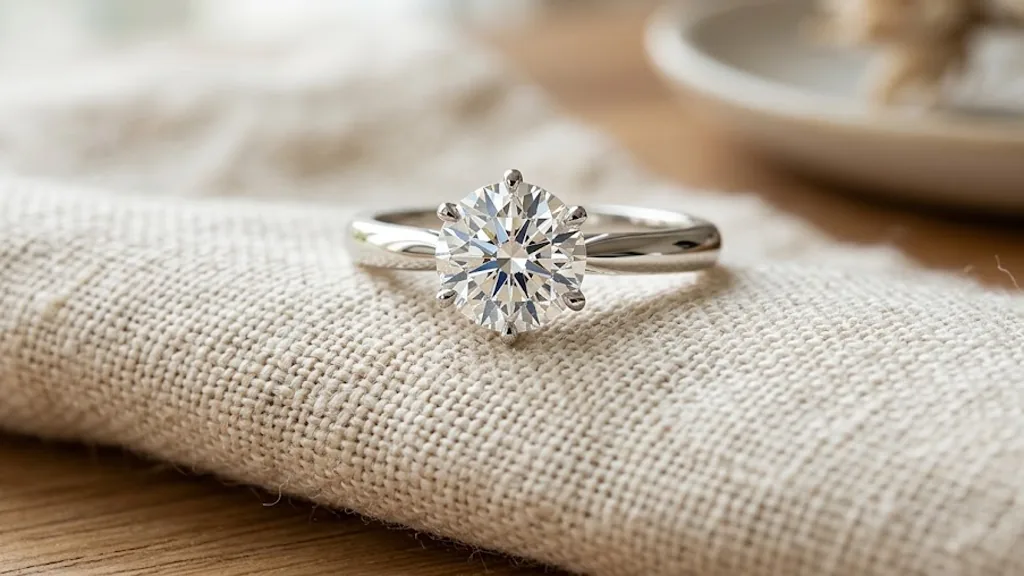
Round brilliant. A circle with 57 or 58 facets arranged in a pattern refined over a century to return as much light to your eye as possible. It is the sparkliest shape there is and by far the most popular.
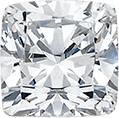
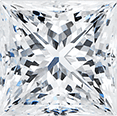
Princess cut. A square with sharp, uncut corners and a deep, pointed underside. It uses brilliant-style faceting too, so it is genuinely sparkly, with a crisp, modern, geometric look that a round cannot give you.
Side by side
| Round brilliant | Princess cut | |
|---|---|---|
| Outline | Circle | Square with sharp corners |
| Sparkle | The most of any shape | Very good, with a crisper, more geometric pattern |
| Approximate size at 1 carat | About 6.5 mm across | About 5.5 mm across |
| Price for the same carat | Highest of all shapes | Usually lower than round |
| Cut graded on the certificate | Yes, Excellent down to Poor | No overall cut grade for fancy shapes |
| Durability | Excellent — no weak points | Good, but the four sharp corners can chip if knocked |
| Setting needed | Any style works | Corners must be protected by V-shaped claws |
| Character | Timeless, classic, never dates | Modern, sharp, strongly 2000s in feel |
Size: the round wins on the eye
This surprises people, because a square sounds like it should cover more finger. It does not.
A princess cut is cut deep. A great deal of its weight sits below the setting, hidden from view. At one carat a princess measures roughly 5.5 mm across against a round’s 6.5 mm, so the round looks distinctly larger despite weighing the same.
The princess does have one visual trick in its favour. Its corners reach further across the finger diagonally than a round’s edge does, so it can feel more substantial than the measurements suggest. But on pure surface area you can see, the round is ahead.
Price: the princess is the cheaper stone
A princess cut costs less than a round of the same carat weight, colour and clarity. Two reasons.
First, waste. Rough diamond crystals often occur in a shape called an octahedron, which is essentially two pyramids joined base to base. Slice one in half and you get two pieces that suit a princess cut almost perfectly, with very little thrown away. Cutting a round from the same crystal means grinding a great deal of it into dust — and you pay for that lost weight in the finished stone.
Second, demand. Round is what most people ask for, and heavy demand holds prices firm. Princess cuts sell in far smaller numbers.
As broad guidance only, expect a princess to sit meaningfully below a round of matching weight and quality. That is a rule of thumb rather than a fixed rate, and it applies to both lab-grown and natural stones. Compare two real certificates rather than trusting a headline percentage.
Durability: the one real practical difference
Diamond is the hardest natural material on earth, but hard is not the same as unbreakable. Diamond can chip if it is struck at the wrong angle.
A round has no sharp points anywhere, so there is nothing to catch and nothing to chip. It is about as robust as a set stone can be.
A princess has four sharp corners, and those corners are the thinnest, most exposed part of the stone. Knock one against a door frame and you can chip it. This is not a reason to avoid the shape — millions are worn happily every day — but it does mean the setting is not optional. A princess must be held in V-shaped claws that wrap and shield each corner. If a jeweller offers you a princess in plain round claws, walk away.
Which should you choose?
Choose a round if you want the most sparkle available, the largest look for the carat weight, a shape that will never date, and the reassurance of a cut grade printed on the certificate.
Choose a princess if you love clean geometry and straight lines, you want a lower price per carat, and you are happy with a setting that protects the corners.
What we stock, honestly
We do not currently hold princess cut rings as a stock line at CarbonstoneUK. We would rather tell you that than sell you something else pretending it is the same thing.
We do make princess cut rings to order. Bespoke design carries no extra design cost with us — you pay for the metal and the stones only — so a made-to-order princess ring is not a luxury option, it is simply how we build that shape. Send us a sketch, a photograph or a link to something you like and we will quote it in writing.
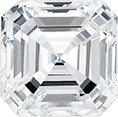
If you want a square look from something we hold now, an Asscher cut is worth a look. It is a square stone with cut corners and long, flat, mirror-like facets rather than brilliant sparkle — calmer than a princess, and with no fragile points. Our Stackable Asscher Cut Wedding Band in Yellow Gold is £1,416.
On the round side, the Solitaire Round Cut Engagement Ring in Platinum is £657 and is the classic in its purest form. If you want detail rather than plainness, the Vintage Round Cut Engagement Ring in Yellow Gold at £1,051 sets small diamonds along the band.
Browse the round diamond collection, or see every design together in the engagement ring collection.
Everything we make is hand-made in solid gold or platinum in North Harrow, London, using lab-grown diamonds — real diamonds grown in a laboratory rather than mined — with a free IGI certificate on every centre stone.
Common questions
Is a princess cut cheaper than a round?
Yes, for the same carat weight, colour and clarity. Less of the raw crystal is wasted in cutting, and fewer people ask for the shape.
Which sparkles more, round or princess?
Round. It was designed specifically to maximise returned light and nothing beats it. A princess is still a brilliant cut and sparkles well, but with a sharper, more geometric pattern rather than the round’s even fire.
Do princess cut diamonds look smaller than round?
Usually, yes. A one carat princess is around 5.5 mm across against a round’s 6.5 mm, because the princess carries more of its weight in depth below the setting.
Are princess cut diamonds still fashionable?
They read as distinctly 2000s to most eyes today, which some buyers love and others do not. Round is the shape that never looks of its time. Buy what you like rather than what is current — you will wear it for decades.
Can you make me a princess cut engagement ring?
Yes. We make them to order with no design fee, in solid gold or platinum, with V-claws protecting all four corners and a free IGI certificate on the centre stone. UK delivery is free and insured and you have 30 days to return.
If you cannot decide, look at both on a real hand in daylight. A round will look bigger and brighter; a princess will look sharper and cost less. Neither answer is wrong.
Ready to find your perfect ring?
Explore our lab-grown diamond collection or book a virtual appointment with our team.