How Much Is a 3 Carat Emerald Cut Diamond Ring?
What a 3 carat emerald cut ring really costs in the UK, lab-grown vs natural, plus a carat-to-mm size chart and ways to save money.
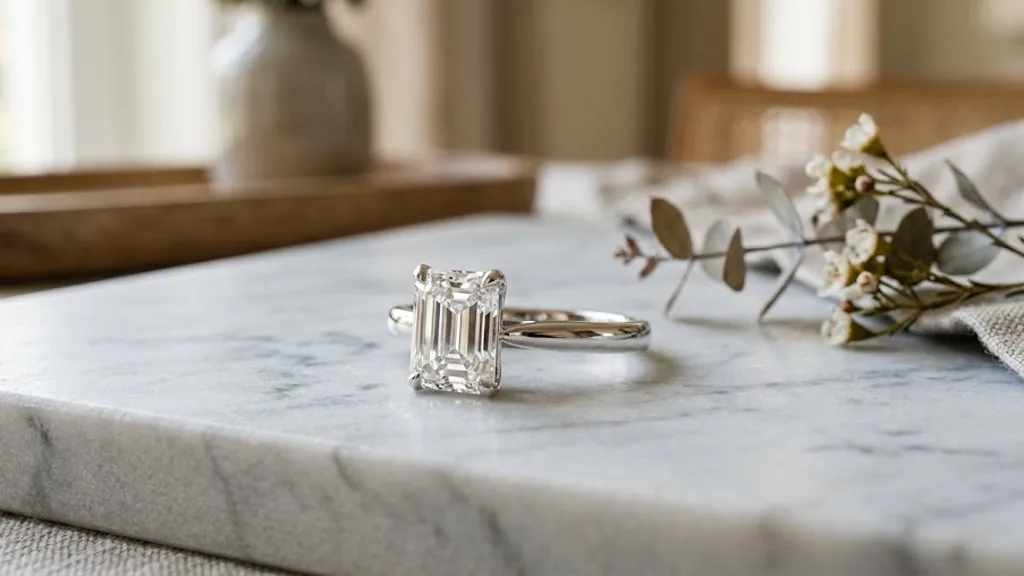
A 3 carat emerald cut diamond ring is a big, confident piece of jewellery, and the price gap between a lab-grown one and a natural one is enormous. As a broad guide, a 3 carat lab-grown emerald cut set in solid gold usually lands somewhere in the low thousands of pounds, while the natural equivalent of similar quality is normally a five-figure purchase. Below we break down exactly what you are paying for, so you can judge any quote you are given.
First, what “3 carat” actually means
Carat is a measure of weight, not size. One carat is 0.2 grams. So a 3 carat diamond weighs 0.6 grams — about the same as a grain of rice.
Millimetres (mm) are a measure of length. When we say a stone is “9.5 x 7.5mm”, we mean it is 9.5mm long and 7.5mm wide across the top, which is the part you actually see when the ring is on a finger.
These two numbers do not move together perfectly. Two diamonds can both weigh 3 carats and look noticeably different in size, because one may be cut deeper (hiding weight underneath the setting) and the other shallower (spreading that weight across the top). This matters when you are comparing prices, because you may be paying for weight you cannot see.
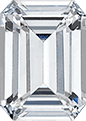
Emerald cuts are a rectangular, step-cut shape — long straight facets that run parallel to the edges, like steps going down into the stone. They tend to look larger than their weight suggests, because emerald cuts spread their weight over a wide, flat top.
Typical face-up size of an emerald cut
| Carat weight | Typical size (mm) | How it reads on the hand |
|---|---|---|
| 1.00 ct | 7.0 x 5.0 | Classic, everyday size |
| 1.50 ct | 7.5 x 5.5 | Noticeably larger, still easy to wear |
| 2.00 ct | 8.5 x 6.5 | Clearly a statement stone |
| 2.50 ct | 9.0 x 7.0 | Covers most of the finger width |
| 3.00 ct | 9.5 x 7.5 | Very large; fills the finger on most hands |
| 4.00 ct | 10.5 x 8.5 | Red-carpet scale |
These are typical figures for a well-proportioned emerald cut at a 1.5:1 length-to-width ratio. Your certificate will always give the exact measurements for your specific stone, and those are the numbers to trust.
What drives the price of a 3 carat emerald cut ring
Four things decide the final figure, and only one of them is the carat weight.
| Price element | What it covers | How much it moves the price |
|---|---|---|
| The centre stone | Lab-grown or natural, colour, clarity, cut quality, certificate | The largest single factor by far |
| The metal | 9ct or 18ct gold, or platinum; ring weight and width | Hundreds of pounds; platinum costs more than gold |
| The setting design | Plain solitaire, hidden halo, three stone, pavé shoulders | Extra diamonds and extra handwork add up |
| Making and finishing | Hand fabrication, setting, polishing, sizing | Fixed craft cost, similar for most designs |
Lab-grown versus natural: the honest comparison
A lab-grown diamond is a real diamond. It has the same carbon crystal structure, the same hardness and the same sparkle as a mined one. The difference is where it was formed. A natural diamond grew underground over a very long time; a lab-grown diamond is grown in a controlled machine over a few weeks. Under a loupe or on a certificate, they are graded on exactly the same scale.
At 1 carat the price difference between the two is already large. At 3 carats it becomes dramatic, because natural diamond prices rise steeply as size increases, while lab-grown prices rise far more gently. That is why a 3 carat emerald cut is one of the strongest arguments for going lab-grown: it is the size at which the saving is life-changing rather than merely nice.
A word of caution about any price you are quoted, including ours: lab-grown diamond prices have moved a great deal in recent years and continue to move. Treat every published range, on any website, as guidance rather than a fixed quote. Always ask for a live price on a specific certified stone before you commit.
What CarbonstoneUK offers at this size
Our ready-to-order engagement rings are built around smaller, everyday centre stones, so the prices you see on the shop pages are not 3 carat prices. Here are three emerald cut designs from our current collection so you can see the styles and where our finished-ring pricing starts (prices correct at the time of writing):
- Solitaire Emerald Cut Engagement Ring — £672. The purest version of the shape, nothing competing with the centre stone.
- Hidden Halo Emerald Cut Engagement Ring — £1,016. A ring of small diamonds sits underneath the centre stone where you only see it from the side, lifting the stone and making it read slightly larger from above.
- Three Stone Emerald Cut Engagement Ring — £1,017. Two smaller stones flank the centre, which adds visible width without adding centre-stone carat weight.
If you want a genuine 3 carat centre stone, that is a bespoke commission. We design bespoke at no extra design cost — you pay for the stone, the metal and the making, not for the drawings. Tell us the shape, the rough budget and the finger size, and we will come back with certified stone options and a full price. You can browse the full emerald cut collection or the wider engagement rings range to find a setting style you like first, then we scale it up.
Three ways to get more ring for the same money
Drop the weight slightly. A 2.90 carat stone and a 3.00 carat stone are visually identical, but the price often steps up at the round number. Buying just under a milestone weight is the oldest trick in the trade and it still works.
Choose colour and clarity for the shape. Emerald cuts have large, open facets, which means inclusions (tiny natural marks inside the stone) are easier to spot than they would be in a sparkly round. It is worth paying for clarity here. Colour is more forgiving, especially in yellow or rose gold, where a very slightly warm stone looks perfectly white against the metal.
Let the setting do some work. A hidden halo or a three stone design adds visual size for far less money than adding carat weight to the centre. On a fixed budget, this is usually the better buy.
Frequently asked questions
Does a 3 carat emerald cut look bigger than a 3 carat round?
Usually yes, in one direction. A 3 carat round is about 9.3mm across; a 3 carat emerald cut is around 9.5 x 7.5mm. The emerald cut is longer, and because it sits along the finger it tends to look more elongated and more dramatic, even though its total top surface is broadly similar.
Will a 3 carat ring be uncomfortable to wear every day?
It is a real consideration. A stone that size sits high and catches on knits and hair unless the setting is designed for it. Bezel settings, where a rim of metal wraps the edge of the stone, and lower-profile baskets both help a great deal.
Do I get a certificate?
Yes. Every centre stone we supply comes with a free IGI certificate. IGI is an independent laboratory, and the certificate records the exact carat weight, measurements in millimetres, colour, clarity and cut grade. Never buy a stone this size without one.
Can I insure it, and how do I know what it is worth?
The certificate plus your receipt is what an insurer will ask for. Bear in mind that resale value for any diamond, lab-grown or natural, is well below the retail price — buy a ring because you want to wear it, not as an investment.
How long does a bespoke 3 carat ring take?
Sourcing the certified stone and hand-making the ring usually takes a few weeks. We will give you a firm timeline once the stone is chosen, and UK delivery is free and fully insured, with 30 days to return if it is not right.
A 3 carat emerald cut is a serious ring, and it deserves a serious conversation rather than a quick add-to-basket. We are in North Harrow, London, and we hand-make everything in solid gold and platinum — send us the shape you have in mind and we will price it properly.
More guides on this topic
Ready to find your perfect ring?
Explore our lab-grown diamond collection or book a virtual appointment with our team.