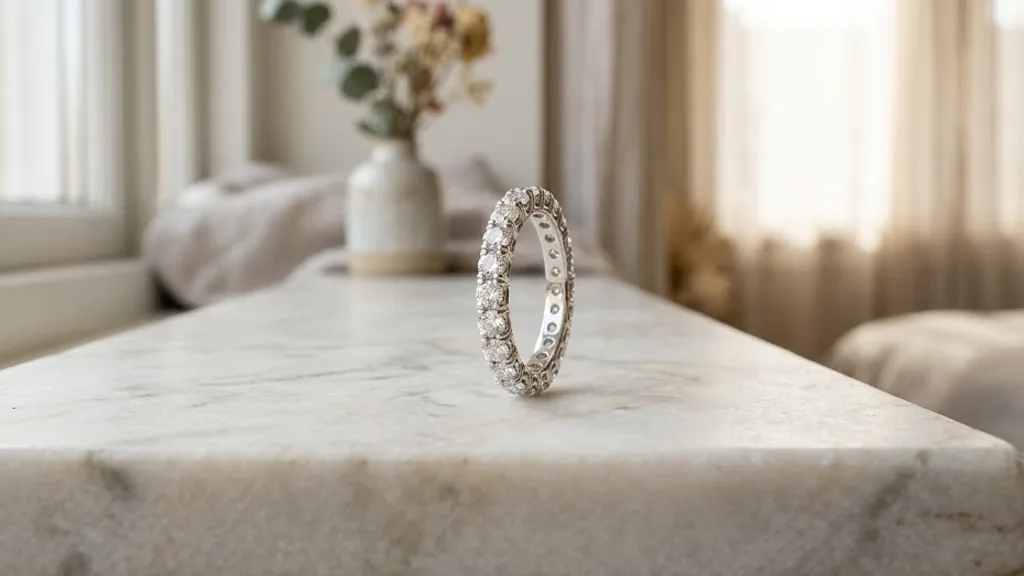
What Should an Eternity Ring Look Like? Width Stones and Settings
How to choose an eternity ring design: band width, stone shape, setting type, metal, and making it sit flush with your rings.
There is no official design for an eternity ring, which is both freeing and unhelpful. If you are staring at dozens of near-identical bands wondering what separates a good one from an expensive mistake, this is the guide. We will go through width, stone shape, setting style, metal and how the ring has to sit next to whatever is already on the finger.
Start with the hand it is going on
An eternity ring is almost never worn alone. It joins an engagement ring and a wedding band that were chosen years earlier, often by someone with a different budget and different taste. So the first question is not “what do I like?” but “what will live happily next to those two?”
Take a photo of the existing rings from the side, not just from above. The side view tells you how high the centre stone sits and whether the shanks are straight or tapered. That single photo answers most design questions.
Width: the decision people get wrong most often
Most eternity rings sit between 1.5mm and 3mm wide. That sounds like a tiny range. On a finger it is the difference between a whisper and a statement.
| Width | How it reads | Works well when |
|---|---|---|
| 1.5–2mm | Delicate, a fine line of light | Stacking two or three rings; small hands; the engagement ring is the star |
| 2–2.5mm | The safe middle. Visible, not loud | Most people, most engagement rings |
| 2.5–3mm | Substantial, clearly the main event | Worn alone or with a plain band; larger hands; bolder taste |
| 3mm+ | A statement band | Worn on the right hand or as a solo ring |
A rule of thumb in the trade, not a measured figure: an eternity ring should be roughly the same width as the wedding band it sits beside, or slightly narrower. Much wider and the stack looks unbalanced.
How much of the band should be set
Full eternity means stones all the way round. Three-quarter means about 75%. Half eternity means the front half only.
A full eternity ring is the most dramatic and the least practical. It cannot usually be resized, and the stones on the underside sit against your palm all day. A three-quarter is the compromise most people end up happy with: from any normal viewing angle it looks full, but there is plain metal underneath. Our stackable round cut three-quarter eternity band is the classic version of this.
A half eternity is the everyday workhorse. It is lighter, cheaper for the same stone quality, easier to repair and far easier to resize. If the ring will be worn while cooking, gardening, typing and carrying children, choose half.
Stone shape changes the whole personality
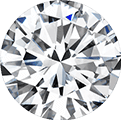
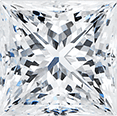
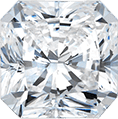
Round brilliants give the brightest, busiest sparkle. They are the default for a reason: they suit nearly every engagement ring and never look dated.
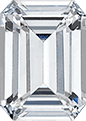
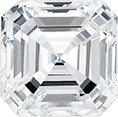
Step cuts — baguette, emerald, asscher — behave completely differently. Instead of scattering light into small flashes, they reflect it in broad, mirror-like planes. The effect is calmer, more architectural and, to many eyes, more grown-up. A pavé baguette cut wedding band gives that look at a modest price.
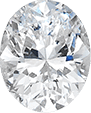
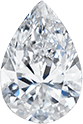
Shaped cuts — marquise, pear, heart — set in a line create rhythm and movement rather than a straight edge of light. They are less common and more distinctive. A stackable marquise cut wedding band in rose gold is a good example of how different a shaped-stone band feels.
Rose cut stones are flat-backed with a domed, faceted top. They glow rather than sparkle and give an antique, candlelit look.
Settings: what actually holds the stones in
This is the part that decides how long the ring lasts.
- Claw or prong. Small metal fingers grip each stone. Maximum light, maximum sparkle, most exposure. Prongs wear down over years and occasionally need retipping.
- Channel. Stones sit in a groove between two raised walls of metal. Very secure, smooth to the touch, nothing to catch on clothing.
- Pavé. Small stones set close together with tiny beads of metal, so the surface looks paved with diamond. Beautiful, and the format that most rewards good workmanship.
- Bezel. A thin rim of metal wraps each stone completely. The most protective option and increasingly popular for its clean, modern outline. See our bezel rose cut eternity band.
If the wearer is hard on jewellery, bezel or channel. If sparkle is the priority and the ring will be looked after, claw or pavé.
Metal
Platinum is naturally white, dense and does not need re-plating. It scuffs into a soft patina rather than wearing thin. It is the most expensive option and the most durable for stone-set bands.
White gold is yellow gold alloyed pale and usually rhodium-plated for brightness. The plating wears and needs redoing every few years — that is normal maintenance, not a fault.
Yellow and rose gold need no plating and hold their colour indefinitely. Rose gold, in particular, flatters warm skin tones and looks striking against white diamonds.
Sterling silver is the most affordable and the softest. It is a genuine option for a band that will not be worn daily.
The safest choice is to match the existing engagement ring exactly. The second safest is to contrast it obviously — a rose gold eternity band against white gold reads as an intentional design decision. What looks like a mistake is a near-match.
Should the stones match the engagement ring?
They do not have to. A round-stone eternity band sits perfectly well beside an emerald cut engagement ring, and often looks better than trying to repeat the same shape at a smaller size.
Matching shape is worth doing when the engagement ring has an unusual outline and you want the stack to read as one designed set. Our stackable emerald cut three-quarter eternity band exists for exactly that reason.
The fit problem nobody mentions
If the engagement ring has a raised setting or a halo, a straight eternity band may not sit flush against it. You will get a wedge-shaped gap, and over years the two rings will rub and wear each other.
Three fixes: a curved band that arcs around the centre stone, a chevron band with a V shape, or wearing the eternity ring on the other side of the wedding band where the gap does not show. Our chevron round cut wedding band in rose gold shows the V-shaped approach.
If none of the stock shapes fit, we make bespoke at no extra design cost, working from your existing rings.
What good workmanship looks like
Two eternity rings can look identical online and be very different objects. Since you are buying a row of small stones held by small pieces of metal, the quality of the setting work is most of what you are paying for.
Look for stones that sit level with each other, in a straight line, with even gaps. A row where one stone sits fractionally proud or tilted is a row that will lose that stone first. Under magnification the claws or beads should be crisp and uniform, not blobby.
Ask whether the ring is cast in one piece or hand-built. Both can be excellent, but a cast ring with hand-set stones is the norm at most price points, and the setting is where the skill shows.
Weight tells you something too. A ring that feels insubstantial for its size is either very thin or hollow. Neither wears well over decades on a hand.
A word on stone quality
On a band of small diamonds, colour and clarity matter less than they do on a single large stone. Tiny inclusions are invisible at that scale, and a slight tint disappears against the metal.
What does matter is consistency. All the stones should match each other in colour and cut quality, because the eye picks up a mismatched row immediately even when it cannot say why.
This is a real advantage of lab-grown diamonds for band work: matched parcels of small stones are easier to obtain, so the row looks uniform. Our centre stones come with a free IGI certificate, and the melee stones in a band are graded as a matched set rather than individually, which is standard practice throughout the trade.
Frequently asked questions
How many diamonds should an eternity ring have?
There is no correct number. It is determined by the width of the band and the size of each stone. A 2mm half eternity typically holds somewhere between seven and eleven stones; a full eternity in the same width holds roughly double.
Should an eternity ring be wider than the wedding band?
Usually not. Matching or slightly narrower keeps the stack balanced. A wider eternity ring tends to make the wedding band look like an afterthought.
Can an eternity ring have coloured stones?
Traditionally yes — sapphire and ruby eternity bands have a long history. We work in lab-grown diamonds only, so a coloured-stone band would be a bespoke commission rather than something we hold in stock.
Does a full eternity ring look better than a half?
From above, at normal distance, they look almost identical. The difference shows when the hand turns. Full costs more, sparkles from every angle and is much harder to resize.
What if her taste has changed since the engagement ring?
Then buy for her taste now, not for the old ring, and consider whether a plain contrasting band between the two would tie the stack together. There is also no rule that says everything must be worn on the same finger.
Browse the full wedding and eternity band collection, or narrow it down by emerald cut stones if you already know the look you want. If you would like to understand the formats first, our guide to what an eternity ring is covers the basics.
Ready to find your perfect ring?
Explore our lab-grown diamond collection or book a virtual appointment with our team.