Which Diamond Cut Is Least Expensive? And Which Shapes Cost the Most
Which diamond shapes cost least, which cost most, and what a 1 carat lab-grown diamond really works out at once it is set.
Two diamonds can weigh exactly the same, carry the same clarity and colour grades, and still differ noticeably in price. The reason is shape. Some shapes waste more of the original crystal, some are harder to cut well, and some are simply in higher demand.
This guide answers the question from both ends: which diamond shapes cost the least, which cost the most, and roughly what a one carat lab-grown diamond works out at once it is set in a ring.
Why shape changes the price at all
Three things drive it.
Yield. A rough diamond crystal is a fixed lump of material. The cutter has to find the largest, cleanest finished stone inside it. Some shapes fit a rough crystal neatly and keep most of the weight. Others force the cutter to throw a lot away. Everything thrown away still has to be paid for by the finished stone.
Difficulty. Certain shapes are unforgiving. Get the angles slightly wrong on a round brilliant and it goes dull; get them wrong on an emerald cut and every facet line looks crooked. Skilled hours cost money.
Demand. Round brilliants are the most requested shape in the world by a long way. Popularity holds prices up regardless of how efficient the cutting is.
Which diamond cut is least expensive?
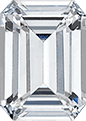
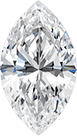
As a general rule, the elongated and step-cut shapes cost the least per carat, because they use the rough crystal efficiently and are less in demand than rounds.
| Shape | Relative price per carat | Why |
|---|---|---|
| Marquise | Lowest | Long, narrow outline keeps a lot of the rough; modest demand |
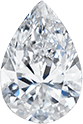
| Pear | Low | Good yield from awkward rough; very good size-per-carat |
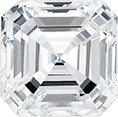
| Emerald | Low | Step cutting is efficient; shallow shape looks large for its weight |
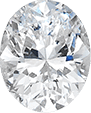
| Oval | Low to mid | Efficient, but demand has climbed sharply |
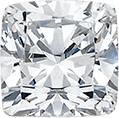
| Cushion | Mid | Reasonable yield, steady demand |
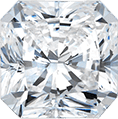
| Radiant, Asscher | Mid | More facets to place, more cutting time |
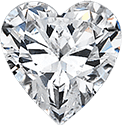
| Heart | Mid to high | Fiddly, and symmetry errors are obvious |
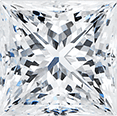
| Princess | Mid | Very efficient from the rough, but corners chip easily |
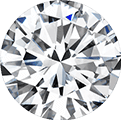
| Round brilliant | Highest | Roughly half the rough crystal is lost, plus the strongest demand |
So the short answer: marquise, pear and emerald cuts are usually the cheapest per carat, and round brilliants are usually the most expensive.
There is a bonus with the elongated shapes. Because they spread their weight along their length rather than downwards, they look bigger on a finger than a round of the same carat weight. A marquise piece like our Solitaire Marquise Cut Engagement Ring covers more of the finger than a round would at the same weight, and costs less to begin with. Our Solitaire Oval Cut Engagement Ring works the same trick with a softer outline.
Which diamond cuts are the most expensive?
The round brilliant sits at the top for the two reasons above: heavy loss from the rough, and unmatched demand. On top of that, the very best round brilliants are graded on cut quality in a way fancy shapes are not, so the finest examples command a further premium.
After rounds, the shapes that cost most tend to be the ones where a mistake is visible. Hearts must be perfectly symmetrical or they look lopsided. Well-proportioned cushions and radiants take real cutting time. Antique-style cuts — old European, old mine, rose cut — are cut by hand to older proportions and priced accordingly.
A point worth making honestly: these differences are smaller than most buyers expect. Shape typically moves the price of a stone by a modest percentage, while carat weight, cut grade and clarity move it far more. Choosing a marquise over a round will save you money, but it will not halve your bill.
How much does a 1 carat lab-grown diamond cost?
This is the question everybody really wants answered, so here is an honest answer with the caveats attached.
Lab-grown diamond prices have fallen substantially over the past few years and they are still moving. Production capacity has increased, and the price of a loose stone today is a fraction of what the same stone cost when lab-grown diamonds first reached the high street. Any figure printed anywhere online has a short shelf life, including this one.
What we can give you is the shape of the pricing rather than false precision:
- A one carat loose lab-grown round of good cut, near-colourless grade and eye-clean clarity is now a few hundred pounds rather than the several thousand a comparable mined stone would cost.
- Moving from a round to a marquise, pear or emerald at the same weight and grades will usually reduce the stone cost noticeably.
- Pushing from an eye-clean VS2 up to a VVS1, or from G colour up to D, adds meaningfully to the stone cost while adding nothing you can see.
The stone is only part of the bill. The setting is the other part, and it is a real cost that does not fall with diamond prices. Hand-made solid gold or platinum, hand-set accent stones, hallmarking and finishing all take time and material. This is why finished rings do not get cheaper at the same rate loose stones do.
For a sense of what that means in practice, our own hand-made rings start at around £490 and most sit under £1,200. Simple solitaire settings such as our Solitaire Round Cut Engagement Ring in White Gold sit at the lower end; pavé and eternity designs with dozens of hand-set stones sit higher, because every one of those small diamonds is set individually.
How to get the most visible diamond for your money
If value is the goal, these choices do the heavy lifting:
- Choose an elongated shape. Marquise, pear and oval all look larger per carat than a round.
- Buy just under the magic weights. A 0.90ct sits below the 1.00ct price step but is under half a millimetre smaller across.
- Stop at eye-clean. VS2 or a carefully picked SI1. “Eye-clean” means no inclusions — the small natural marks inside a diamond — visible without magnification.
- Match colour to metal. A slightly warmer stone disappears in yellow or rose gold. Save the icy D–F grades for platinum.
- Never economise on cut grade. It is the only C that changes how much the diamond sparkles.
- Consider a halo. A ring of small diamonds around the centre stone makes it read considerably larger for a fraction of the cost of upgrading the centre.
That last trick is genuinely effective. A design like our Halo Round Cut Engagement Ring presents a much bigger face to the world than the centre stone alone would.
What about the shapes nobody talks about?
Hexagon, lozenge and rose cut stones sit outside the standard price tables. They are made in smaller quantities, so pricing is set more by the individual piece than by a broad market rate. They also tend to look completely different from a conventional brilliant, which is rather the point of choosing one.
Frequently asked questions
Which diamond cut is the cheapest?
Per carat, marquise is usually the least expensive, with pear and emerald close behind. All three also look larger for their weight, so the saving compounds.
Which diamond cut is the most expensive?
The round brilliant. Around half the original rough crystal is lost cutting one, and it is the most in-demand shape in the world. Antique hand-cut shapes and perfectly symmetrical hearts also carry premiums.
Is a cheaper shape a lower quality diamond?
No. Price per carat by shape is about cutting yield and demand, not quality. A marquise and a round of the same clarity and colour are the same material, cut to the same standards.
Does the shape affect how much the setting costs?
A little. Shapes with points — marquise, pear, heart — need extra protective claws, and step cuts often need bespoke seats cutting into the setting. The difference is small compared with the metal choice.
What if I want princess cut?
We do not currently stock princess cut, but we make bespoke pieces at no extra design cost, so we can source and set one for you. Every centre stone we supply comes with a free IGI certificate.
If you want to compare shapes with real prices rather than theory, browse our engagement rings, or jump straight to marquise diamonds if you want the most size for the smallest spend. Everything is hand-made in London, delivered free and insured across the UK, with 30 days to return it if it is not right.
More guides on this topic
Ready to find your perfect ring?
Explore our lab-grown diamond collection or book a virtual appointment with our team.