Is Radiant or Cushion Cut Better?
Radiant versus cushion cut compared: sparkle, size on the finger, durability and price, explained for first-time ring buyers.
Radiant and cushion cuts get confused with each other constantly, and it is easy to see why. Both are squarish. Both sparkle a lot. Both sit somewhere between a round and an emerald cut in personality.
But they are genuinely different stones, and once you know what to look for you will never mix them up again. Neither is objectively better. The right answer depends on the look you want, the hand it will sit on and how much you care about a crisp outline.
The quickest way to tell them apart
Look at the corners and the sides.
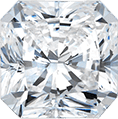
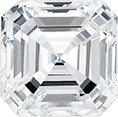
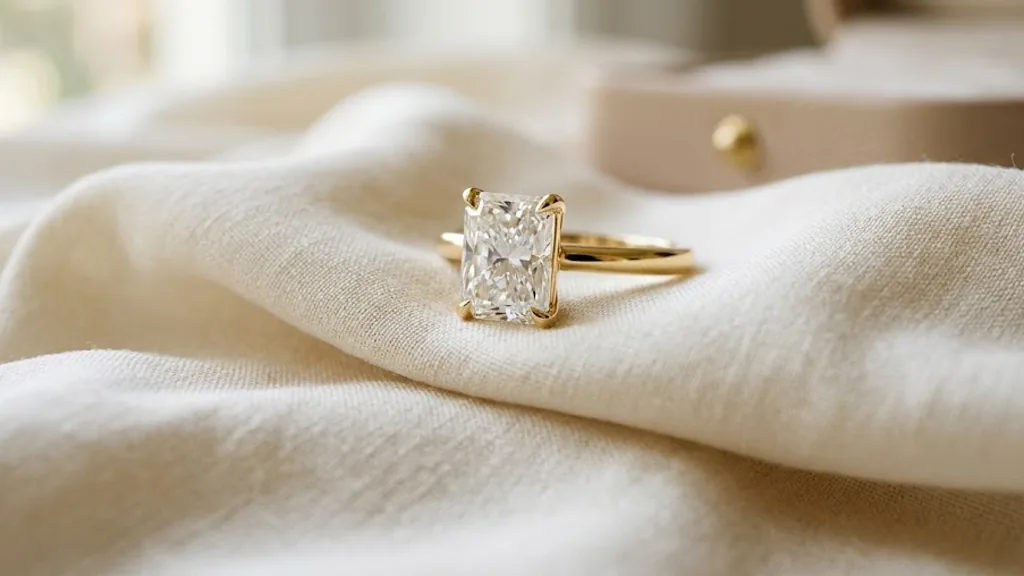
- A radiant cut has straight sides and corners that are cut off at an angle, so the outline is a rectangle or square with four small flat corners. Everything is straight lines and defined angles.
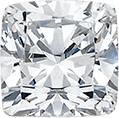
- A cushion cut has gently curved sides and softly rounded corners. It looks like a small pillow, which is exactly where the name came from.
If the edges look like they were drawn with a ruler, it is a radiant. If they look like they were drawn freehand, it is a cushion.
Where each one came from
The cushion is old. Versions of it have been cut since the 1700s, back when jewellery was seen by candlelight and stones were cut with big chunky facets to glow warmly in low light. Facets, if the word is new to you, are the small flat polished surfaces cut into a diamond.
The radiant is modern, invented in the 1970s. Its whole purpose was to solve a problem: people liked the clean rectangular outline of an emerald cut but wanted the sparkle of a round. The radiant does that by taking a rectangular outline and cutting brilliant-style facets into it.
That history explains their characters. The cushion is romantic and antique. The radiant is bright and deliberate.
Side by side
| Radiant cut | Cushion cut | |
|---|---|---|
| Outline | Rectangle or square, corners cut off | Squarish with curved sides, rounded corners |
| Sparkle | Very bright, sharp, high contrast | Softer, warmer, broader flashes |
| Face-up size for the weight | Generally larger — shallower cut | Generally smaller — often cut deep |
| Hides small inclusions | Very well | Well, especially “crushed ice” versions |
| Hides a faint yellow tint | Less well — corners can concentrate colour | Reasonably well |
| Durability | Excellent — cut corners are strong | Excellent — no sharp points at all |
| Wedding band fit | Straight bands sit flush | Straight bands sit flush |
| Overall feel | Modern, bold, architectural | Vintage, soft, romantic |
Which looks bigger?
The radiant, usually.
Carat is a measure of weight, not size, so two stones of the same carat weight can cover different amounts of finger. Radiants tend to be cut shallower, meaning more of the weight sits in the top surface where you can see it. Cushions are frequently cut deep, hiding weight underneath the setting.
As a rough guide, a 1 carat radiant often measures around 6.0 to 6.5mm across, while a 1 carat cushion may be nearer 5.3 to 5.7mm. It is not a huge gap, but it is visible next to each other.
The practical advice is the same for both: ask for the millimetre measurements before you buy, not just the carat weight. That single question will tell you more about how the ring will look than anything else on the certificate.
Which sparkles more?
They sparkle differently rather than one simply winning.
A radiant throws sharp, distinct flashes with strong contrast between light and dark. It is a lively, almost restless stone in bright light. If someone loves the energy of a round brilliant but wants a rectangle, the radiant delivers it.
A cushion produces larger, slower flashes and shows more rainbow colour, an effect jewellers call fire. It looks softer and glowier. In candlelight or warm indoor lighting, many people find a cushion the more beautiful of the two.
One warning on cushions: they come in two very different styles. A standard cushion has larger, clearly defined flashes. A “crushed ice” cushion looks like a mass of tiny glittering fragments. Both are sold simply as “cushion”, so always ask which you are looking at, or you may be surprised when it arrives.
Colour and clarity: what to specify
Colour is graded from D, meaning completely colourless, down the alphabet as a faint warmth appears. Clarity describes tiny natural marks inside the stone, called inclusions.
Both radiants and cushions are brilliant-style cuts, so they are forgiving on clarity. Small inclusions get lost in the sparkle. You rarely need to pay for the very top clarity grades with either shape — VS2 is usually plenty, and even SI1 can look flawless to the eye if the inclusions are well placed.
Colour is where they differ slightly. A radiant’s cut corners can concentrate colour, so warmth shows a little sooner. If you want a bright white look in white gold or platinum, aim a grade or two higher on a radiant than you would on a cushion.
With lab-grown diamonds this is a small consideration, because higher colour grades cost far less than they do in natural stones. A lab-grown diamond is a real diamond — identical carbon, identical hardness, identical sparkle — grown in a laboratory over weeks rather than underground over millions of years. Every CarbonstoneUK centre stone comes with a free IGI certificate, so the colour and clarity grades are verified by an independent laboratory rather than simply claimed by the seller.
Price
Both shapes cost less per carat than a round diamond of the same colour and clarity, because rounds waste more of the original rough crystal and are in higher demand.
Between the two, prices are broadly similar. Cushions are sometimes a little cheaper because they are more widely produced. Radiants can carry a small premium in larger sizes because well-proportioned ones are less common.
Remember that the stone is only part of what you pay. The metal, the setting work, the hallmarking and the making are the same whichever shape you choose. A complicated setting will affect your total far more than the difference between these two cuts.
Which should you choose?
Choose a radiant if you want:
- The largest face-up look for the carat weight
- Sharp, bright, high-contrast sparkle
- A modern, architectural, clean-lined ring
- A shape that pairs neatly with straight wedding bands and side stones
Our 5 Stone Radiant Cut Engagement Ring in Yellow Gold shows the shape at its best: the straight sides line up perfectly with the smaller stones either side, which is something curved shapes cannot do as tidily. If you want the engagement ring and wedding band designed together from the start, the Curved Radiant Cut Bridal Set is made as a matched pair.
Choose a cushion if you want:
- A softer, warmer, more romantic look
- Vintage or antique-inspired character
- Rounded corners with nothing sharp to catch
- A shape that flatters longer fingers and looks gentle rather than bold
The Three Stone Cushion Cut Engagement Ring is a good example of how the pillow shape softens a design that would look severe in a rectangular cut.
Frequently asked questions
Is a radiant cut just a cushion with straight edges?
Close, but not quite. Both are brilliant-style cuts, but the radiant has a defined rectangular outline with cut corners and a more structured facet pattern. A cushion has curved sides. They also come from completely different eras of cutting.
Which is better for someone with small hands?
A radiant, generally, because it gives more face-up spread for the same weight and its straight lines make the stone read as larger. That said, an elongated cushion with a longer rectangular ratio achieves something similar.
Do radiant and cushion cuts chip easily?
No. Both are among the toughest shapes. A radiant’s corners are deliberately cut off so there are no fragile points, and a cushion has no points at all. Compare that with a pear or marquise, where the tip needs protecting.
Which is easier to pair with a wedding band?
Both are straightforward. Their outlines allow a straight band to sit flush against the engagement ring without an awkward gap, which is not always true of pears and marquises.
Which holds its style better over time?
The cushion has been cut for around two centuries, which is a fair test of staying power. The radiant is younger but has become a firm favourite. Neither reads as a passing trend.
See them for yourself
Photographs never do justice to the difference between a sharp radiant and a soft cushion — it is the kind of thing you understand in a second when you see them together. Have a look through our radiant cut rings and the wider engagement ring collection to compare.
Every ring is hand-made to order in solid gold or platinum from our workshop in North Harrow, London, with a free IGI certificate on the centre stone, free insured UK delivery and 30-day returns. If you like a design but want it in the other shape, our bespoke service carries no extra design cost, so just tell us what you have in mind.
More guides on this topic
Ready to find your perfect ring?
Explore our lab-grown diamond collection or book a virtual appointment with our team.