How Much Does a 1 Carat Round Diamond Cost? (And What It Is Really Worth)
What a 1 carat round diamond costs in the UK, lab-grown vs natural, what it is really worth, and how to get one carat presence for less.
A one carat round diamond is the most requested engagement ring stone in Britain, so it is also the price everyone wants to know first. The honest answer is that there is no single price — but there is a clear set of reasons why one carat rounds sit where they do, and once you understand those reasons the numbers stop feeling random.
This guide explains what “one carat” actually means, what changes the price, and what a one carat round is genuinely worth once you own it. We are a lab-grown diamond jeweller in North Harrow, London, so we will be straight with you about the difference between lab-grown and natural pricing.
First, what does one carat actually mean?
A carat is a unit of weight, not size. One carat equals 0.20 grams. It is written as 1.00ct.
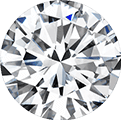
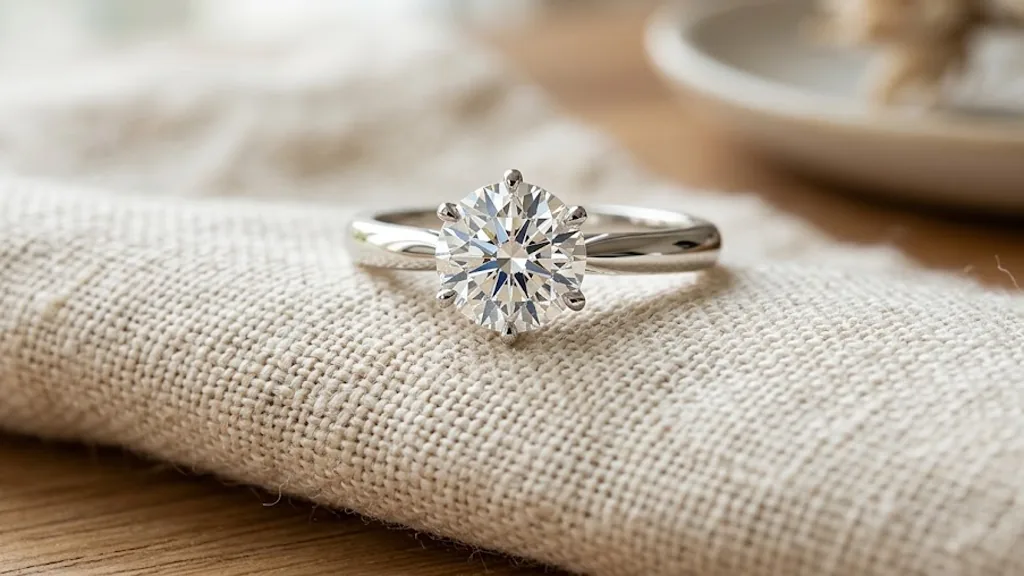
Because it is a weight, two one carat diamonds can look slightly different in size depending on how they are cut. A well-cut round one carat diamond usually measures around 6.4mm to 6.5mm across the top. A stone cut too deep can weigh a full carat but look smaller from above, because the weight is hidden underneath.
That is the first thing that affects price. You are not just buying weight. You are buying how much of that weight you can actually see.
What is a one carat round diamond worth?
“Cost” and “worth” are two different questions, and people usually ask them for two different reasons. Cost is what you pay in a shop. Worth is what the stone is genuinely delivering for that money — and what you could expect if you ever sold it.
Here is the plain version. A diamond is not an investment. Almost no diamond, natural or lab-grown, resells for what you paid, because the retail price includes the setting, the craftsmanship, the certification and the shop’s costs. Anyone who tells a first-time buyer that an engagement ring is a financial asset is selling, not advising.
What a one carat round is worth is this: it is the size at which a solitaire reads clearly as “an engagement ring” from across a table. That visual presence is the real value, and it is why the one carat mark carries a price premium of its own.
The carat threshold effect
Diamonds are priced in bands, and the bands jump at round numbers. A 0.90ct stone and a 1.00ct stone are almost impossible to tell apart on a hand — the difference is roughly a fifth of a millimetre across the top. But the 1.00ct will usually cost noticeably more, purely because it crosses the magic number.
This is a rule of thumb in the trade, not a statistic. If your budget is tight, asking for a 0.90ct to 0.95ct round is one of the few genuinely free wins in diamond buying.
Lab-grown versus natural: the real price gap
A lab-grown diamond is a real diamond. Same carbon, same crystal structure, same hardness, same sparkle. The only difference is where it formed — in a laboratory over a few weeks rather than underground over a very long time. A gemmologist needs specialist equipment to tell them apart; you cannot do it by eye, and neither can a jeweller with a loupe.
What differs enormously is the price. The following is general market guidance for the UK, not a quote, and prices move:
| What you are buying | Typical UK guidance range | Notes |
|---|---|---|
| 1ct round lab-grown, loose stone | Low hundreds of pounds | Prices have fallen steadily as growing capacity increased |
| 1ct round lab-grown, set in a finished gold ring | Several hundred to low thousands | Depends heavily on metal, setting style and side stones |
| 1ct round natural, loose stone | Low to mid thousands | Rises sharply with better colour and clarity |
| 1ct round natural, set in a finished gold ring | Mid thousands upwards | Same setting costs, far higher stone cost |
Treat those bands as guidance for orientation only. Always ask for a written price on the exact stone and setting you want.
The four things that move the price most
Beyond carat weight, four factors decide what you pay. Jewellers call them the 4Cs.
- Cut — how well the stone was shaped and polished. This is the one that controls sparkle. On a round diamond, never compromise here. An Excellent or Ideal cut grade is worth paying for.
- Colour — graded D (colourless) down through the alphabet. D, E and F look colourless. G and H look colourless once set, especially in white gold or platinum, and cost less.
- Clarity — how many tiny natural marks the stone contains. VS1, VS2 and many SI1 stones are “eye-clean”, meaning you cannot see anything without magnification. Paying for VVS or Flawless buys you a better certificate, not a better-looking ring.
- Certification — an independent lab report confirming the grades. Without one you are trusting a claim. We include a free IGI certificate on every centre stone, so you always have the grades in writing.
Where to spend and where to save
If you want the best-looking one carat round for your money, the trade rule of thumb is simple: spend on cut, save on colour and clarity. A G colour, VS2 clarity, Excellent cut round will out-sparkle a D colour, VVS1, Good cut round every single time — and cost less.
What our round rings actually cost
All of the below are hand-made in solid gold or platinum with lab-grown diamonds, and all prices are correct at the time of writing.
| Ring | Style | Price |
|---|---|---|
| Solitaire Round Cut Engagement Ring in White Gold | Classic single stone | £563 |
| Solitaire Round Cut Engagement Ring in Platinum | Single stone, platinum | £657 |
| Halo Round Cut Engagement Ring | Halo of small diamonds around the centre | £707 |
Notice the pattern. The plain solitaire is the cheapest way to put a round diamond on a hand. The platinum version costs more because platinum is a denser, more expensive metal and takes more work to finish. The halo costs more again because it adds a full circle of small stones — but a halo also makes the centre stone look larger, which is why it is such a popular way to stretch a budget.
You can see everything we hold in round in our round diamond collection, and browse the full range in engagement rings. Round is our deepest stock — around twenty designs.
Ways to get one carat presence for less
- Go just under a carat. A 0.90ct round looks the same on a hand and sits in a cheaper price band.
- Choose a halo. A ring of small diamonds around the centre adds visible width for far less than adding weight to the centre stone.
- Choose a thinner band. A slim shoulder makes the centre stone look bigger by contrast.
- Drop from D–F colour to G–H. In a white metal setting, the difference is invisible to almost everyone.
- Choose lab-grown. The single biggest saving available, with no visible compromise.
Frequently asked questions
How much does a 1 carat round diamond cost in the UK?
As guidance only: a loose one carat lab-grown round typically sits in the low hundreds of pounds, while a comparable natural stone typically runs into the low thousands. Set into a finished gold or platinum ring, expect the total to rise by the cost of the metal and the craftsmanship. Our own round engagement rings start at £563, correct at the time of writing.
What is a one carat round diamond worth if I sell it?
Considerably less than you paid, for both lab-grown and natural. Retail prices include the setting, the certification and the shop’s costs, none of which a buyer will pay again. Buy a ring because you want to wear it, not because you expect to sell it.
Is a 1 carat lab-grown diamond a real diamond?
Yes. It is chemically, physically and optically identical to a mined diamond. It is not a simulant like cubic zirconia or moissanite, which are different materials entirely. Every centre stone we sell comes with a free IGI certificate confirming exactly what it is.
How big does a one carat round actually look?
Around 6.4mm to 6.5mm across the top when well cut — roughly the width of a pencil. On a smaller finger it reads as generous; on a larger finger it reads as neat and classic.
Can you make a one carat round ring to my own design?
Yes. We hand-make bespoke rings in solid gold and platinum with no extra design cost — you pay for the materials and the making, not for the drawing. Tell us your budget and we will show you honestly what one carat looks like within it.
If you are weighing up a one carat round, the most useful thing you can do is see one on a hand rather than on a screen. Every order includes free insured UK delivery and 30 days to return it, so you can make that judgement in your own home rather than under shop lights.
More guides on this topic
Ready to find your perfect ring?
Explore our lab-grown diamond collection or book a virtual appointment with our team.