
Are All Round Diamonds Brilliant Cut? What “Round Brilliant” Really Means
Round is the outline, brilliant is the faceting. No, not all round diamonds are brilliant cut. Rose, single and old European explained.
“Round brilliant cut” is two separate pieces of information stuck together, and once you separate them the term stops being jargon.
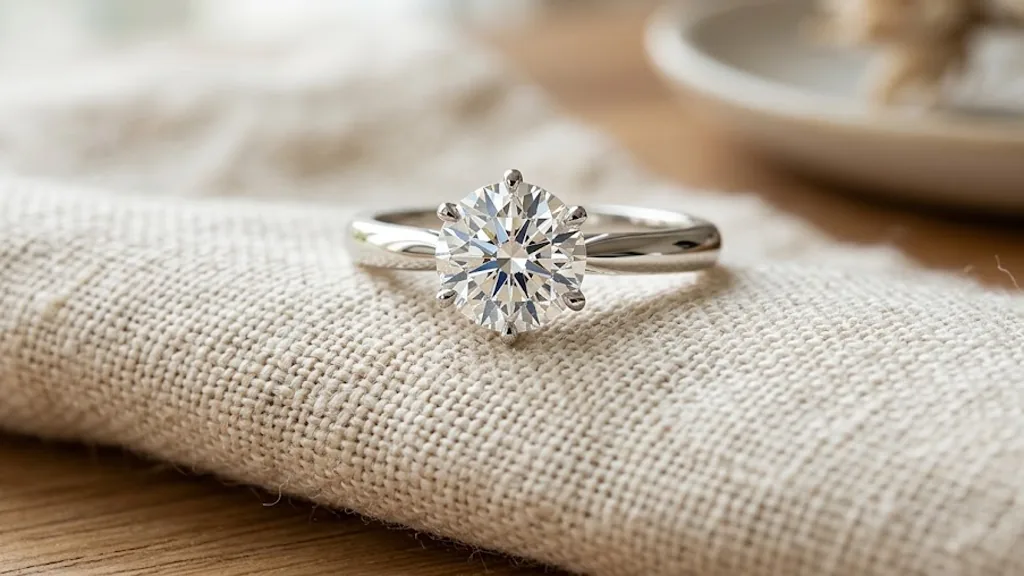
Round describes the outline — the shape you see looking down at the stone. Brilliant describes the faceting style — how the flat polished surfaces are arranged inside that outline. Put them together and you have a circular diamond cut with the triangular and kite-shaped facets designed to throw light straight back at your eye.
Which leads neatly to the second question people ask: if round and brilliant are two different things, are all round diamonds brilliant cut? No, they are not. Here is the full picture.
What “brilliant” means
Diamond faceting falls into two main families.
Brilliant cuts use triangular and kite-shaped facets radiating out from the centre. They are engineered to maximise light return — the crisp, white, fast sparkle most people picture when they think of a diamond. Round, oval, pear, marquise, heart, cushion and radiant are all brilliant cuts.
Step cuts use long, flat, parallel facets arranged in rows like steps, running round the stone. They produce slow, broad flashes like light moving across a hall of mirrors, rather than sparkle. Emerald, Asscher and baguette are step cuts.
So “brilliant” is not a compliment or a quality claim. It is a description of geometry. A badly cut brilliant is still a brilliant.
What “round brilliant cut” means precisely
A round brilliant has a circular outline and 57 facets — 58 if the stone has a culet, the small flat facet at the very bottom point. The facets are arranged in eight-fold symmetry, so every facet has seven identical siblings spaced evenly around the stone.
That arrangement traces back to Marcel Tolkowsky’s 1919 calculations of the angles that best return light to the viewer. It has been refined but not replaced in over a century. If you want the full breakdown of where those facets sit, we cover it in our guide to how many facets a round brilliant cut diamond has.
One practical consequence: the round brilliant is the only shape that grading laboratories give a full cut grade to. Because the ideal proportions are mathematically agreed, IGI and others can grade a round from Excellent down to Poor. For every other shape you get polish and symmetry grades and must judge the rest yourself. That is a genuine advantage of buying round — you have an objective quality number to lean on.
Are all round diamonds brilliant cut?
No. Round is an outline, and several different faceting styles fit inside it. Here are the ones you will actually encounter.
| Round cut style | Facets | Character | Where you see it |
|---|---|---|---|
| Round brilliant | 57 or 58 | Bright, crisp, fast sparkle | The overwhelming majority of modern round diamonds |
| Single cut | 17 or 18 | Gentle twinkle | Very small accent stones, antique watch dials |
| Rose cut | Usually 24 | Flat back, domed faceted top, soft glow | Antique and antique-inspired jewellery |
| Old European cut | 58 | Small table, high crown, open culet, candlelit glow | Georgian, Victorian and Edwardian pieces |
| Portuguese cut | Often 161 | Extremely busy, very fine glitter | Specialist and collector cutting |
| Briolette | Varies | Faceted all over, no flat back, drop-shaped | Pendants and earrings, historically |
The two that matter most to ordinary buyers are the rose cut and the old European cut, because both turn up in vintage-style engagement rings and both are round without being brilliant.
The rose cut
A rose cut has a completely flat back and a domed top faceted into triangles, like a rosebud about to open. There is no pavilion underneath to bounce light back, so it does not sparkle in the modern sense. It glows. It also sits very low on the finger, which some people love and others find underwhelming.
We do stock rose cuts. The Stackable Rose Cut Wedding Band in Sterling Silver (£489, correct at the time of writing) is the easiest way to see the difference for yourself — put it next to a round brilliant and the change in behaviour is immediate.
The old European cut
The direct ancestor of the modern round brilliant, cut by hand between roughly the 1890s and the 1930s. Round outline, 58 facets, but with a much smaller table, a taller crown and a visibly open culet that looks like a small hole at the centre. They were cut for candlelight and gaslight, and under those conditions they glow beautifully. Under LED downlights they look softer and sleepier than a modern round.
We do not stock old European cut stones. If that specific look is what you want, say so — we design bespoke pieces at no extra design cost and can source appropriately.
How to tell which one you are looking at
The certificate settles it. An IGI report has a shape and cutting style line, and it will say “Round Brilliant” in full rather than just “Round”. If it says “Rose Cut” or “Old European Cut”, you know.
Without a certificate, look down through the top of the stone. A round brilliant shows a large flat table with a clear eight-pointed pattern of reflections and comes to a point underneath. An old European cut shows a small table and a visible dark dot at the centre where the culet is. A rose cut has no table at all — the top comes to a low peak — and the back is completely flat.
Why the round brilliant became the default
Three reasons, and only one of them is about beauty.
- It is the brightest general-purpose cut. A century of optimisation has gone into those angles.
- It is the only shape with an objective cut grade, which makes it the safest thing to buy without seeing.
- It is the hardest shape to cut without waste. Turning an octahedral rough crystal into a circle throws away a large proportion of the material. That wastage is built into the price.
That last point is why rounds cost more per carat than almost any other shape. It is a rule of thumb in the trade rather than a fixed percentage, and lab-grown stones narrow the gap because the rough is grown to a planned shape rather than found in whatever form nature produced.
Round brilliant rings worth looking at
The cleanest way to appreciate the cut is a solitaire, where nothing else competes. Our Solitaire Round Cut Engagement Ring (£657) does exactly that, and the Solitaire Round Cut Engagement Ring in Rose Gold (£1,007) shows how warm metal changes the way a bright white stone reads.
If you want the brilliance spread across the whole ring rather than concentrated in one stone, the Twisted Round Cut Engagement Ring (£1,007) wraps small round brilliants around the band.
Round is by some distance our deepest category — browse the whole round cut collection, or see how it sits against other shapes in engagement rings. To translate carat weights into actual widths, use our round diamond size chart.
Frequently asked questions
Is “round cut” the same as “round brilliant cut”?
In everyday use, yes — when a jeweller says “round cut” they almost always mean a round brilliant. Strictly it is not the same, because rose cuts and old European cuts are also round. If it matters to you, ask for the cutting style line on the certificate.
Which diamond shape sparkles the most?
The round brilliant, if you mean bright white sparkle returned evenly from every angle. Other shapes can beat it for fire — the coloured flashes — or for drama under low light, but for sheer measured brightness the round is the benchmark.
Does a round brilliant hide inclusions well?
Better than a step cut does. The busy sparkle breaks up the view into the stone, so small inclusions are harder to spot. VS2 is usually a safe clarity for a round, and many SI1 stones are eye-clean once set.
Are lab-grown round brilliants cut the same way?
Identically. The same cutters, the same wheels, the same 57-facet geometry, the same grading process. A lab-grown round brilliant differs from a mined one only in where the carbon crystal came from.
Do you sell old European or princess cuts?
Not as stock pieces — neither shape is in our current collection. Both can be made as bespoke commissions, and we do not charge extra for the design work.
Choosing with your eyes open
Knowing that “round” and “brilliant” are two separate claims is genuinely useful when you are being sold to. Ask which faceting style you are looking at, ask for the cut grade if it is a round brilliant, and then decide on how the stone actually behaves in your hand.
Every centre stone we set comes with a free IGI certificate. Rings are hand-made in solid gold, platinum or sterling silver, delivered free and insured across the UK, with 30 days to change your mind.
More guides on this topic
Ready to find your perfect ring?
Explore our lab-grown diamond collection or book a virtual appointment with our team.











