What Does Ideal Cut Mean for a Diamond? And Which Cut Sparkles Most
Ideal cut explained in plain English: what the grade measures, why fancy shapes rarely get one, and which diamond cut sparkles most.
When people talk about a diamond being “ideal cut”, they are not talking about its shape. They are talking about how well it was cut — the angles, the proportions and the finish that decide how much light comes back out of the stone and hits your eye.
It is the one word on a certificate that has the biggest effect on how a diamond actually looks in daylight, and it is also the one most buyers skim past. Here is what it means in plain English, and how it links to the question everyone really wants answered: which cut sparkles the most?
What “ideal cut” actually means
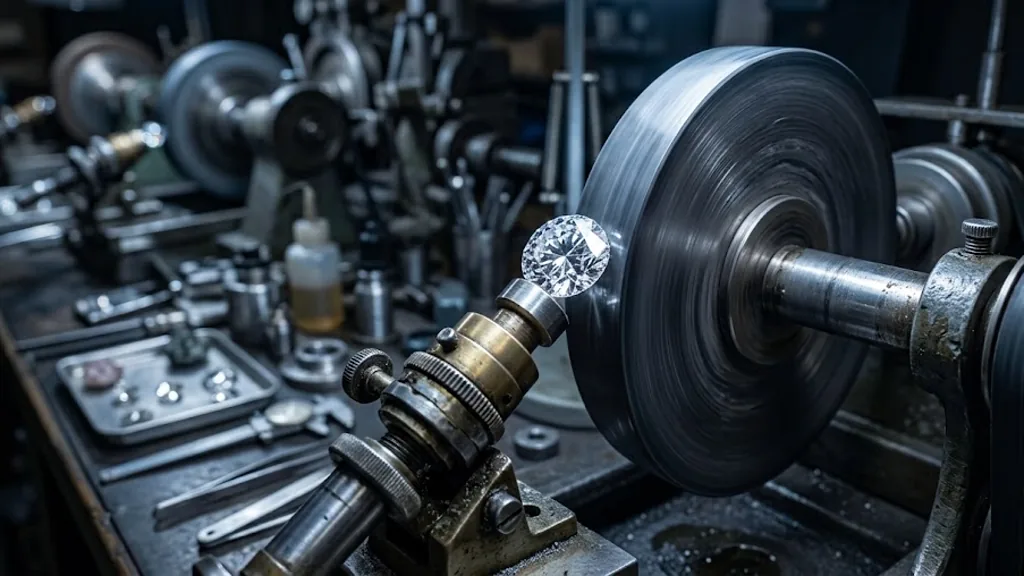
A diamond is cut with dozens of tiny flat surfaces called facets. Light enters through the top, bounces around inside, and comes back out. If the angles are right, almost all of that light returns to your eye and the diamond looks bright and lively. If the angles are too shallow or too deep, light leaks out of the bottom and the stone looks glassy, dull or dark in the centre.
“Ideal” is the top rung of the cut grade on a laboratory report. It means the cutter kept the proportions inside a narrow window that returns the most light. Nothing more mysterious than that.
Two things are worth knowing straight away. First, cut grade is not the same as shape — round, oval, pear and emerald are shapes. Second, different laboratories use slightly different words for the top grade, which is where most of the confusion comes from.
The cut grade scales, side by side
Every one of our centre stones comes with a free IGI certificate, so the IGI column is the one you will see on our reports.
| Laboratory | Top grade | Full scale |
|---|---|---|
| IGI | Ideal | Ideal, Excellent, Very Good, Good, Fair, Poor |
| GIA | Excellent | Excellent, Very Good, Good, Fair, Poor |
| AGS | Ideal (0) | 0 to 10, where 0 is Ideal |
So an IGI “Ideal” and a GIA “Excellent” sit in roughly the same place: the best band on that laboratory’s scale. A stone is not better simply because its report says the word “Ideal”. Always read the grade against the laboratory that issued it.
The proportions behind the grade
You do not need to memorise numbers, but it helps to know what the grader is measuring on a round brilliant.
| Measurement | What it is | Typical range in a top-graded round |
|---|---|---|
| Table | The big flat facet on top, as a percentage of the diamond’s width | About 54–57% |
| Total depth | Top to bottom height, as a percentage of the width | About 59–62.5% |
| Crown angle | The slope of the top section | About 34–35 degrees |
| Pavilion angle | The slope of the bottom section | About 40.6–41 degrees |
| Polish and symmetry | Surface finish and how evenly facets line up | Excellent or Very Good |
These are the ranges the trade works to, not a law of physics. A stone half a degree outside them can still be beautiful. Treat them as a guide, not a pass mark.
Why fancy shapes rarely get a cut grade
Here is something that catches people out. Look at a certificate for an oval, pear, marquise, emerald or cushion diamond and you will usually find no overall cut grade at all — just Polish and Symmetry.
That is not an oversight. The major laboratories only issue a full cut grade for round brilliants, because a round is a standardised shape that can be measured against one agreed model. Fancy shapes are cut to taste. A long, dramatic oval and a short, wide oval are both “correct”; they simply suit different people.
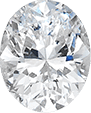
So when you are choosing a fancy shape, you judge cut quality with your eyes and with two numbers: the length-to-width ratio, and whether the stone shows a dark band across the middle (the trade calls this a bow tie). A little is normal. A heavy one is not.
Our Solitaire Oval Cut Engagement Ring is a good example of a balanced oval — long enough to flatter the finger without stretching so far that the centre goes dark.
Which diamond cut sparkles the most?
The round brilliant. It is not close, and it is not a matter of opinion.
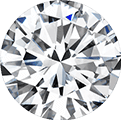
The round brilliant was designed, mathematically, for one job: to send the maximum amount of light straight back at the viewer. Its 57 or 58 facets are arranged specifically for that. Every other shape is a compromise between sparkle and some other quality — length, drama, a clean architectural look, or saving more of the original rough crystal.
Here is roughly how the popular shapes rank for pure fire and flash:
| Shape | Sparkle character | Best for |
|---|---|---|
| Round brilliant | Maximum — the benchmark | Anyone who wants the most light return |
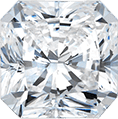
| Radiant | Very high, crushed-ice look | Sparkle in a squarish outline |
| Cushion | High, softer and warmer | A romantic, antique feel |
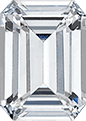
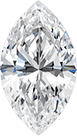
| Oval, pear, marquise | High, with long flashes | Looking larger for the carat weight |
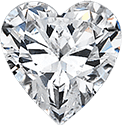
| Heart | High, needs careful cutting | A shape with obvious meaning |
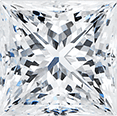
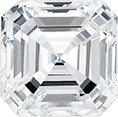
| Emerald, Asscher, baguette | Lower sparkle, broad mirror flashes | A clean, elegant, understated look |
| Rose cut | Soft glow rather than flash | Vintage character |
If sparkle is your priority, start with a well-cut round. Our Solitaire Round Cut Engagement Ring puts nothing between the stone and the light, and the Halo Round Cut Engagement Ring surrounds it with a ring of small diamonds so the whole head catches light from more angles. Both are priced at £657 and £707 respectively, correct at the time of writing.
Round is also where we hold the most choice — twenty round designs across the collection. You can see them all in the round diamond collection.
Is it worth paying for the top cut grade?
In our experience, yes — and it is the one place where trading up rewards you every single day.
Think of it this way. Colour and clarity are about what you cannot see: a faint tint, a tiny inclusion. Cut is about what you can see from across a room. A stone that is one colour grade lower but beautifully cut will look better than a whiter stone that leaks light.
A rule of thumb in the trade, not a measured figure: if your budget is stretched, drop a colour grade or a clarity grade before you drop a cut grade.
Because our diamonds are lab-grown, the top cut grades are far more reachable than they used to be. You are not paying a rarity premium on top of the cutting skill.
How to check cut quality yourself
You do not need a loupe. Try these three simple checks in ordinary indoor light, at arm’s length:
- Is the centre bright? A well-cut stone stays lively in the middle. A dark or glassy centre usually means light is leaking out of the bottom.
- Does it flash white and coloured light as you tilt it? White flashes are brilliance; coloured flashes are fire. You want both.
- Does it go dead in dim light? Every diamond dims in a dark room, but a good cut keeps working in a restaurant or an office.
Frequently asked questions
Is “ideal cut” the same as “excellent cut”?
Practically, yes — they are each laboratory’s top band. IGI calls it Ideal, GIA calls it Excellent. Compare the grade with the laboratory that issued it rather than assuming one word outranks the other.
Does every diamond get a cut grade?
No. Only round brilliants receive a full cut grade from the major laboratories. Ovals, pears, emeralds, cushions and other fancy shapes are given Polish and Symmetry grades instead. That is normal and not a warning sign.
Can a poorly cut diamond be fixed?
A skilled cutter can sometimes improve a stone by recutting it, but the diamond always loses weight in the process and the work is specialist. It is far cheaper to buy a well-cut stone in the first place.
Does cut matter more than carat?
For how the ring looks, usually yes. A well-cut smaller stone reads brighter and often looks larger than a heavier stone cut badly, because a good cut spreads the weight across the top of the diamond rather than hiding it in a deep belly.
Do lab-grown diamonds get the same cut grades?
They do. A lab-grown diamond is the same material as a mined one and is cut, polished and graded on exactly the same scales, by the same laboratories.
Where to start
If you take one thing from this, make it this: choose the cut first, then decide how far your budget stretches on the rest. Have a look through our engagement ring collection when you have a quiet ten minutes, and if you have a stone in mind that we do not have on the shelf, we design bespoke pieces at no extra design cost. Every centre stone comes with a free IGI certificate, delivery within the UK is free and insured, and you have 30 days to change your mind.
Ready to find your perfect ring?
Explore our lab-grown diamond collection or book a virtual appointment with our team.