
What Is a Step Cut Diamond?
Step cut diamonds - emerald, Asscher, baguette - use long mirror facets instead of sparkle. What they suit and the one rule for buying.
A step cut diamond is one whose facets are long, straight and parallel, arranged in rows that fall away from the table like a flight of stairs. That staircase is where the name comes from, and it is the only thing you need to remember to understand every step cut ever made.
Step cuts behave completely differently from the sparkly brilliant cuts most people picture when they think “diamond”. They are not a compromise or a cheaper option. They are a different idea about what a diamond should do.
Sparkle versus mirrors
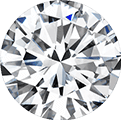
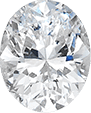
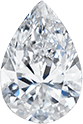
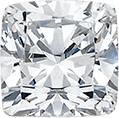
A brilliant cut — a round, an oval, a pear — is covered in dozens of small triangular and kite-shaped facets. Each one throws back a tiny flash. Together they produce that fine, fizzy sparkle with coloured glints.
A step cut does the opposite. It has fewer, much larger facets. Each acts as a broad mirror, and instead of hundreds of pinpoints you get long, clean flashes of white light that switch on and off as the stone moves. Jewellers call it the hall of mirrors effect.
The other consequence is that a step cut has a large, open table — the flat facet on top — and you can see straight down into the stone through it. A brilliant cut hides its interior behind all that sparkle. A step cut shows you everything.
| Brilliant cut | Step cut | |
|---|---|---|
| Facet shape | Many small triangles and kites | Few long parallel rectangles |
| Light effect | Fine, fizzy sparkle with coloured fire | Broad white flashes, mirror-like |
| Hides inclusions | Very well | Poorly — you see straight in |
| Hides colour tint | Well | Poorly — tint pools in the body |
| Overall impression | Lively, showy | Calm, architectural, understated |
The step cut shapes
Emerald cut
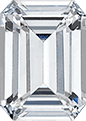
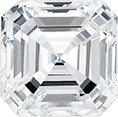
The best known of the family: a rectangle with the corners cut off, with rows of steps on the crown and the pavilion. It usually runs around fifty facets, arranged in a few broad rows rather than dozens of small ones.
Its long outline flatters the finger and makes it look generous for its carat weight. The cut corners are not decoration — they remove the fragile ninety-degree points that would otherwise be vulnerable to knocks, which makes an emerald cut one of the more practical shapes for daily wear.
The Solitaire Emerald Cut Engagement Ring at £672 is the cleanest expression of it we make, price correct at the time of writing. There are six emerald designs in the emerald cut collection in total.
Asscher cut
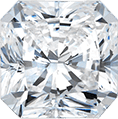
Think of an Asscher as a square emerald cut. It was developed by the Asscher family in Amsterdam in the early twentieth century and became a signature of the Art Deco period.
The clipped corners on a square outline create a distinctive pattern when you look down through the table — concentric squares drawing your eye into the centre of the stone, sometimes called the windmill. It is the most inward-looking of the step cuts, which is part of why it reads as quietly expensive.
The trade-off is size. Because the Asscher is cut deep and compact, it looks smaller for its carat weight than almost any other shape, as we set out in our guide to which diamond cut looks the smallest. We hold one Asscher design, the Stackable Asscher Cut Wedding Band in Yellow Gold at £1,416.
Baguette and the small step cuts
Baguettes are small, straight-sided rectangles, most often used in rows as side stones or along a band. Tapered baguettes narrow towards one end and are used to flank a centre stone.
Because they are set in rows, baguettes give jewellery a linear, geometric look that no round stone can produce. The Stackable Baguette Cut Half Eternity Band at £672 shows exactly that, and there are four baguette designs in the baguette cut collection.
One practical point: unlike emerald and Asscher cuts, a plain baguette keeps its sharp ninety-degree corners. That makes it slightly more vulnerable to chipping, which is why baguettes are usually channel-set or bezel-set with metal protecting the edges rather than held on exposed claws.
Lozenge, kite, trapezoid and the antique step cuts
These are the geometric shapes used to build patterns rather than to sit alone: diamond-shaped lozenges, triangular kites, trapezoids, and antique patterns such as the French cut and the carré. They are the vocabulary of Art Deco jewellery.
We hold lozenge cut designs in the collection, and if you like this look but want something less familiar than an emerald cut, it is well worth a look.
The one rule for buying a step cut
Spend on clarity, not on carat.
This is the single most useful piece of advice about step cuts, and the one people most often miss. Because you can see straight through that open table into the body of the stone, an inclusion that would vanish completely inside a round brilliant sits there in plain view inside an emerald cut.
The same goes for colour. A faint warm tint that a brilliant cut would break up and disguise pools visibly in the long, open body of a step cut.
A rule of thumb in the trade, not a measured figure: with a step cut, buy a grade or two higher on clarity and colour than you would for the same size of brilliant, and take the difference out of carat weight if you need to. A slightly smaller, visibly clean emerald cut looks far better than a larger one with a visible mark in the middle.
This is much easier to do than it used to be, because lab-grown diamonds make higher clarity and colour grades genuinely reachable rather than a luxury.
Who suits a step cut?
They are not for everyone, and it is better to know that before you buy than after.
- You will probably love a step cut if you like clean lines and simple design, you find brilliant cut sparkle a bit much, you are drawn to Art Deco or mid-century style, or you want a ring that looks considered rather than showy.
- You will probably not if sparkle is the whole point for you, or you want the maximum flash you can get for the money. In that case go round, and we would say so honestly.
There is also a reason step cuts photograph so well and get chosen so often by people who work with their hands or their eyes: they stay elegant in every light rather than flashing hard in some and going flat in others.
Frequently asked questions
Do step cut diamonds sparkle at all?
Yes, but as broad flashes of white light rather than fine glitter. Move an emerald cut under a lamp and you will see long mirror flashes switch on and off. It is a slower, calmer effect, not an absence of one.
Are step cuts cheaper than brilliant cuts?
Sometimes, for the same carat weight, because a step cut wastes less of the original rough crystal. But you generally need higher clarity and colour to make one look right, and that pushes the price back up. Compare finished rings rather than assuming.
What clarity should I choose for an emerald cut?
High enough that nothing is visible to your naked eye at normal viewing distance. With an open table there is nowhere for an inclusion to hide, so this matters far more than it does with a round.
Is an Asscher the same as an emerald cut?
Very nearly. An Asscher is essentially a square emerald cut with more pronounced clipped corners and a deeper, more inward-focused facet pattern. Same family, different proportions.
Are step cuts durable?
Emerald and Asscher cuts are among the more robust shapes, because the vulnerable corners have been cut away. Plain baguettes with square corners need a setting that protects those edges.
Have a look
If the step cut idea appeals, start with the emerald cut — it is the most wearable of the family and the one we hold the most of. If you would like to see how it compares with everything else, our guide to the types of diamond cuts lays out the whole picture.
Otherwise, browse the engagement ring collection or the wedding ring collection at your leisure. Everything is hand-made in solid gold or platinum, every centre stone comes with a free IGI certificate, UK delivery is free and insured, and you have 30 days to change your mind.
Ready to find your perfect ring?
Explore our lab-grown diamond collection or book a virtual appointment with our team.