SI3 Diamond Clarity: Is It a Real Grade and Is It Good Enough?
SI3 is not on the official IGI or GIA clarity scale. Here is what the grade really means, where it came from, and how to judge one.
Before anything else, the correction that matters: SI3 is not an official diamond clarity grade. It does not appear on the standard clarity scale used by IGI or GIA. If you have been shown a diamond described as SI3, you are looking at a trade term, not a laboratory grade.
That does not automatically make it a bad diamond. But it does change how carefully you need to look. Here is what SI3 really is, where it came from, and how to judge a stone that carries the label.
The official scale has no SI3
The recognised clarity scale runs to eleven grades, and this is the complete list:
| Family | Grades | Plain meaning |
|---|---|---|
| Flawless | FL, IF | Nothing findable, or surface marks only |
| Very Very Slightly Included | VVS1, VVS2 | Extremely hard to find at 10x |
| Very Slightly Included | VS1, VS2 | Hard to find at 10x |
| Slightly Included | SI1, SI2 | Noticeable at 10x, often eye-clean |
| Included | I1, I2, I3 | Visible without magnification |
There is no SI3 anywhere in that list. The Slightly Included family stops at SI2, and the next step down is I1.
So where did SI3 come from?
SI3 was introduced by other grading laboratories — most notably EGL — to describe stones that sit in the gap between SI2 and I1. The reasoning was that this gap is wide, and that a stone at the top of it looks meaningfully better than one at the bottom.
There is a fair argument in that. The jump from SI2 to I1 is the largest single step on the whole scale in terms of how the diamond actually looks, because it is the point where inclusions cross from “a grader can see them” to “anybody can see them”.
The problem is commercial rather than gemmological. Once a grade exists outside the main scale, it becomes a way of making a stone sound better than the standard scale would rate it. A diamond sold as SI3 would, on an IGI or GIA report, most often come back as I1, and sometimes as a weak SI2.
What an SI3 stone typically looks like
Expect inclusions that are visible if you look at the diamond closely and know what you are looking for. Whether they bother you depends on three things:
- Type. A white or transparent crystal is far more forgiving than a black carbon spot of the same size. Black inclusions read as a dot against the sparkle and catch the eye immediately.
- Position. An inclusion under the table facet, dead centre, sits where you always look. The same inclusion near the girdle can be hidden entirely by a prong or a bezel rim.
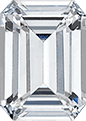
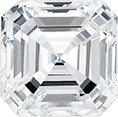
- Shape of the cut. A round brilliant scatters light and hides a lot. An emerald or Asscher cut hides nothing at all.
Should you buy one?
Our honest position is this: you do not need to go anywhere near the bottom of the clarity scale to buy well, particularly with lab-grown diamonds. The prices at VS2 and SI1 are already accessible enough that stretching down to a disputed grade to save a little more is a poor trade.
A well-cut, eye-clean SI1 in a minimalist round cut engagement ring at £587 (correct at the time of writing) gives you a clean stone with an honest certificate. That is a better place to spend than a marginally larger stone with a grade that no major laboratory recognises.
If your priority is getting the most visible ring for the money, there are much better levers to pull than clarity:
- Choose an elongated shape. Marquise, pear and oval shapes cover more finger area than a round of the same carat weight. A solitaire marquise cut engagement ring is a good example of getting visual size without paying for it in carats.
- Use a design with multiple stones. A cluster or side-stone ring reads as larger overall than a single stone at the same total budget.
- Drop a colour grade instead. In yellow or rose gold especially, a warmer colour grade costs less and is genuinely invisible once the stone is set.
How to check any clarity claim
The test is simple and takes two minutes:
- Ask which laboratory graded the stone, and for the report number.
- Look the number up on that laboratory’s own website — IGI and GIA both have free public report lookups.
- Check that the grade on the website matches the grade on the listing.
If the answer is “our own in-house grading” or there is no report number, treat the clarity as a seller’s opinion. That is not necessarily dishonest, but it is not independent either.
Every centre stone we set at CarbonstoneUK comes with a free IGI certificate, so the grade you are quoted is one you can verify yourself.
What we do and do not stock
We do not sell SI3-graded stones, because we only work with the standard IGI scale. If a listing says SI1, that is an IGI SI1.
If you want a specific clarity, colour and carat combination that is not on a listing, tell us. We source to specification and design bespoke pieces at no extra design cost.
Frequently asked questions
Is SI3 the same as I1?
In most cases an SI3 stone regraded by IGI or GIA would come back as I1. Some sit at the very bottom of SI2. There is no fixed conversion, because SI3 is not a defined point on the standard scale.
Is an SI3 diamond a fake?
No. The stone is a real diamond. It is the grading terminology that is non-standard, not the material. Judge the stone on its own appearance and on any report you can independently verify.
Are SI3 diamonds less durable?
Possibly, but not because of the label. Durability becomes a genuine concern when a stone contains a large feather — an internal fracture — that reaches the surface, especially near a corner or a thin girdle. Ask specifically about that rather than relying on the grade.
What is the lowest clarity grade worth buying?
For a centre stone in a brilliant shape, SI1 is a sensible floor and is usually eye-clean. For an emerald, Asscher or baguette cut, we would not go below VS2. For tiny accent stones set in a band, clarity barely registers at all — a stackable round cut full eternity band looks the same whether its stones are VS or SI.
Why do laboratories disagree about grades?
Clarity grading involves human judgement, so a one-grade difference between two laboratories on the same stone is normal and not evidence of anything wrong. Larger differences usually mean the two laboratories apply different standards, which is precisely why buyers stick to the well-known ones.
Where to look next
If you want the full picture on how the scale works, read our guide to diamond clarity grades from FL to I3.
Or start from the rings themselves — the engagement ring collection and the round brilliant range are the two most useful places to begin. All hand-made in solid gold and platinum in North Harrow, London, with free insured UK delivery and 30-day returns.
Ready to find your perfect ring?
Explore our lab-grown diamond collection or book a virtual appointment with our team.