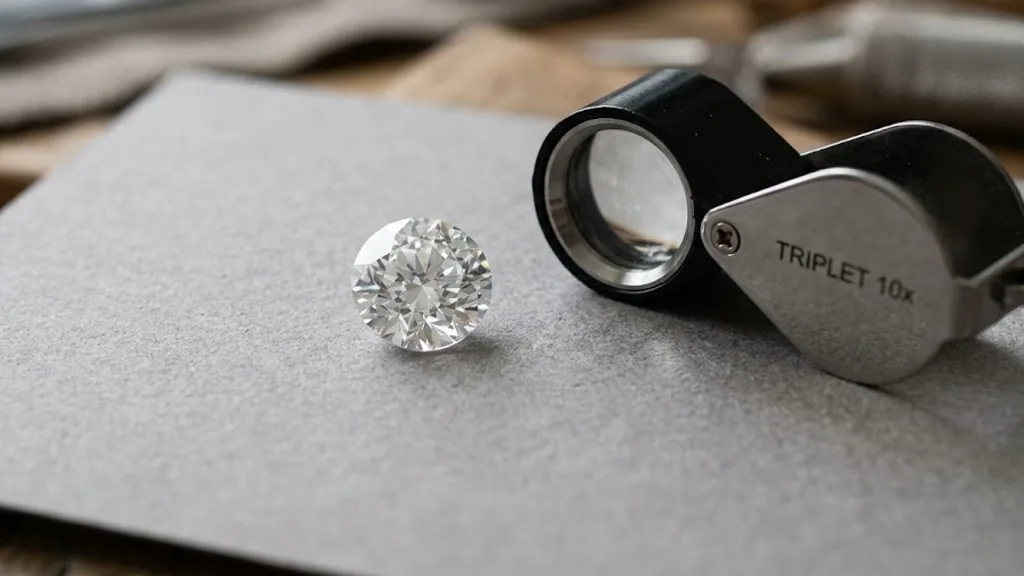
Clarity Enhanced Diamonds: What They Are, How to Spot One, and Whether They Last
Fracture filling and laser drilling explained: how to identify a treated diamond, whether the treatment lasts, and what it does to value.
If you have been shopping around and found a diamond that looks far too cheap for its stated clarity, there is a good chance the word “enhanced” appears somewhere in the description. It is a genuinely important thing to understand before you spend money, because a clarity-enhanced diamond is not the same product as an untreated one — and it does not behave the same way over a lifetime.
We should say plainly at the start: we do not sell clarity-enhanced diamonds. Every diamond we set is an untreated lab-grown stone with a free IGI certificate. This guide exists so you can recognise a treated stone when you meet one elsewhere, not to sell you one.
What “clarity enhanced” actually means
Clarity enhancement is a treatment applied to a diamond after it has been cut, to make its internal flaws less visible. The diamond is not made cleaner. The flaws are made harder to see.
There are two main methods, and they are very different from one another.
Fracture filling
Diamonds often contain feathers — internal fractures that look like tiny cracks. When a feather reaches the surface, a treater can force a molten glass-like substance into it under heat and pressure. The filler has a light-bending property close to that of diamond, so the fracture more or less disappears to the eye.
It is a cosmetic fix. The fracture is still there, now filled with glass.
Laser drilling
Some inclusions are dark — a speck of black carbon or a mineral crystal that reads as a full stop inside the stone. A laser burns a microscopic tunnel down to the inclusion, and acid is then used to bleach or dissolve it, leaving a far less visible white or empty spot.
The tunnel itself is permanent, but it is extremely fine and usually far less noticeable than the dark speck it replaced. Sometimes the resulting channel is then fracture-filled as well.
What about colour enhancement?
Colour treatments are a separate family and often get lumped in with clarity work under the vague heading “enhanced”.
| Treatment | What it does | Is it permanent? |
|---|---|---|
| Fracture filling | Hides surface-reaching fractures | No — can be damaged or removed |
| Laser drilling | Removes or lightens dark inclusions | Yes |
| HPHT colour treatment | Removes brown tint from certain diamonds, making them whiter | Yes |
| Irradiation | Turns a diamond a fancy colour such as blue or green | Generally yes, but can shift with heat |
| Surface coating | A thin film that alters apparent colour | No — wears off |
One point of honesty that matters for lab-grown buyers specifically: some lab-grown diamonds do receive a post-growth HPHT treatment to improve their colour. This is a legitimate, permanent, stable process — quite unlike fracture filling — and it should be disclosed on the certificate. If you are buying lab-grown, read the treatment line on the report rather than assuming.
How to tell if a diamond is clarity enhanced
There are four practical checks, in order of how easy they are.
1. Read the certificate
This is the reliable one. A reputable laboratory report has a treatment or comments section, and fracture filling and laser drilling are disclosed there in plain terms.
Worth knowing: GIA will not issue a full grading report for a fracture-filled diamond, because the filling is not permanent and any clarity grade would be temporary. If a seller says a fracture-filled stone is GIA graded, something is wrong with the story. IGI does identify and disclose treatments on its reports.
A stone with no certificate at all, sold cheaply, with a clarity grade quoted only by the seller, deserves real caution.
2. Look for the flash effect
This is the classic identification trick for fracture filling. Under magnification, tilt the diamond slowly and watch the filled fracture. As the angle changes, the filler flashes a distinct colour — often orange or yellow one way, and blue, purple or pink the other.
Natural inclusions do not do this. Any competent jeweller can show it to you in under a minute.
3. Look for drill holes
Under 10x magnification a laser channel looks like a fine straight tunnel or a line of tiny bubbles running from the surface towards an inclusion. Once you know to look for a perfectly straight line, it is quite recognisable — nothing in nature grows that straight.
4. Notice the price
Not proof, but a strong hint. A treated stone will be priced well below what its stated grade would normally command. If a VS1 is a fraction of the going rate for a VS1, ask why in writing.
In the UK, a treatment must be disclosed to you before purchase. A seller who avoids answering a direct written question about treatment has told you the answer.
Do clarity enhanced diamonds last?
Laser-drilled diamonds: yes. The drilling is permanent, the diamond is still a diamond, and normal wear, cleaning and repair will not undo it.
Fracture-filled diamonds: this is where the real problem sits. The filler is not diamond, and it does not survive everything diamond survives.
- Heat. A jeweller’s torch during resizing, retipping a claw or any repair can damage or drive out the filling. Many jewellers will refuse repair work on a filled stone, or insist on removing it first.
- Ultrasonic and steam cleaning. The routine cleaning most jewellers offer for free can degrade the filling.
- Acids and harsh chemicals. Standard pickling solutions used in workshops will attack it.
- Time and knocks. Filling can gradually cloud or shrink back, and the fracture reappears.
The practical consequence is a ring that needs to be treated as fragile forever, and a jeweller who must be warned before touching it. For an engagement ring meant to be worn every day for decades, that is a significant thing to sign up for.
Do clarity enhanced diamonds hold their value?
Poorly, and we would rather say that clearly than dance around it.
Treated stones sell for meaningfully less than comparable untreated ones when new, and the gap widens on resale. Many dealers will not buy fracture-filled goods at all, and auction houses generally decline them. Because the grade depends on a treatment that can be undone, there is no settled market to price against.
We will not quote you a percentage, because no honest source publishes a reliable one. The direction of travel is what matters: down, and further down than untreated diamonds.
It is worth being realistic about the wider point too. Diamonds of any kind, natural or lab-grown, are bought to be worn rather than as investments, and retail resale rarely flatters anybody. But a fracture-filled stone starts that conversation from a considerably worse position.
The honest alternative
Clarity enhancement exists to solve a specific problem: a heavily included natural diamond that is difficult to sell at its true grade. It made more commercial sense in a market where clean natural stones were scarce and expensive.
Lab-grown diamonds address the same problem from the other end. Because they are grown in controlled conditions, genuinely clean stones are far more available, and an untreated VS-clarity diamond costs a fraction of what the natural equivalent would. There is simply less reason to hide a flaw when you can afford a stone that does not have one.
Everything we make uses untreated lab-grown diamonds with a free IGI certificate on the centre stone — a Solitaire Round Cut Engagement Ring in White Gold or a Solitaire Oval Cut Engagement Ring gives you a clean stone you can send for repair, resizing or ultrasonic cleaning without a second thought. If you prefer a lot of small diamonds to one large one, something like the Stackable Round Cut Full Eternity Band spreads the light without any treatment involved.
How to spot an enhanced diamond in a listing
Sellers who treat stones are expected to disclose it, but the language is often soft. Watch for:
- The phrases “clarity enhanced”, “CE”, “fracture filled”, “glass filled” or “treated”
- A clarity grade of I1 to I3 paired with a photograph that looks perfectly clean
- A price that is dramatically below everything comparable
- Care instructions warning against ultrasonic cleaning or heat
- No independent laboratory report, or a report from a name you cannot verify
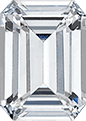
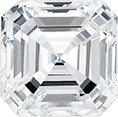
If you are buying a step cut such as an emerald or an asscher, treatment matters even more. Those long open facets act like a window into the stone, so both inclusions and any filler are easier to notice than in a brilliant cut.
The balanced picture, for and against
“Bad” is the wrong word for clarity enhancement. Dishonestly sold is bad. Sold clearly, at a price that reflects the treatment, to a buyer who understands the trade-off, it is a legitimate product. Here is the balance.
| In favour | Against |
|---|---|
| Much cheaper for a given face-up appearance | Treatment can be damaged by heat, ultrasonic cleaning or chemicals |
| It is a genuine diamond, not a simulant | Resale value is low, and some buyers refuse them outright |
| You can get a larger stone for the same budget | Major laboratories will not issue a standard clarity grade for a fracture-filled stone |
| Laser drilling is stable and permanent | You must disclose the treatment to any jeweller doing repairs |
| The underlying stone is genuinely low clarity |
Frequently asked questions
Are clarity enhanced diamonds real diamonds?
Yes. The stone is a genuine diamond that has had a treatment applied. It is not a simulant like cubic zirconia or moissanite. The issue is disclosure and durability, not authenticity.
Can a jeweller remove the filling?
Yes, and sometimes they must before working on the ring. Once removed, the original fracture becomes visible again and the stone reverts to its true, lower clarity grade.
Can a clarity enhanced diamond be re-treated?
It can be re-filled by a specialist, and some sellers offer a lifetime re-treatment policy. That policy is worth reading closely, because it depends on that company still trading in ten or twenty years.
Are lab-grown diamonds clarity enhanced?
They should not be, and ours are not. Fracture filling is a treatment aimed at heavily included natural goods. Some lab-grown stones do receive post-growth HPHT colour treatment, which is permanent and stable and must be disclosed on the certificate — a different thing entirely.
How can I be certain a diamond is untreated?
Buy one with a certificate from a recognised laboratory and read the treatment and comments lines. That is the only genuine certainty, and it is why we include an IGI certificate on every centre stone as standard rather than charging for it.
Can I have a clarity enhanced ring resized?
Only if you tell the jeweller first. Many will decline, and those who accept will normally remove the stone before applying any heat. Never send an enhanced ring for repair without disclosing the treatment.
Buying with your eyes open
Clarity enhancement is not a scam when it is disclosed. It becomes one when it is not, and the low price that first attracted you turns out to be the price of a stone that cannot be repaired normally and cannot be resold easily.
If you would rather skip the whole question, have a look through our engagement ring collection or the wedding rings. Everything is hand-made in solid gold or platinum in North Harrow, with free insured UK delivery, 30-day returns, and bespoke design at no extra design cost if you want something we do not list.
More guides on this topic
Ready to find your perfect ring?
Explore our lab-grown diamond collection or book a virtual appointment with our team.