What Do Diamond Colour and Clarity Mean? The 4Cs in Plain English
What diamond colour and clarity actually measure, how laboratories rate them, and how to read the two grades together.
Colour and clarity are two of the four grades on every diamond certificate. Colour describes how close to colourless the stone is. Clarity describes how free it is of tiny natural features formed while the crystal grew.
Both are graded by trained people at independent laboratories, not by the shop selling you the ring — and both are easy to misread if nobody explains the scales. This guide explains what each grade means, how the grading is actually done, and how to read the two together.
The four grades in one paragraph
Diamonds are described by four measures, always called the 4Cs: carat (weight), colour (how colourless), clarity (how free of inclusions), and cut (how well the facets are proportioned). Carat is a measurement. Cut, colour and clarity are all judgements made against defined standards.
Of the four, cut is the one that decides how much the diamond sparkles. Colour and clarity decide how the material itself is described. Carat decides how big it is. All four go on the certificate.
What diamond colour means
Colour on a standard certificate is not about coloured diamonds. It measures the absence of colour — specifically, how much faint yellow or brown tint a stone carries.
The scale starts at D and runs through the alphabet to Z. It begins at D rather than A deliberately, to make a clean break from older, inconsistent grading systems that had used A, B and C.
| Range | Name | What you would see |
|---|---|---|
| D, E, F | Colourless | No tint at all, even to a trained eye under grading conditions |
| G, H, I, J | Near colourless | Face-up in a ring, looks white. Tint only visible against a reference stone |
| K, L, M | Faint | A gentle warmth, which many people like in yellow or rose gold |
| N to R | Very light | Warmth clearly visible face-up |
| S to Z | Light | Obvious yellow or brown |
Most engagement ring buyers sit somewhere in the D to J range. Where exactly depends heavily on the metal — a G looks bright in platinum, while a K looks perfectly natural in yellow gold and costs much less.
What diamond clarity means
As a diamond crystal grows, small features get trapped inside. These are inclusions. Marks on the polished outside surface are blemishes. Clarity is a grader’s assessment of how many there are, how large, where they sit and how visible they are.
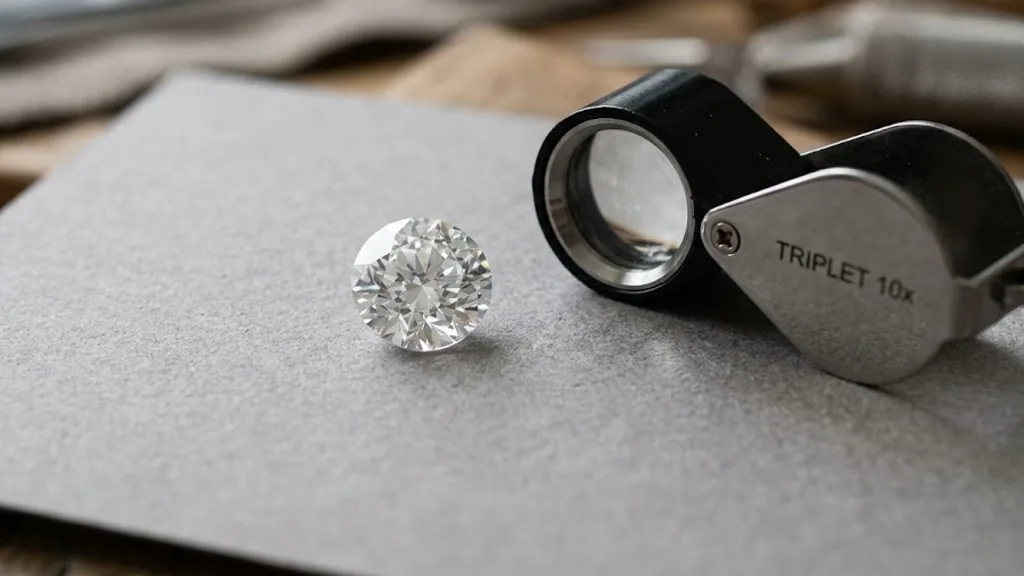
The critical detail: clarity is graded at ten times magnification, not by eye. That single fact explains why grades sound worse than they look.
| Grade | Full name | In practice |
|---|---|---|
| FL | Flawless | Nothing findable inside or out at 10x |
| IF | Internally Flawless | Clean inside, faint surface mark only |
| VVS1 / VVS2 | Very Very Slightly Included | A grader has to hunt. Invisible to you |
| VS1 / VS2 | Very Slightly Included | Found without much trouble at 10x. Eye-clean |
| SI1 / SI2 | Slightly Included | Clear at 10x. SI1 usually eye-clean, SI2 varies |
| I1 / I2 / I3 | Included | Visible without magnification |
How the grading is actually done
Both grades are assigned by a laboratory rather than a retailer, and the methods are quite different from each other.
Grading colour
The diamond is placed face-down in a white tray under standardised daylight-equivalent lighting, and compared against a set of master stones of known grade. Face-down matters — viewed from the top, a diamond’s own sparkle masks its body colour, so graders look through the side of the stone where the tint is most honest.
Because grading looks at the stone from an angle you will never see it from once it is set, a colour grade is a technical description rather than a prediction of how the ring will look on a hand.
Grading clarity
The stone is cleaned, then examined under a microscope with light directed from the side — a technique called darkfield illumination, which makes inclusions stand out against a dark background. Anything found is verified with a 10x loupe, because 10x is the official standard.
The grader weighs five things: size, number, position, nature (what type it is) and relief (how strongly it contrasts against the diamond). Relief is why a black crystal costs a stone more grades than a colourless one of identical size.
Independent agreement
At the major laboratories, several graders examine each stone separately, without seeing each other’s conclusions, and the grade is only issued once they agree. That independent cross-check is what makes a laboratory report meaningfully different from a seller’s own description.
Every centre stone we set comes with a free IGI certificate, so the colour and clarity you are quoted have been through that process.
Reading the two together
The grades interact, and knowing how saves real money.
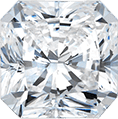
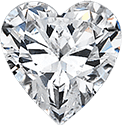
- Brilliant cuts hide clarity, show colour. Round, cushion, oval, pear and radiant shapes scatter light across dozens of facets, which conceals inclusions well. That same scattering concentrates any tint, so colour is the grade to watch. A three stone cushion cut engagement ring is a good example: the brilliant faceting will forgive an SI1 easily.
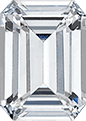
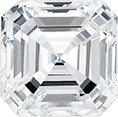
- Step cuts show clarity, hide colour. Emerald, Asscher and baguette shapes give clean flashes rather than sparkle, so inclusions have nowhere to go. Buy clarity here and relax on colour.
- Warm metals forgive colour. Yellow and rose gold surround the stone with warmth, so a lower colour grade looks intentional rather than compromised. In a curved pear cut bridal set, the metal choice will change what colour grade suits it more than any other factor.
- Small stones need neither. Pavé, halo and eternity band stones are too small for either grade to register. Setting quality matters far more. A solitaire hexagon cut engagement ring puts all the attention on one stone, which is where your grades should go.
Do lab-grown diamonds use the same system?
Yes, entirely. The same D-to-Z colour scale, the same eleven-point clarity scale, the same five factors, the same laboratories, the same independent agreement between graders. A lab-grown VS1 has met exactly the same requirement as a mined VS1.
The report itself will state that the stone is laboratory-grown, which is a disclosure requirement rather than a different standard.
Frequently asked questions
Which is graded more strictly, colour or clarity?
Neither is stricter, but colour is graded closer to how you will see the stone. Colour is judged with the naked eye against master stones; clarity is judged under a microscope. That is why a modest clarity grade is often invisible while a modest colour grade may not be.
What do the letters and numbers actually stand for?
Colour letters run D to Z with no words behind them — they are simply positions on a scale. Clarity codes are abbreviations: FL is Flawless, IF Internally Flawless, VVS Very Very Slightly Included, VS Very Slightly Included, SI Slightly Included, I Included. The numbers after them, such as VS1 and VS2, split each family into a better and a lesser half.
Are colour and clarity the most important grades?
No. Cut is the grade that creates sparkle, and it deserves your budget first. Colour and clarity describe the material; cut determines what the material does with light.
Can I trust a colour or clarity grade with no laboratory named?
Treat it as an opinion. Ask which laboratory issued the report and for the report number, then check it on that laboratory’s own public lookup. If there is no report, the grades are the seller’s description rather than an independent assessment.
Do these grades ever change?
Colour and clarity are properties of the crystal and are permanent. What can change is the surface, through wear — scratches and softened facet edges build up on any diamond over years and are restored by a professional clean and polish.
Putting it into practice
Pick your shape, then your metal, then set your colour and clarity around those two decisions rather than in the abstract. That is how the grades were designed to be used.
Our guides to the full clarity scale and balancing colour against clarity go deeper on each. When you want to look at rings, the engagement ring collection and the wedding ring range are the places to start — all hand-made in solid gold and platinum in North Harrow, London, with free insured UK delivery and 30-day returns.
Ready to find your perfect ring?
Explore our lab-grown diamond collection or book a virtual appointment with our team.