What Colour and Clarity Diamond Should I Buy?
G colour and VS2 clarity suits most rings. How to adjust that for your shape, metal and carat weight, with three worked examples.
For most people, the answer is simpler than the industry makes it sound: G colour and VS2 clarity, with an excellent cut. That combination looks white, looks clean, and stops short of the grades that only a laboratory can tell apart.
But “most people” is not everyone, and the right answer shifts with your shape, your metal and your size. Here is how to land on the combination that suits your ring specifically.
The two scales, briefly
Colour runs from D to Z and describes the faint body tint of the stone. D is completely colourless; a gentle warmth builds as you move down the alphabet.
| Grades | Band | In a finished ring |
|---|---|---|
| D, E, F | Colourless | No tint at all |
| G, H, I, J | Near colourless | Reads as white; warmth shows only in direct comparison |
| K, L, M | Faint | Visible warmth to many people |
| N to Z | Very light to light | Clearly tinted |
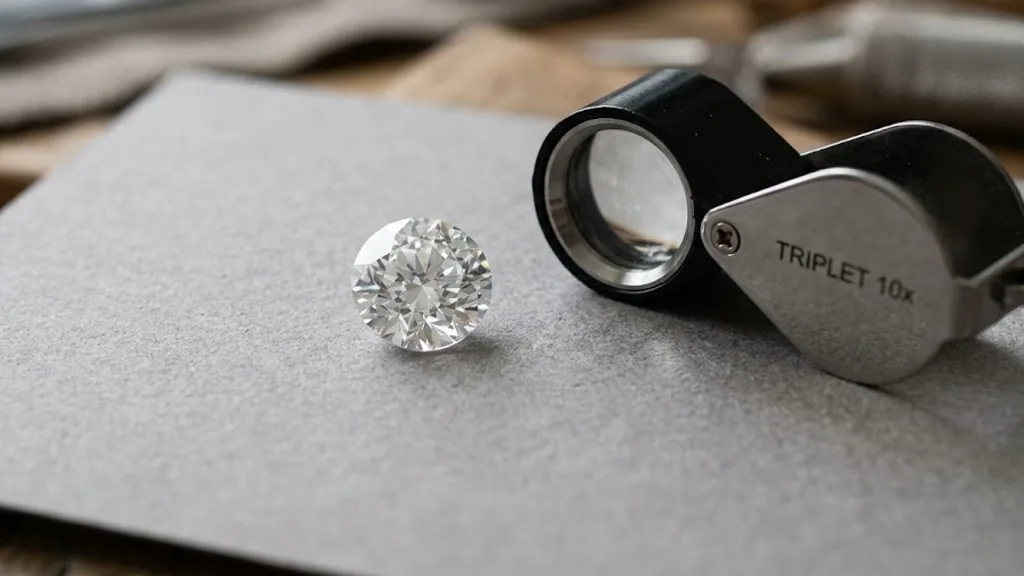
Clarity runs from FL to I3 and describes tiny features inside and on the surface, judged under 10x magnification.
| Grades | Band | To the naked eye |
|---|---|---|
| FL, IF | Flawless / Internally Flawless | Clean |
| VVS1, VVS2 | Very, very slightly included | Clean |
| VS1, VS2 | Very slightly included | Clean in almost every case |
| SI1, SI2 | Slightly included | SI1 usually clean; SI2 sometimes visible |
| I1, I2, I3 | Included | Visible; brightness can suffer |
Before either: get the cut right
Neither colour nor clarity creates sparkle. Cut does — the angles and proportions that decide whether light entering the top of the diamond returns to your eye or leaks out of the base.
A stone cut too deep goes dark in the middle. Cut too shallow, it looks watery and flat. No grade on any other scale fixes that. So the first line of your budget goes on cut, and the colour and clarity choice happens with whatever is left.
The recommendations, shape by shape
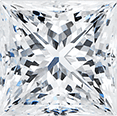
Different cutting styles hide or reveal what is inside the stone, which is what really drives the answer.
| Shape | Colour | Clarity | Why |
|---|---|---|---|
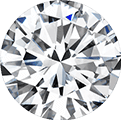
| Round brilliant | G-H | SI1-VS2 | The busiest facet pattern of all. Hides both colour and inclusions superbly |
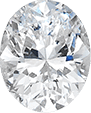
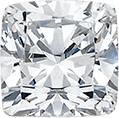
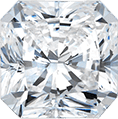
| Oval, cushion, radiant | G-H | VS2 | Brilliant-style facets, very forgiving |
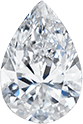
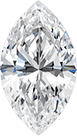
| Pear, marquise | F-G | VS2 | Elongated outlines can concentrate a little warmth at the points |
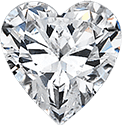
| Heart | G | VS2 | Brilliant faceting, but the cleft area rewards a cleaner stone |
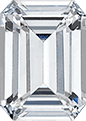
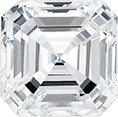
| Emerald, asscher, baguette | F-G | VS1 | Open step-cut facets act like windows and show everything |
| Hexagon, rose cut and other open cuts | F-G | VS1 | Fewer, larger facets mean less to hide behind |
Our Solitaire Hexagon Cut Engagement Ring, at £1,078 correct at the time of writing, is a good example of an open geometric cut where a cleaner grade shows its value. At the other end, our Three Stone Cushion Cut Engagement Ring, at £957 correct at the time of writing, uses soft brilliant-style faceting that is far more forgiving.
Now adjust for your metal
This is the adjustment buyers most often miss, and it can be worth a whole colour grade in either direction.
- Platinum or white gold. A cool, bright background sits right beside the stone and gives your eye a white reference. Stick to the colour grades in the table above.
- Yellow gold. Warm reflections wash gently into the diamond from all sides. You can drop one or two colour grades — H, I or even J looks perfectly white — and put the saving into size or cut.
- Rose gold. The warmest background of the three, and the most forgiving on colour of all.
Now adjust for size
Both scales become less forgiving as the stone gets larger, because there is more material for colour to build through and more interior for the eye to explore.
- Under 1 carat: you can comfortably take the lower end of every range above.
- 1 to 2 carats: the recommendations in the table are aimed squarely at this range.
- Over 2 carats: step up one grade on both scales. F-G colour and VS1 clarity is a sensible target.
- Accent stones: ignore all of this. The tiny diamonds in a pavé band or halo are far too small for anyone to see into, and paying for high grades in them buys nothing visible.
Three worked examples
A classic solitaire, around one carat, in platinum
Round brilliant, excellent cut, G colour, VS2 clarity. This is the default for a reason. The stone reads white against a bright white metal and shows nothing to the eye. Going to F or VS1 changes the certificate and nothing else.
A yellow gold ring where size matters most
Round or oval brilliant, excellent cut, I colour, SI1 clarity, with the plot checked to confirm nothing dark sits under the table. The yellow metal masks the colour completely and the facet pattern hides the inclusions. Every pound saved goes into carat weight, and that is the difference you will actually see.
A two carat emerald cut in white gold
Step cut, excellent polish and symmetry, F colour, VS1 clarity. Here the higher grades genuinely earn their money: the long open facets show both colour and inclusions honestly, and the size magnifies both.
A checklist for the moment you buy
- Confirm the stone is certified. IGI or GIA. Every centre stone we set comes with a free IGI certificate.
- Check the cut, polish and symmetry grades first. These decide how the diamond behaves.
- Read the plot. An inclusion near the girdle is often hidden by a claw; one under the table is in your direct line of sight.
- Look for dark inclusions. A black crystal is far more visible than a white one of the same size.
- Read the comments section. Notes about large clouds or internal graining can mean a stone looks slightly hazy despite a respectable grade.
- Ask how accent stones are matched. A halo whose small stones sit noticeably warmer than the centre is more obvious than any grade difference.
- See it in more than one light if you possibly can, or ask for a magnified video.
Does any of this change for lab-grown diamonds?
The scales do not. Lab-grown diamonds are graded D to Z for colour and FL to I3 for clarity by the same laboratories using the same methods, so a G VS2 means the same thing in both markets.
What changes is what your money reaches. Because growth conditions are controlled rather than geological, higher colour and clarity grades are produced more consistently in a laboratory than they are found in the ground. The step up from G to F, or from VS2 to VVS2, tends to be a smaller stretch in a lab-grown stone. That is general guidance about how the two markets behave rather than a quoted figure — it varies by size, supplier and month.
In practice this means many buyers can hold the grades recommended above and put the difference into carat weight or into the setting itself.
Where to look next
- Colour or clarity: which is more important? — the trade-off explained shape by shape.
- Diamond clarity grades explained — the full FL to I3 scale.
- What is a G colour diamond? and what is an F colour diamond?
- SI1 and SI2 clarity — how to buy the value grades safely.
Browse our full range of engagement rings, our bridal sets — our Curved Pear Cut Bridal Set is £999 correct at the time of writing — or filter by cushion and hexagon shapes.
Frequently asked questions
What colour and clarity is good for a diamond ring?
G colour and VS2 clarity with an excellent cut suits the great majority of rings. Move to F and VS1 for step cuts or stones over two carats; drop to H-J colour and SI1 clarity in yellow or rose gold.
Is SI1 clarity good enough?
In a brilliant cut, usually yes — most SI1 stones are eye-clean and the saving is real. Check the plot to confirm nothing dark sits centrally, and avoid SI grades in emerald and asscher cuts.
Should I prioritise colour or carat weight?
If your setting is yellow or rose gold, carat weight almost every time — the metal disguises the colour. In platinum or white gold the choice is closer, but a size difference is generally more visible than a single colour grade.
What is the lowest colour grade that still looks white?
There is no fixed line, because colour is a gradient rather than a threshold. As a rule of thumb in the trade rather than a measured figure, most people find G and H look white in any setting, I and J look white in warm metals, and K onwards starts to read as warm.
Do I need a certificate for the small accent stones?
No. Melee is not individually certified anywhere in the trade. What matters is that the accent stones are well matched to each other and to the centre — ask your jeweller how they select them.
Choosing without second-guessing
Set your cut, pick your shape, pick your metal, then read the two grades off the table above. That is the whole job, and it protects you from paying for differences that live on paper rather than on your hand.
Every centre stone we set is lab-grown and IGI certified, hand-made into solid gold or platinum here in North Harrow, London, with free insured UK delivery and 30 days to return. If the exact combination you want is not in the collection, we design bespoke pieces at no extra design cost — just tell us what you are after.
Ready to find your perfect ring?
Explore our lab-grown diamond collection or book a virtual appointment with our team.