SI1 vs SI2 Diamond Clarity: Are They Good Enough?
SI1 is often the best value on the clarity scale, SI2 is the risky one. How to read the plot and check an SI diamond before buying.
SI clarity is where diamond buying stops being simple. Two stones with the same SI1 grade on paper can look completely different in real life — one flawless to the eye, the other with a visible speck. That is not a fault in the grading. It is how the grade is defined.
This guide answers both of the questions people ask about this part of the scale: is SI1 clarity good, and what does SI2 actually mean. It also explains exactly how to check an SI stone before you buy, because with SI grades the checking matters far more than the letter.
What SI stands for
SI means Slightly Included. It sits below the VS grades and above the I grades:
| Grade | Full name | Visible at 10x magnification | Visible to the naked eye |
|---|---|---|---|
| VVS1 / VVS2 | Very, Very Slightly Included | Extremely difficult even for an expert | No |
| VS1 / VS2 | Very Slightly Included | Difficult to somewhat easy | Almost never |
| SI1 | Slightly Included 1 | Noticeable | Usually not, but check |
| SI2 | Slightly Included 2 | Easily noticeable | Sometimes — check carefully |
| I1 / I2 / I3 | Included | Obvious | Yes, and brightness can suffer |
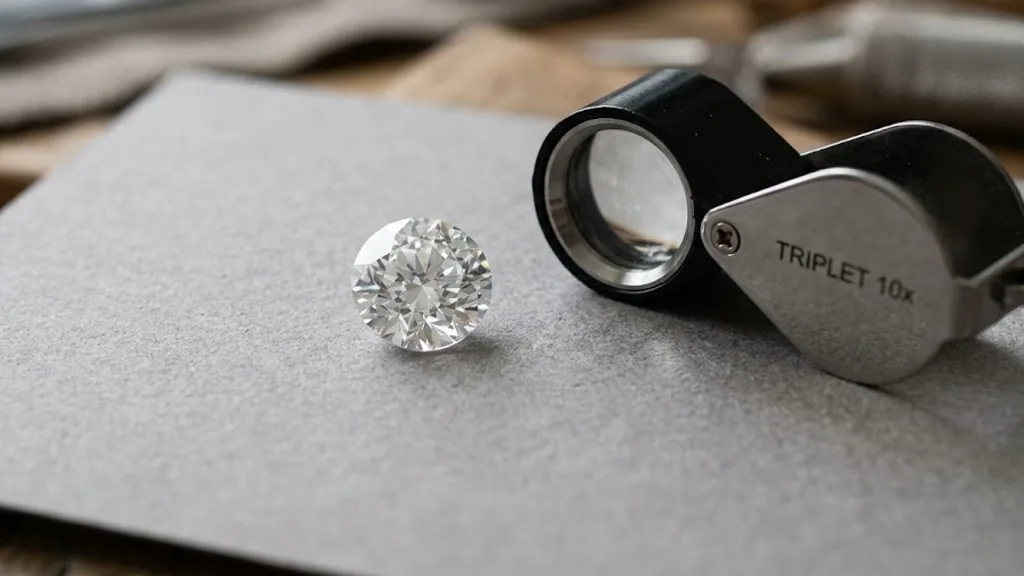
Notice what the definitions describe: how easily a grader finds the inclusions under a loupe. Nothing in the definition of SI1 or SI2 promises anything about your naked eye. That is the crucial gap.
Is SI1 clarity good?
Often, yes — and it can be excellent value. Most SI1 diamonds are eye-clean, meaning you cannot see anything without magnification. Many jewellers consider SI1 the best value grade on the entire scale.
But “most” is doing real work in that sentence. An SI1 grade tells you the inclusions are noticeable at 10x. It does not tell you whether they are three tiny white crystals scattered near the edge, or one dark crystal sitting under the middle of the table. Both can grade SI1.
So SI1 is good when you have checked the stone. It is a gamble when you have not.
What does SI2 mean in practice?
SI2 is the last grade before the I range, and it is the point where naked-eye visibility becomes a genuine possibility rather than a rarity.
Plenty of SI2 stones are still eye-clean, particularly smaller ones in busy brilliant cuts. Plenty are not. In an SI2 stone you may find a feather — a small internal fracture — with enough size to catch the light, or a dark crystal that reads as a tiny black dot from arm’s length.
The practical rule: never buy an SI2 you have not seen, either in person or as a high-resolution image at 20x or more. That advice is not a scare tactic; it is simply what the grade allows.
The three things that decide whether an SI stone looks clean
1. Where the inclusions sit
Every laboratory report includes a plot — a map of the stone with its inclusions marked. This is the most useful part of the certificate for SI grades.
- Under the table — the large flat facet on top. Worst position. Anything here is in the direct line of sight.
- Near the girdle — the thin band around the widest point. Best position. Claws and bezels often cover it entirely.
- Under a crown facet — the angled facets around the top. Middling; the facet pattern helps break it up.
2. What type they are
- White or transparent crystals, pinpoints, needles — much harder to see. These make for friendly SI stones.
- Dark or black crystals — read as specks. Even small ones can be visible.
- Feathers — small internal fractures. Ones contained well inside the stone are harmless. A large feather reaching the surface near a claw is worth asking about, because that is the one clarity issue that can have a durability angle.
- Clouds — hazy groups of pinpoints. A large cloud can make a stone look very slightly milky even when nothing individual stands out. Certificates sometimes flag this in the comments, and it is worth reading.
3. The shape of the cut
This changes everything.
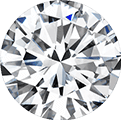
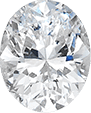
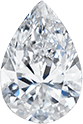
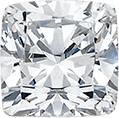
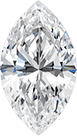
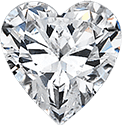
- Brilliant cuts hide inclusions well. Round, oval, pear, marquise, cushion, heart and radiant scatter light so busily that small features get lost. SI grades work best here. Our Solitaire Marquise Cut Engagement Ring, at £538 correct at the time of writing, is a brilliant-style cut that carries its sparkle across the whole stone.
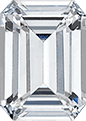
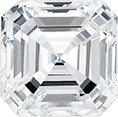
- Step cuts expose them. Emerald, asscher and baguette cuts are open and window-like. An SI2 emerald cut is a genuine risk, and even SI1 needs looking at. For step cuts, VS1 is the sensible floor.
- Busy settings help. Halos, clusters and pavé surrounds add so much competing sparkle that the eye never settles on the centre stone. A Cluster Round Cut Engagement Ring, at £707 correct at the time of writing, is a good example of a design that gives the eye plenty to look at.
Where SI genuinely makes sense
Used deliberately, SI grades free up real money.
- You want more carat weight. Dropping from VS2 to SI1 on a brilliant cut is one of the least visible trade-offs available, and it buys size.
- The stone is a brilliant cut under about two carats. The facet pattern is doing you a favour.
- You have seen the plot and it is clean under the table. This single check removes most of the risk.
- The setting has claws or a bezel over the inclusion’s position. A jeweller can sometimes orientate the stone so a girdle inclusion sits under a claw.
- Accent stones. Melee — the tiny diamonds in a pavé band or halo — are far too small for anyone to see into. Paying for high clarity in melee makes no visual sense at all. Our Pavé Hexagon Cut Engagement Ring, at £1,078 correct at the time of writing, uses a row of small stones exactly this way.
Where to avoid SI
- Emerald, asscher and baguette cuts, especially over a carat.
- Any stone you cannot see or inspect properly before buying.
- Large centre stones, where every feature is magnified along with the size.
- When the certificate comments mention a large cloud affecting transparency.
Does SI clarity affect sparkle?
Rarely, and only at the bottom of the range. The inclusions in a typical SI1 are far too small to interfere with light bouncing through the stone.
The exception is a stone with extensive clouds or heavy included material, which can reduce transparency and leave the diamond looking slightly flat. That is more of an I-grade problem, but it can touch SI2.
What actually determines sparkle is cut — the proportions that send light back out of the top of the stone instead of leaking it through the base. If your budget is fixed, protect cut, then trade clarity. Our guide to VS1 and VS2 clarity covers the next grades up if you want the safer option.
SI clarity in lab-grown diamonds
Lab-grown diamonds are graded on the same FL to I3 scale by the same laboratories at the same 10x standard, so an SI1 means the same thing in both markets.
The inclusion types can differ. Stones grown by the HPHT method can contain small metallic flux inclusions, which are dark and therefore more visible for their size. CVD-grown stones tend towards pinpoints and small dark features. None of this changes the grade, but it does make reading the plot worthwhile.
Because higher clarity grades are more readily produced in a growth chamber than found in the ground, VS and VVS grades are easier to reach in lab-grown stones than in natural ones — which means the case for taking a risk on SI is often weaker here. That is general guidance about how the two markets behave, not a quoted figure.
Every centre stone we set comes with a free IGI certificate showing the clarity grade and the plot. You can browse our engagement rings, or filter by round or hexagon shapes.
Frequently asked questions
Is SI1 clarity good enough for an engagement ring?
For a brilliant cut, usually yes — most SI1 stones are eye-clean and the saving is real. Check the plot on the certificate to make sure nothing dark sits centrally under the table, and you can buy with confidence.
Can you see inclusions in an SI2 diamond?
Sometimes. SI2 is the grade where naked-eye visibility becomes a real possibility rather than an exception. Many SI2 stones look clean; some do not. Never buy one sight unseen.
Is SI1 or SI2 better value?
SI1 is the safer buy and still keeps most of the saving. SI2 saves more but carries genuine risk, and only makes sense if you can inspect the stone or its plot properly first.
Do SI inclusions weaken a diamond?
Almost never. The one case worth asking about is a large feather that reaches the surface near a point where a claw will grip. Contained inclusions have no effect on durability, and diamond remains the hardest material there is.
Will an SI diamond look worse over time?
No. Inclusions are part of the crystal structure and do not grow or spread. If a diamond looks duller after a year, it is dirt on the underside — warm water, a drop of washing-up liquid and a soft brush will fix it.
Buying an SI stone sensibly
SI clarity is not a lesser diamond. It is a grade that rewards attention. Read the plot, favour brilliant cuts, avoid dark central inclusions, and you can put the saving into a bigger or better-cut stone that you will actually notice.
Every centre stone we set is lab-grown and IGI certified, hand-made into solid gold or platinum in North Harrow, London, with free insured UK delivery and 30-day returns. If you want a specific clarity grade in a design we do not currently stock, we create bespoke pieces at no extra design cost.
Ready to find your perfect ring?
Explore our lab-grown diamond collection or book a virtual appointment with our team.