What Are Coloured Diamonds Called? Fancy Colour Grades Explained
The proper name is fancy colour diamonds. How the grading scale works, what modifiers mean, and what trade nicknames like canary really stand for.
The proper trade name is fancy colour diamonds. Not “coloured diamonds”, not “fancy diamonds” — the full phrase, because each word is doing a job. “Fancy” is a technical grading term meaning the stone has enough colour to be graded as a colour rather than penalised for it. Get that one word right and the rest of the vocabulary falls into place.
Below is the language you will see on a certificate and in a shop, translated into plain English, along with the nicknames the trade uses informally and what they actually mean.
Why “fancy” is the key word
Ordinary diamonds are graded on a scale from D to Z, where D is completely colourless and Z has an obvious light yellow or brown tint. On that scale, colour is a fault. Every step down the alphabet means slightly more tint and slightly less money.
Then something interesting happens. Once a yellow diamond has more colour than Z, it stops being a bad grade and starts being a colour in its own right. It leaves the D-to-Z scale entirely and is graded as a fancy colour diamond, where more colour now means more value. Same stone, same colour, opposite direction of travel.
The fancy colour grading scale
Colourless diamonds get a single letter. Fancy colour diamonds get a description in three parts: how strong the colour is, any modifying tint, and the main colour. So a certificate might read “Fancy Intense orangey yellow”.
| Grade | What it means |
|---|---|
| Faint | A trace of colour, only in a controlled light |
| Very Light | Slightly more, still easy to miss |
| Light | Visible but weak |
| Fancy Light | Clearly coloured, gentle and pastel |
| Fancy | A solid, obvious colour |
| Fancy Intense | Strong and saturated |
| Fancy Vivid | The most prized — bright, pure and strong |
| Fancy Deep | Very saturated and dark |
| Fancy Dark | Dark with lower saturation |
Not every colour uses every grade. Faint, Very Light and Light apply mainly to yellows and browns beyond Z. For rare colours such as blue and pink, the grading starts at Fancy Light. And the difference in value between neighbouring grades can be enormous — Fancy Vivid pink and Fancy pink are not close in price.
Reading a modifier
The word in front of the main colour tells you what else is in the mix. It always ends in “-ish” or “-y”: brownish, greyish, orangey, greenish, purplish. The last word is the dominant colour, and the modifier comes before it.
- Purplish pink — mostly pink, with a purple lean
- Pinkish purple — mostly purple, with a pink lean
- Brownish yellow — yellow dulled by brown, worth less than a clean yellow
- Yellow with no modifier — a clean, pure yellow, and the most valuable version
As a rule, modifiers reduce value when they muddy the colour (brown and grey) and can increase it when they enrich it — a slightly purplish pink is often lovely.
The nicknames, and what they really mean
Trade nicknames are marketing language, not grading language. They are useful shorthand but they never appear as a grade on a laboratory report.
| Nickname | Actual grading term |
|---|---|
| Canary diamond | Fancy Intense or Fancy Vivid yellow |
| Champagne diamond | Light to Fancy brown, often with a yellow modifier |
| Cognac diamond | A deeper, richer brown |
| Chocolate diamond | A brand name for certain brown diamonds |
| Salt and pepper diamond | Not a colour grade at all — a heavily included stone with visible dark and light inclusions |
| Chameleon diamond | A rare diamond that temporarily changes colour with heat or darkness |
If a seller uses a nickname and cannot tell you the certified grade behind it, that is worth asking about.
Where our collection sits, honestly
We do not stock fancy colour diamonds. Everything we make uses colourless and near-colourless lab-grown diamonds, and every centre stone comes with a free IGI certificate stating the grade — so you can read the colour for yourself rather than take our word for it.
That is a deliberate choice. For the money most people have to spend on a ring, a bright, well cut colourless stone gives a better result than a weakly coloured fancy stone. If the shape does the character work, you do not need the colour to.
Our solitaire marquise cut engagement ring is a good example — an unusual, elongated shape that reads as distinctive without any colour involved, at £538 at the time of writing. So is the solitaire hexagon cut engagement ring, which uses a geometric outline you will not see on many hands.
For warmth without a fancy colour price, let the metal do it: the halo heart cut engagement ring in rose gold casts a soft pink glow across the stone from the setting itself.
Have a look through the engagement ring collection or the matched bridal sets if you would like the wedding band designed alongside. And if your heart is set on a genuine fancy colour, ask us about bespoke — design costs nothing extra and we will be straight with you about what it involves.
Reading a fancy colour report line by line
A report for a fancy colour diamond looks different from an ordinary one, and knowing what each line means saves a lot of confusion.
| Line on the report | What it is telling you |
|---|---|
| Colour grade | The full description, for example “Fancy Intense purplish pink” |
| Colour origin | Whether the colour is natural or the result of treatment — the single most important line |
| Colour distribution | Whether the colour is even throughout or concentrated in patches |
| Clarity grade | Present, but far less important than with colourless stones — colour hides inclusions |
| Cut or shape | Usually described as a shape and cutting style rather than given a cut grade |
| Inscription | The report number laser-etched on the girdle, plus wording identifying a laboratory-grown stone |
Notice what is missing: fancy colour diamonds generally do not receive an overall cut grade the way round brilliants do. The cutter’s job with a coloured stone is to bring out colour, not to hit textbook proportions, so a standard cut grade would not be a fair measure.
Why clarity matters less on a coloured stone
With a colourless diamond, an inclusion sits against a clear background and shows. With a strongly coloured one, the body colour and the busier facet pattern make small inclusions much harder to see. Fancy colour stones are routinely sold in clarity grades that would be considered low for a colourless diamond, and they still look clean to the eye.
The same principle applies at the other end of the scale, which is worth remembering when you are choosing a colourless stone. Brilliant-cut shapes with lots of small facets — round, cushion, radiant — hide inclusions well. Large open-table cuts such as emerald and Asscher hide nothing, so they need a cleaner grade to look right.
Common questions
Is “fancy colour” the same as “fancy shape”?
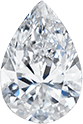
No, and the overlap in wording causes constant confusion. Fancy colour refers to the stone’s colour. Fancy shape means any cut that is not a round brilliant — pear, oval, marquise, emerald and so on. A ring can have one, both or neither.
What is the difference between “Fancy” and “Fancy Vivid”?
Strength of colour. Fancy is a clear, solid colour. Fancy Vivid is the brightest and purest expression of it, and sits at the top of the value scale for most colours.
Do lab-grown diamonds get fancy colour grades?
Yes. A laboratory-grown coloured diamond is graded on exactly the same scale, and the report states clearly that it was grown in a laboratory, usually alongside a laser inscription on the girdle.
Are treated colours graded differently?
They are graded on the same scale, but the report must disclose the treatment — you will see wording such as “colour enhanced” or a note about irradiation. A treated colour is worth considerably less than the same colour occurring untreated.
Is a K colour diamond a fancy yellow?
No. K sits within the normal D-to-Z range and is described as faint colour, not fancy. A yellow diamond only becomes fancy once it has more colour than Z.
Everything we make is hand-made in solid gold and platinum in North Harrow, London, with free insured UK delivery and 30 days to return it if it is not right.
More guides on this topic
Ready to find your perfect ring?
Explore our lab-grown diamond collection or book a virtual appointment with our team.