Is a K Colour Diamond Too Yellow?
In white metal it shows its warmth. In yellow or rose gold it looks flawless. When a K colour diamond is the smartest buy on the scale.
A K colour diamond has a gentle warmth to it. Whether that reads as “too yellow” depends almost entirely on the metal you set it in. In platinum or white gold, a K in a decent size will show its warmth and some people will not like it. In yellow or rose gold, the same stone looks flawless — the metal cancels the tint completely and you have effectively bought a whiter-looking diamond for less money.
K is the most misunderstood grade on the scale. It is not a bargain-bin diamond and it is not a compromise. It is a grade with a specific job, and this guide explains exactly when to use it and when to walk past it.
Where K sits on the scale
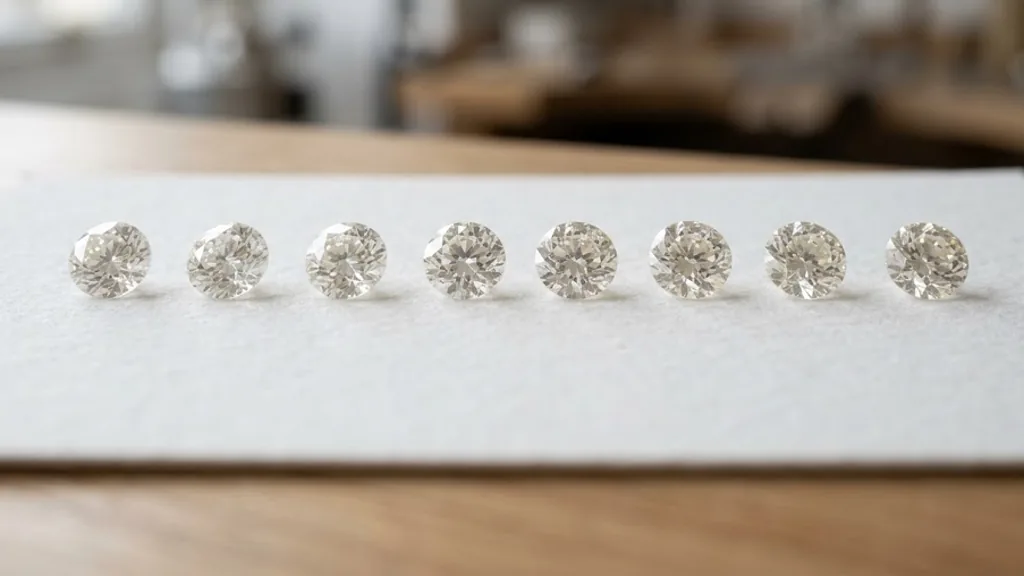
Diamond colour runs from D, completely colourless, to Z, an obvious light yellow. K is the eighth letter and the first grade in the faint colour band — one step below the near-colourless group.
| Grade | Band | What you see face-up in a ring |
|---|---|---|
| D, E, F | Colourless | No tint under any conditions |
| G, H, I, J | Near colourless | Reads as white; warmth only in direct comparison |
| K | Faint | A soft warm tone, noticeable in white metal, invisible in warm metal |
| L, M | Faint | More obvious warmth |
| N to Z | Very light to light | Clearly tinted |
Worth remembering: the grade was assigned to a loose stone, face-down, in a white tray, under a controlled lamp, next to master stones. Nobody will ever look at your ring that way. Face-up, set, in real light, a K is far less obvious than the grading conditions suggest.
The metal decides everything
This is the whole answer, so it is worth being blunt about it.
Yellow gold: K is excellent. Yellow gold reflects warm light into the stone from every direction. A faint warm tint in the diamond simply blends with the metal and stops being visible as a separate thing. Set a K and a G side by side in yellow gold and most people cannot separate them.
Rose gold: K is excellent. Same principle, with a soft pink cast instead. Rose gold and faintly warm stones are a genuinely flattering pairing.
White gold or platinum: think carefully. Bright white metal gives your eye a direct comparison right next to the stone, and warmth shows against it. In a small stone it is still fine. In a large one, K in platinum is the combination most likely to leave someone wishing they had gone higher.
There is a middle path here too: a bezel or basket in yellow gold with a white gold band, so the metal touching the stone is warm while the rest of the ring is white.
Size and shape matter as well
Colour is easier to see the more diamond there is for light to pass through. Below half a carat, K is hard to distinguish from a near-colourless stone in any metal. Above one and a half carats in white metal, it becomes noticeable.
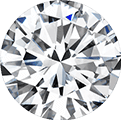
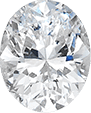
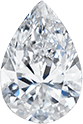
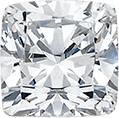
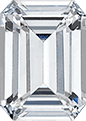
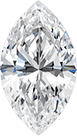
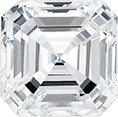
Shape plays a part too. Brilliant cuts — round, oval, pear, cushion, marquise — break light into so many flashes that body colour is partly masked. Step cuts such as emerald and Asscher have big open facets and show colour honestly, so K in a large emerald cut in platinum is the least forgiving combination there is.
| Combination | Verdict on K |
|---|---|
| Yellow or rose gold, any shape, any size | Excellent — buy it and spend the saving elsewhere |
| White metal, under 1 carat, brilliant cut | Fine for most people |
| White metal, over 1.5 carats, brilliant cut | Warmth will show; consider H to J instead |
| White metal, emerald or Asscher cut | Go higher — at least H, ideally G |
| Vintage or antique-style designs | K often suits them better than a colourless stone does |
The case for choosing K deliberately
Some people buy K because it is cheaper. Others buy it because they prefer it, and that is a perfectly good reason.
Antique diamonds were not cut or selected to modern colourless standards, so genuine period jewellery tends to have a warmth to it. If you love the look of an old ring, a colourless stone can actually feel wrong — too clinical against aged gold. A K in yellow gold reads as authentic in a way a D does not.
The saving is real, too. Dropping from G to K frees up money that can go into cut, size or the setting — all things you can see across a room, unlike two or three colour grades.
Rings where K works
If you are going warm, the vintage round cut engagement ring in yellow gold is the natural home for a faintly warm stone — the detailing and the metal do the work, at £1,051 at the time of writing. The 5 stone pear cut engagement ring in yellow gold is another, at £528 at the time of writing.
For a rose gold option with a soft, romantic cast, the halo heart cut engagement ring in rose gold surrounds the centre with small stones and warm metal together.
Every centre stone we set comes with a free IGI certificate stating the colour grade, so you know precisely what you are buying. Browse the full engagement ring collection, or our pear cut rings. If you want to compare where K sits against the higher grades, we have written about G colour diamonds too.
What the money you save actually buys
The point of choosing K is not to spend less overall — it is to move money from something invisible to something visible. Three destinations are worth considering.
Cut quality. The single biggest influence on how a diamond looks. Cut controls how much light comes back to your eye and how the stone behaves when it moves. It is the one grade where paying more always shows.
Carat weight. If size is what the wearer cares about, the gap between K and G can be a meaningful step up in weight for the same total spend, and size is visible from across a room in a way that two colour grades never are.
The setting. A halo, a wider band, a more elaborate shoulder treatment or matched wedding band all change how the piece reads on a hand far more than a colour letter does.
Two ways to hide warmth in a white metal ring
If you love white metal but also love the price of a K, there are two honest workarounds rather than one.
The first is a mixed metal setting: a yellow gold basket, bezel or prong head holding the stone, with a white gold or platinum band. The metal immediately around the diamond is what influences its apparent colour most, so warm metal at the head does the masking while the band stays white.
The second is a halo. Surrounding a stone with small brilliant diamonds gives the eye a busy, sparkling frame rather than a plain white one, which makes the centre’s tone much harder to judge. It also adds apparent size, so it earns its keep twice.
Being honest with yourself
One last piece of advice. Some people genuinely do not notice faint warmth, and some people notice it every single day for the rest of their lives. Only you know which you are.
If you are the sort of person who will look for it, do not buy a K in platinum because the maths says you should — go to H or J and be happy. If you look at a warm stone in yellow gold and think it looks lovely, trust that. A ring you like the look of beats a certificate you like the look of, every time.
Common questions
Is a K colour diamond noticeably yellow?
Not on its own. It has a warm tone rather than an obvious yellow. Placed beside a colourless stone in white metal, the difference is clear. Set in yellow gold with nothing to compare it to, it looks white.
Is K colour good value?
It is one of the best value grades on the scale, provided you pair it with warm metal. You are paying less for something that, in the right setting, nobody can distinguish from a higher grade.
What is the lowest colour grade worth buying?
For most buyers, K to L is the sensible floor, and only in yellow or rose gold. Below M the warmth becomes hard to disguise in any metal.
Will a K colour diamond still sparkle?
Yes, fully. Sparkle comes from cut, not colour. A well cut K will out-sparkle a badly cut D without any difficulty.
Is a K colour diamond a fancy yellow diamond?
No. Fancy yellow begins beyond Z, once there is far more colour than K has. K is simply a faint tint within the ordinary grading range.
Everything we make is hand-made in solid gold and platinum in North Harrow, London, with free insured UK delivery and 30 days to return it.
Ready to find your perfect ring?
Explore our lab-grown diamond collection or book a virtual appointment with our team.