VS2 and SI1 Diamond Clarity: What They Mean and How They Look
What VS2 and SI1 mean, how they differ, which shapes suit each - and whether a VS2 clarity, I colour diamond is a good buy.
VS2 and SI1 sit next to each other in the middle of the diamond clarity scale, and between them they cover a very large share of the engagement rings actually sold. They are the grades where a diamond stops costing money for things you cannot see.
Here is what each one means, how they differ, and how to judge whether a particular stone at either grade is a good buy.
What does VS2 clarity mean?
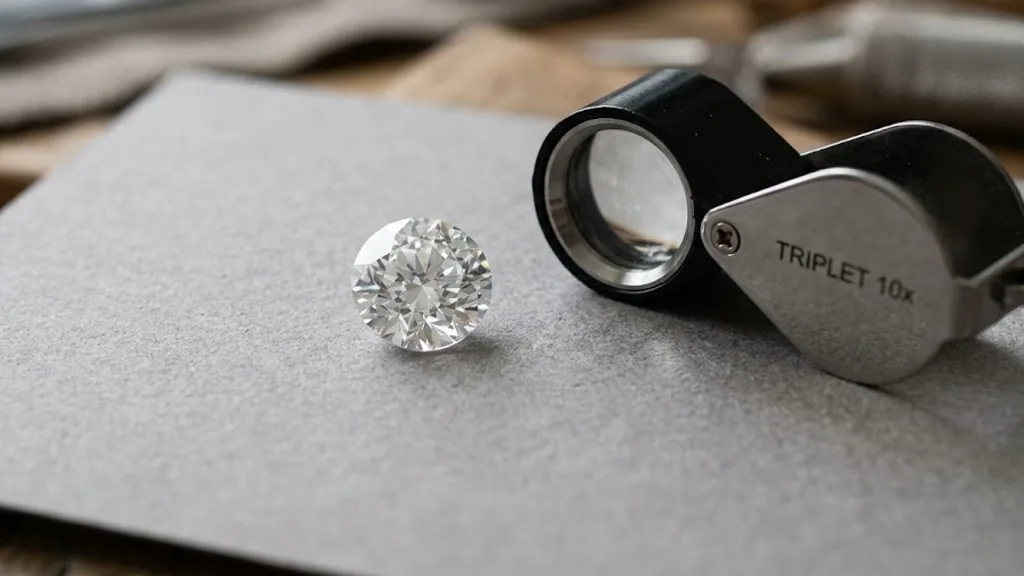
VS2 stands for Very Slightly Included, second grade. It means a trained grader found minor inclusions that are somewhat easy to see at 10x magnification — the standard jeweller’s loupe.
Read that carefully, because the wording does a lot of work. “Somewhat easy to see” refers to what a professional sees through a lens. Without a lens, a VS2 diamond is almost always completely clean to the eye.
Typical VS2 features are a small crystal, a feather, a cloud of pinpoints, or a needle. They are usually white or transparent rather than dark, and small enough that they do not affect how the stone handles light.
What does SI1 clarity mean?
SI1 stands for Slightly Included, first grade. Inclusions are noticeable to a grader at 10x — findable in seconds rather than after a search.
Even so, most SI1 diamonds are still eye-clean, meaning you cannot spot anything looking at the stone face-up from about 30 centimetres away in normal light. Not all of them are, though, and that is the important distinction between SI1 and VS2.
At VS2, eye-clean is close to a given. At SI1, eye-clean is likely but must be checked.
VS2 versus SI1, side by side
| VS2 | SI1 | |
|---|---|---|
| Full name | Very Slightly Included 2 | Slightly Included 1 |
| At 10x magnification | Minor inclusions, somewhat easy to find | Inclusions noticeable |
| To the naked eye | Almost always clean | Usually clean, but check |
| Typical inclusion type | Small crystal, feather, cloud | Crystal, feather, cloud — larger or more of them |
| Effect on sparkle | None | None in an eye-clean stone |
| Relative price | Higher | Lower |
| Best suited to | Step cuts, larger stones, anyone who wants certainty | Round and fancy brilliants, smaller stones |
The two grades are neighbours. VS2 sits directly above SI1 with nothing in between, which is why the price gap between them is often the most interesting number in a diamond search.
Are they good grades to buy?
Both are, for most people, and we say that without hedging.
The trade’s rule of thumb — and it is a rule of thumb, not a measured figure — is to buy the lowest clarity grade that remains eye-clean in your chosen shape, then spend the saving on cut quality or carat weight. For a very large share of buyers, that lands on VS2 or SI1.
Above these grades you are paying for a certificate line. VVS and Flawless stones are genuinely rarer, but they look identical on a hand. Below these grades, at SI2 and into the I range, visible inclusions become a real risk.
The one grade you should never trade away is cut. A well-cut SI1 will out-sparkle a badly cut VVS1 in every lighting condition, to every eye, forever. Clarity permits beauty; cut creates it.
Which shapes suit which grade
Shape matters more than any other factor here, because different cuts hide inclusions very differently.
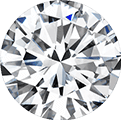
Round brilliants are the most forgiving. Fifty-seven facets throw light in every direction, and that busy sparkle conceals small inclusions remarkably well. SI1 is a sensible target, and a piece like the Solitaire Round Cut Engagement Ring gives you the maximum benefit from that.
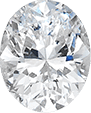
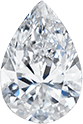
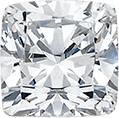
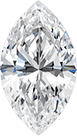
Fancy brilliants sit in the middle. Oval, pear, marquise, cushion, radiant and heart shapes are still very sparkly, but they have larger open areas and pointed tips where the eye can settle. VS2 to SI1 is the range to aim at. A Halo Marquise Cut Engagement Ring in White Gold is a good illustration, since the ring of small diamonds around the centre stone also draws the eye outwards.
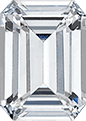
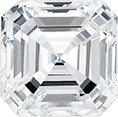
Step cuts are the least forgiving. Emerald, asscher and baguette shapes have long parallel facets and very little sparkle, so the eye looks straight into the stone. At these shapes, prefer VS2 over SI1, or see the stone first.
Carat weight shifts everything by a step. An SI1 that is comfortably eye-clean at 0.70ct may not be at 2.00ct, simply because there is more diamond to look through and the inclusion is proportionally larger.
Is a VS2 clarity, I colour diamond good?
This specific pairing comes up often, and the answer is: yes, in the right metal — and it is one of the better-value combinations on the market.
I sits in the near colourless band (G, H, I, J) on the D-to-Z colour scale. It is the second from the bottom of that band. On its own, against a white background, an I colour stone shows a faint warmth. Set in a ring and viewed face-up, it usually reads as white.
What decides it is the metal:
| Setting metal | How an I colour stone reads |
|---|---|
| Yellow gold | Excellent. The warm metal makes the stone look bright by comparison, and any faint tint is completely lost. |
| Rose gold | Excellent, for the same reason. Many people prefer a slightly warm stone here. |
| White gold or platinum | Good at smaller sizes. Above roughly 1.50ct, the bright white metal sits right against the stone and faint warmth can become noticeable. |
So a VS2, I colour diamond in a yellow gold setting is a genuinely smart buy — clean to the eye, white to the eye, and considerably cheaper than chasing D or E colour that nobody will notice. Something like the Vintage Round Cut Engagement Ring in Yellow Gold or the 5 Stone Pear Cut Engagement Ring in Yellow Gold makes exactly that use of warm metal.
In a large platinum solitaire, we would nudge you up to G or H instead.
How to check a VS2 or SI1 before you buy
Three practical steps, in order.
- Look at the plotting diagram on the certificate. This is the outline drawing showing where inclusions sit. One symbol near the edge is very different from one dead centre under the flat top facet. The edge can be hidden by a setting; the centre cannot.
- Read the key to symbols. It names what was found. A white crystal or a small feather is easy to live with. A dark carbon speck or a large cloud deserves a closer look, since a big cloud can make a stone read slightly milky.
- Ask directly whether the stone is eye-clean. Any honest jeweller will answer plainly, and a good one will show you. This is the question that actually protects you at SI1, and it costs nothing to ask.
Every centre stone we sell comes with a free IGI certificate, so you can do steps one and two yourself before committing to anything.
Frequently asked questions
Can you see inclusions in a VS2 diamond?
Not without magnification, in the vast majority of cases. VS2 is graded on what is visible through a 10x loupe, and that is a much stricter test than looking at a ring on someone’s hand.
Is SI1 clarity good enough for an engagement ring?
Yes, particularly in a round brilliant, and it is one of the most sensible value choices available. The only condition is that you confirm the specific stone is eye-clean rather than assuming it from the letter.
Is the price gap between VS2 and SI1 worth paying?
If you are buying a step cut, or a stone above about 1.50ct, often yes. If you are buying a round brilliant under a carat, usually not — that money does more visible work put towards cut quality or size.
What is the difference between SI1 and SI2?
SI2 has inclusions that are easily seen at 10x and are sometimes visible without a lens. SI1 is the safer end of the SI band. If you go to SI2, checking the individual stone stops being optional.
Do lab-grown diamonds come in VS2 and SI1?
Yes, graded on exactly the same scale by the same laboratories. Because clean stones are more available in lab-grown, many buyers find they can sit at VS2 comfortably within a budget that would only have reached SI1 in a natural diamond.
Making the choice
VS2 and SI1 are the grades where a diamond budget starts working properly. Choose VS2 if you are buying a step cut, a large stone, or you simply want certainty without a conversation. Choose SI1 if you are buying a round or fancy brilliant and would rather put the difference into size — just confirm the individual stone is eye-clean first.
If you want the full scale explained, we have covered it in how to read diamond clarity grades on a certificate. Otherwise have a browse through our engagement rings or the round cut collection — everything hand-made in solid gold or platinum in North Harrow, with free insured UK delivery and 30-day returns.
More guides on this topic
Ready to find your perfect ring?
Explore our lab-grown diamond collection or book a virtual appointment with our team.