Diamond Clarity Explained: How to Read the Grades on Your Certificate
What FL, VVS1, VS2 and SI1 really mean, how to read a clarity plot, and how graders rate diamond clarity and colour.
Every diamond certificate has a line marked “Clarity” with two or three letters next to it: VS1, SI2, VVS2. Those letters decide a real part of what you pay, and almost nobody explains what they actually mean before you are standing at a counter nodding politely.
This guide walks through the whole clarity section of a diamond report, line by line, so you can read one yourself. No jargon left unexplained.
What diamond clarity actually measures
Clarity is a measure of how clean a diamond is inside and on the surface. Diamonds form under enormous heat and pressure, and tiny features get trapped as they grow. Graders call the internal ones inclusions and the surface ones blemishes.
An inclusion might be a speck of another mineral, a pinpoint of carbon, a feather-shaped internal fracture, or a faint growth line. A blemish might be a small scratch, a nick on a facet edge, or a tiny natural rough surface left from cutting.
Clarity grading counts those features and judges five things about them:
- Size — how big the feature is relative to the stone
- Number — how many there are
- Position — one under the flat top facet is far more visible than one hidden near the edge
- Nature — what kind of feature it is, and whether it affects durability
- Relief — how strongly it stands out against the diamond around it
Important: clarity is graded at 10x magnification. That is the standard jeweller’s loupe. A grader decides the letter by looking through a 10x lens, not with the naked eye. This single fact explains most of the confusion around clarity, and we will come back to it.
The clarity scale, letter by letter
There is no secret “clarity code”. The letters are the code, and they are an abbreviation of a plain-English description. Once you know what each abbreviation stands for, the scale reads itself.
| Grade | What the letters stand for | What it means in plain English |
|---|---|---|
| FL | Flawless | No inclusions and no blemishes visible at 10x magnification. |
| IF | Internally Flawless | No inclusions at 10x. Only tiny surface blemishes. |
| VVS1 | Very, Very Slightly Included 1 | Inclusions so small a trained grader struggles to find them at 10x. |
| VVS2 | Very, Very Slightly Included 2 | The same, very slightly easier for a grader to find. |
| VS1 | Very Slightly Included 1 | Minor inclusions, difficult to see at 10x. |
| VS2 | Very Slightly Included 2 | Minor inclusions, somewhat easier to see at 10x. Almost always invisible without a lens. |
| SI1 | Slightly Included 1 | Inclusions noticeable at 10x. Usually still clean to the naked eye. |
| SI2 | Slightly Included 2 | Inclusions easily seen at 10x. Sometimes visible to the naked eye. |
| I1 | Included 1 | Inclusions obvious at 10x and often visible without a lens. |
| I2 | Included 2 | Obvious inclusions that reduce sparkle. |
| I3 | Included 3 | Heavy inclusions that affect brilliance and can affect durability. |
The numbers work the way you would hope: the lower the number, the cleaner the stone. VS1 is cleaner than VS2. SI1 is cleaner than SI2.
Read from left to right, the whole scale is one sentence: flawless, then internally flawless, then progressively more included. That is genuinely all there is to it.
Where the scale came from, and which labs use it
This eleven-grade scale was developed by the Gemological Institute of America (GIA) in the middle of the twentieth century, which is why you often see it called “the GIA clarity scale”. It became the industry standard, and other respected laboratories grade to the same letters.
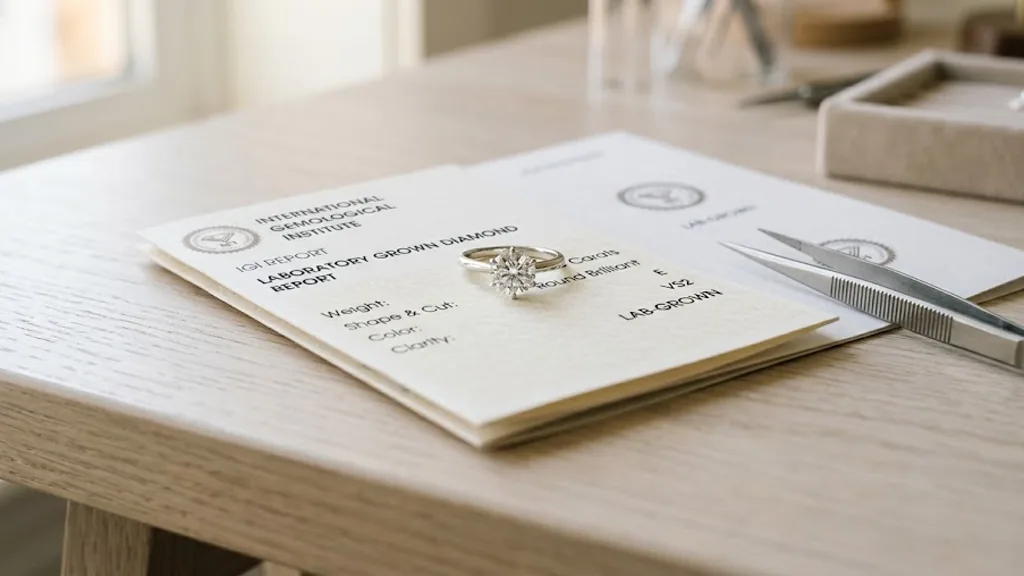
Every centre stone we sell comes with a free certificate from the International Gemological Institute (IGI), which is the laboratory most widely used for lab-grown diamonds. IGI uses the same FL-to-I3 letters, so a VS1 on an IGI report and a VS1 on a GIA report are describing the same thing.
One honest caveat worth knowing: clarity grading involves human judgement, and laboratories are not identical. A stone can occasionally sit at the boundary and be graded one step apart by two labs. This is a well-known feature of the trade rather than a scandal, and it is one reason we encourage people to look at a stone rather than shop by letter alone.
How to read the clarity section of a real certificate
Pull up your report and look for four things.
1. The clarity grade itself
Usually in the summary block near the top, alongside carat weight, colour and cut. This is the headline letter.
2. The plotting diagram
Many reports include a diagram: two outline drawings of the diamond, one seen from the top and one from below, with small symbols marked on them. Those symbols show where the inclusions are. Red symbols conventionally mark internal features, green symbols mark surface features.
This diagram is genuinely useful. A stone with one symbol tucked near the edge will look cleaner in a ring than a stone with the same grade and a symbol dead centre under the table facet, because a setting can hide the edge but nothing hides the middle.
3. The key to symbols
Beneath the diagram is a short list naming the features found — crystal, feather, cloud, needle, pinpoint, indented natural. This is where you learn what kind of inclusion you are buying, not just how many.
Two worth flagging: a large cloud (a dense group of microscopic pinpoints) can make a diamond look slightly milky even at a decent grade. A feather reaching the surface at a vulnerable point is worth asking a jeweller about, because it is the one type of inclusion that can matter for durability.
4. The comments line
A short note at the bottom of the report. It can flag that clarity is partly based on clouds not shown on the diagram, which is a useful signal to look at the stone in person.
How graders actually rate clarity
People often ask whether they can grade clarity themselves. Honestly, not reliably, and it is worth knowing why.
A laboratory grader works in controlled lighting with the stone cleaned, examines it loose rather than set, uses a 10x loupe as the deciding standard, and typically has more than one grader reach the same conclusion independently before a grade is issued. Grading a diamond in a ring, under shop lighting, with fingerprints on it, is a different exercise entirely.
What you can do at home is more useful than grading anyway. Clean the stone, hold it about 30 centimetres from your eyes in ordinary daylight, and look straight down at it. If you cannot see anything, the diamond is “eye-clean” — and eye-clean is the thing that actually matters when the ring is on a hand.
Rating clarity and colour together
Clarity almost never travels alone. The other letter on your certificate is colour, and the two are read side by side.
Colour runs on its own scale, from D to Z, and it measures the absence of a faint yellow or brown tint. Confusingly it is spelled “Color” on the certificate itself because the grading terms are American — that is the one place we keep the American spelling.
| Colour range | Trade name | What you see |
|---|---|---|
| D, E, F | Colourless | No tint at all, even against a white card. |
| G, H, I, J | Near colourless | Warmth only a grader would spot; face-up it reads as white. |
| K, L, M | Faint | A gentle warm tone, which some people actively like in yellow gold. |
| N to Z | Very light to light | Visible tint. |
The two scales are independent — a stone can be VVS1 clarity and J colour, or VS2 clarity and E colour. When you compare two diamonds, compare both letters, plus carat and cut, or you are not comparing like with like.
If you want the practical version of this — which letters are worth paying for and which are not — we have written that up separately in what clarity and colour to choose for a diamond ring.
Does the scale work the same for lab-grown diamonds?
Yes. A lab-grown diamond is chemically and physically the same material as a mined one, it forms inclusions as it grows in the same way, and it is graded on the same FL-to-I3 scale by the same laboratories.
One difference is worth mentioning honestly: because growth conditions are controlled, high clarity grades are more common and therefore more affordable in lab-grown diamonds than in mined ones. That is the main reason the same budget stretches considerably further.
Where clarity shows most — and least
The shape of the cut changes how forgiving a clarity grade is.
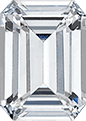
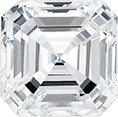
Step cuts — emerald, baguette, asscher — have long open facets like a hall of mirrors. There is very little sparkle to distract the eye, so inclusions show sooner. With these shapes it pays to be a little fussier about clarity, or to see the stone first. Our Solitaire Emerald Cut Engagement Ring is a good example of a design where the stone has nowhere to hide.
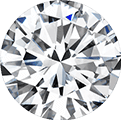
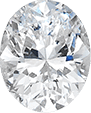
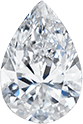
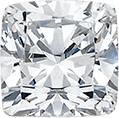
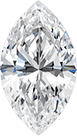
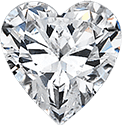
Brilliant cuts — round, oval, pear, marquise, cushion — have dozens of small facets throwing light in every direction. That busy sparkle hides small inclusions remarkably well. A round brilliant is the most forgiving shape on the clarity scale, which is part of why a piece like the Solitaire Round Cut Engagement Ring in Platinum looks so clean.
Multi-stone designs spread the eye across several smaller diamonds rather than one large one, and smaller stones show inclusions less simply because there is less stone to look through. A Three Stone Oval Cut Engagement Ring is a good illustration.
Frequently asked questions
What is the best diamond clarity code?
There is no single code that is best for everyone, but there is a sensible answer for most buyers: the lowest grade that is still eye-clean in your chosen shape. For brilliant cuts that is usually VS2 or SI1. For step cuts, aim a step higher. Paying for a grade you cannot see is the most common way people overspend on a diamond.
What do the numbers after the letters mean?
They split a grade into a cleaner half and a less clean half. VS1 is cleaner than VS2, SI1 is cleaner than SI2, VVS1 is cleaner than VVS2. The number only compares within that grade — an SI1 is never cleaner than a VS2.
Is clarity graded with the naked eye or under magnification?
Under 10x magnification, always. That is why so many stones graded SI1 look completely clean when worn. The grade describes what a lens sees, not what a dinner guest sees.
Why does my report show inclusions I cannot find?
Because at 10x they are visible and at arm’s length they are not. That gap is normal and, frankly, is where the value sits for most buyers.
Do all diamonds come with a certificate?
Not all, but every centre stone we sell does — a free IGI certificate, included as standard rather than sold as an extra.
Reading a report before you buy
If you can read the four parts of a clarity section — the grade, the diagram, the key to symbols and the comments line — you already know more than most people walking into a jeweller. Use it to ask better questions rather than to chase the highest letter.
Every centre stone at CarbonstoneUK arrives with its IGI certificate, and everything is hand-made in solid gold or platinum in our North Harrow workshop. Have a browse through our engagement ring collection or the round cut designs, and if you would like a particular grade combination in a particular setting, we design bespoke at no extra design cost.
Ready to find your perfect ring?
Explore our lab-grown diamond collection or book a virtual appointment with our team.