What Is a Shared Claw Setting?
A shared claw setting holds a row of diamonds with each claw gripping two stones. A row of 5 needs 12 claws, not 20, so more diamond shows and less metal.
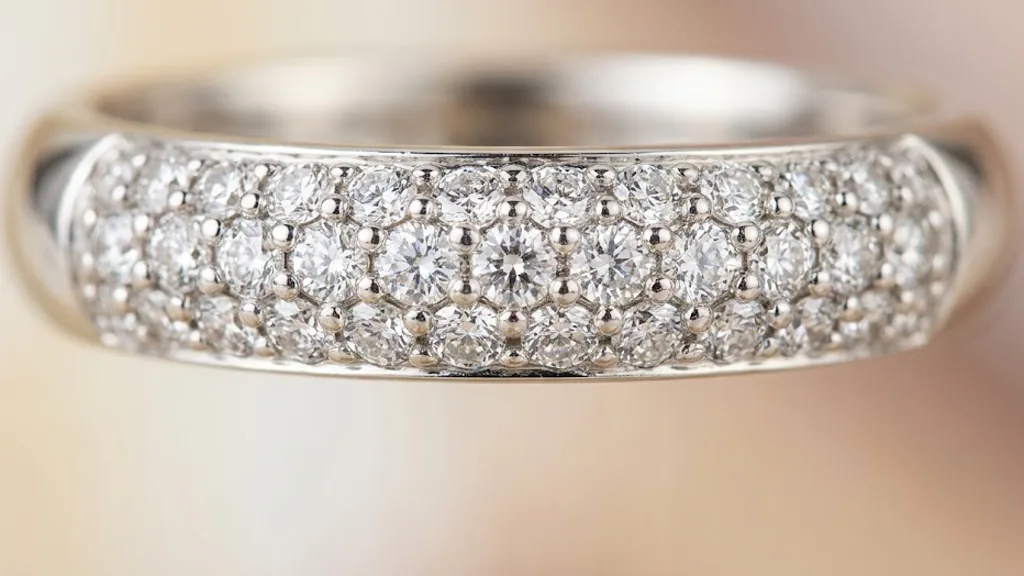
A shared claw setting, also called a shared prong setting, holds a row of diamonds so that each claw (a small metal finger) grips two neighbouring stones at once instead of one. Because the stones share their claws, a row of 5 diamonds needs about 12 claws rather than 20. Less metal shows, so the band looks like an almost unbroken line of sparkle.
How does a shared claw setting hold each diamond?
A shared claw setting holds each diamond between pairs of claws standing in the gaps between the stones. The jeweller cuts a small seat for every stone, then bends each claw over the edges of the diamonds either side of it. One pair at each gap, plus a pair at each end, means a row of 5 stones uses 12 claws. Giving every stone its own 4 claws would need 20.
Is a shared claw setting secure for everyday wear?
A shared claw setting is secure for everyday wear when it is well made, which is why it is used on eternity bands worn daily. The one trade-off is that each claw does two jobs. If a single claw is knocked open, 2 stones can loosen at once, not 1. A shared claw ring should be checked by a jeweller every 12 months, and straight away if it catches on clothing.
What is the difference between shared claws and pavé?
Shared claws and pavé both cover a band in small diamonds, but they hold the stones differently. Shared claws are real upright claws standing between the stones, so you can see each one. Pavé uses tiny beads of metal raised from the band, usually 3 or 4 per stone, so the metal almost disappears. Shared claws suit slightly larger side stones, while pavé suits very small ones of around 1 mm.
Listings often call both pavé. Our guide to what a pavé ring is sets the two side by side.
Which rings use a shared claw setting?
Rings that use a shared claw setting are mostly eternity bands, wedding bands and engagement ring shoulders, where side stones lead to the centre stone. Five and seven stone rings often use shared claws between the outer stones too. The look works best with round, rose cut or oval side stones from about 0.05 ct each, where the claws stay small next to the diamonds.
The table compares how much metal four common settings use to hold a row of 5 side stones.
| Setting | How each stone is held | Metal holding a row of 5 |
|---|---|---|
| Shared claw | Each claw grips two neighbouring stones | 12 claws |
| Individual claws | Every stone has its own 4 claws | 20 claws |
| Pavé | Tiny raised beads, 3 or 4 per stone | 15 to 20 beads |
| Channel | Stones sit in a groove between two metal walls | No claws, 2 walls |
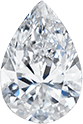
Two of our rings use shared claws. The 5 Stone Pear Cut Engagement Ring, at £528, sets a pear centre stone between round side stones of 0.10 ct, and the Stackable Rose Cut Wedding Band, at £489, holds a graduated row of rose cut diamonds. Both prices are correct at the time of writing. At CarbonstoneUK in North Harrow, London, every centre stone comes with a free IGI certificate. See more in our wedding ring collection.
How do you look after a shared claw ring?
A shared claw ring needs normal diamond care, plus one habit: look at the claws. Soak it for 10 to 15 minutes in warm water with a drop of washing-up liquid, then brush gently with a soft toothbrush. Never put a ring with a loose stone in an ultrasonic cleaner. Once a year, ask a jeweller to check every claw under a 10x loupe, a small magnifying glass.
Frequently asked questions
Is a shared prong setting the same as a shared claw setting?
Yes. Prong is the American word and claw is the British trade word for the same small metal finger that holds a diamond. Both names describe exactly the same construction, where each claw grips 2 neighbouring stones. UK listings use both words, sometimes together in one title.
Do shared claw settings lose stones more easily?
No, not when they are well made and checked. Because a shared claw holds two stones, one claw knocked open puts both nearby stones at risk at the same moment. Caught early at a yearly check, a lifted claw is a quick, simple fix for any jeweller.
Can a shared claw band be resized?
Yes, a little, if the diamonds stop part of the way round. A half eternity band set with shared claws can usually be resized by about 1 size through the plain metal at the back. A full eternity band with stones all the way round cannot be resized safely, because stretching it loosens the claws.
Does a shared claw setting show more sparkle than a channel?
Yes. A shared claw setting leaves the sides of each diamond open, so light enters from more angles than in a channel, where 2 metal walls cover the edges of every stone. A channel, though, protects the stones far better from everyday knocks and bumps.
Is a shared claw setting good for an engagement ring?
Yes, for the side stones. Shared claws suit the shoulders of an engagement ring, where a row of small diamonds leads to the centre stone. The centre stone itself sits in its own setting, usually 4 or 6 claws or a rubover collar, because it needs independent support.
What is a U-cut shared claw setting?
A U-cut shared claw setting is a shared claw band where the metal under each diamond is cut away in a U shape. From the side it looks scalloped, like small arches. The cut-outs let more light into each stone, so a U-cut band of 2 mm looks especially light and open.
More guides on this topic
Ready to find your perfect ring?
Explore our lab-grown diamond collection or book a virtual appointment with our team.