How Many Claws Does a Pear Shaped Diamond Need?
Five is the usual count: 4 around the body and 1 V-shaped claw over the point. The point is the thinnest part of the stone and chips first if left bare.
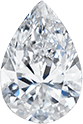
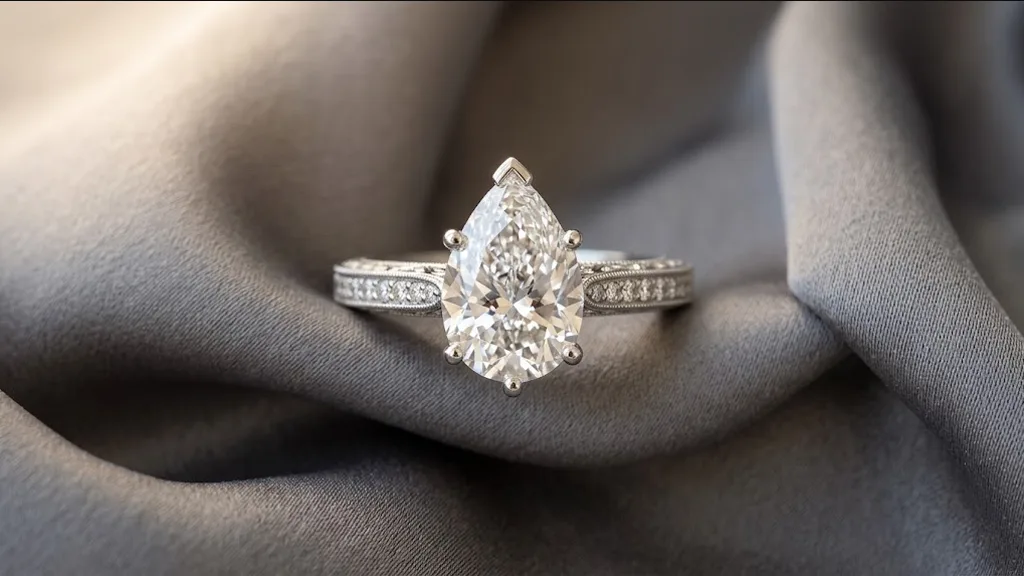
A pear shaped diamond usually needs 5 claws: 4 spread around the rounded body and 1 V-shaped claw wrapped over the point. The point is the thinnest part of the crystal and the part that chips, so it gets a claw of its own. Larger stones above about 1.50 ct often take 6 body claws instead of 4.
Why does the point need its own claw?
The point of a pear needs a claw of its own because it is the one part of the stone with almost no thickness behind it. A pear is a rounded body that tapers to a tip, and at that tip the two sides of the crystal meet at a narrow angle. Anywhere else on the outline, a knock is absorbed by a solid wedge of diamond. At the tip there is very little diamond to absorb anything.
Claw is the British trade word for the small metal finger that grips a stone; American listings call the same thing a prong, and the two mean exactly the same part. Our page on what a solitaire engagement ring is carries a claw-count table, but that table is written for round stones and does not cover a pointed outline. A pear is a different problem.
What is a V-claw, and when do you need one?
A V-claw is a single claw formed into a V so that it wraps a pointed tip from two sides at once instead of gripping it from one. Think of it as a small metal hood sitting over the point. It spreads any impact along two facets rather than concentrating it on the very end of the crystal, and it also stops the tip catching on knitwear, which is how most damage actually starts.
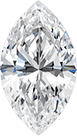
You need one on any stone that ends in a point: pear, marquise, heart and some trilliant cuts. You do not need one on a round, oval or cushion, because those outlines have no weak corner. Our guide to how each ring setting holds the stone covers the wider family of settings, of which the V-claw is one small and very specific member.
How many claws does the body of a pear need?
Most pear shaped diamonds take 4 claws on the body, set two to each shoulder, plus the V-claw over the point, which gives 5 pieces of metal in total. Four is enough on a stone up to roughly 1.50 ct because the curved shoulders give a claw a good seat to sit in. Above that weight the unsupported span between claws gets long, and we move to 6.
The other decision is where the body claws sit. Placing them on the widest part of the stone looks tidy but leaves a long unsupported run down towards the point, so we usually set them slightly forward of the widest line. If you are still choosing between outlines rather than settings, the full diamond shape guide compares them side by side.
The table below gives the counts we actually use at the bench, so you can match a stone size to a claw arrangement without guessing.
| Pear diamond | Claws on the body | Metal over the point |
|---|---|---|
| Under 0.70 ct | 4 claws | 1 V-claw |
| 0.70 ct to 1.50 ct | 4 claws | 1 V-claw |
| Above 1.50 ct | 6 claws | 1 V-claw |
| Rubover setting | A continuous metal rim | The rim wraps the point |
Can a pear shaped diamond chip at the tip?
Yes, a pear shaped diamond can chip at the tip, and that is the honest answer rather than a sales one. Diamond is the hardest material there is, which means it resists scratching, but hardness is not the same as toughness. A thin point struck at the wrong angle against a door frame or a worktop can lose a small flake. It is not common, and it is not inevitable, but it is real.
No setting makes a point chip-proof, and anyone who tells you otherwise is overselling. A V-claw reduces the risk substantially by covering the tip and by stopping it snagging; a rubover, where a rim of metal wraps the whole outline, reduces it further at the cost of covering more of the stone. Both lower the odds. Neither removes them.
The same physics applies to any pointed outline, which is why a marquise is set the same way at both ends. Our page on protecting the points on a marquise diamond covers that stone in detail, and whether marquise diamonds sparkle well answers the question people usually ask next.
Does the direction the point faces change the setting?
The direction the point faces does not change how many claws a pear needs, but it does change where they sit and how the ring feels to wear. Most people wear a pear with the point towards the fingernail, which is the standard orientation and the one most settings are designed around. The V-claw goes over the point either way, so the count stays at 5.
Where orientation matters is spinning. A pear is heavier at the round end than the pointed end, so an ill-fitting ring tends to rotate until the weight sits underneath. That puts the point across the finger, where it catches more. Our guide to which way to wear a pear diamond covers the orientation choice and how to stop a pear ring turning.
What should you check on a pear ring every year?
Check the V-claw over the point first, because it is the claw that does the hardest work and the one that thins soonest. Run a fingertip over the tip of the stone: a claw that has worn will feel like a small ridge rather than a smooth curve, and it will start catching on wool before it ever lets go. Then check the four body claws the same way.
The second check takes two seconds. Hold the ring close to your ear and tap the stone gently with a fingernail. A stone that is properly seated is silent; a stone that has loosened gives a faint tick. Anything that ticks, catches or moves needs a bench, and re-tipping a worn claw is quick, routine work that costs a fraction of replacing a chipped stone.
Every ring we make is hand-made in solid gold or platinum in our North Harrow workshop, with a free IGI certificate on the centre stone, and we set every pear with a V-claw as standard. A 5 stone pear cut ring in yellow gold at 528 pounds shows how the arrangement looks on a smaller stone.
For a matched pair, a curved pear cut bridal set at 999 pounds shapes the band around the point so nothing rubs, and a tiara pear cut bridal set in platinum at 999 pounds does the same in a harder-wearing metal. Prices correct at the time of writing; we hold 11 pear designs in our pear shaped ring collection.
Frequently asked questions
How many prongs does a pear diamond need?
Five is the usual answer: four around the rounded body and one V-shaped prong over the point. Prong is the American word for what a British jeweller calls a claw, so the counts are identical whichever term a listing uses. Stones above about 1.50 ct often move to six body claws, keeping the single V over the tip.
Does a bezel protect the point better than a claw?
Yes, a rubover setting, which the trade also calls a bezel, gives a pointed tip more protection than a V-claw because a continuous rim of metal wraps the whole outline. The trade-off is that the rim covers more of the stone and lets in less light from the side. Neither option makes a point impossible to chip.
Does a V-claw make the ring harder to clean?
Yes, slightly. A V-claw forms a small pocket over the point where hand cream, soap and dust collect, and that pocket is easy to miss with a cloth. A soft toothbrush, warm water and a drop of washing-up liquid clears it in under a minute. Work the brush from underneath as well as from the top.
Can a V-claw be added to a ring you own?
Yes, in most cases. A bench jeweller can remove the stone, build a V over the point and reset it, which is standard work on a claw head. It is harder on a cast setting with a decorative gallery, and the head has to be assessed first. Ask for the setting to be checked before you commit to the job.
What is the point of a pear diamond called?
The narrow end is simply called the point, or sometimes the tip, and the wide rounded end is the head or the belly. The line where the two sides bulge widest is the girdle. Knowing those words helps when you are asking a jeweller about protection, because the point is the only part that needs special handling.
How often should pear claws be checked?
Once a year for a ring worn every day, and immediately if the stone starts catching on knitwear or feels different under a fingertip. The V-claw over the point wears faster than the body claws because it sits proudest of the setting. A check takes minutes at the bench and costs nothing with us.
Ready to find your perfect ring?
Explore our lab-grown diamond collection or book a virtual appointment with our team.