What Shape of Diamond Is Best for an Engagement Ring?
Round is the most popular shape, but not always the best one for you. Every shape compared on sparkle, size, price and durability.
Shape is the first decision you make and the one you will notice every single day. Get it right and everything else — metal, setting, carat weight — falls into place around it. Get it wrong and no amount of quality elsewhere fixes the feeling.
This guide covers both halves of the question people usually ask: which shape is the most popular, and which shape is actually best for you. Those are not the same question, and the second one matters far more.
Shape and cut are not the same word
Worth clearing up first, because the trade uses them loosely.
Shape is the outline — round, oval, pear, and so on. Cut properly means how well the stone’s facets are proportioned and finished, which is what makes it sparkle. A “round cut” diamond is really a round brilliant, and a badly cut round will look worse than a well cut oval. So when someone says “which cut is best”, they usually mean shape, but the quality question hides underneath it.
What is the most popular diamond shape for engagement rings?
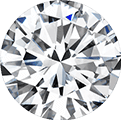
The round brilliant, and it is not close. It has been the default engagement ring shape for the best part of a century, and it remains the shape most people picture when they hear “diamond ring”.
We are not going to attach a percentage to that, because reliable, current UK-specific figures are not something we can verify — and made-up statistics are exactly what this industry has too many of. What we can tell you honestly is what our own shelves look like: of the engagement rings we stock, round is by a wide margin the largest group, followed by pear, then emerald and marquise.
There is a real reason for the round’s dominance, not just habit. Its 57 or 58 facets are arranged specifically to bounce light back at the viewer, and more research has gone into optimising round proportions than every other shape combined. If raw sparkle is your priority, the round wins on engineering, not fashion.
Behind it, oval and pear have grown enormously in the last decade, largely because they look bigger for the money.
Every shape, honestly compared
| Shape | Best known for | Watch out for | In stock |
|---|---|---|---|
| Round | Maximum sparkle; suits everyone; easiest to resell | Most expensive per carat; looks smallest for its weight | 20 designs |
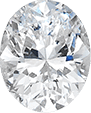
| Oval | Looks larger than a round of equal weight; elongates the finger | Can show a dark “bow tie” across the centre if poorly cut | 3 designs |
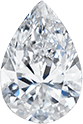
| Pear | Distinctive; very flattering; excellent finger coverage | The point needs a protective claw; must be symmetrical | 11 designs |
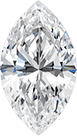
| Marquise | The longest look of any shape per carat | Two vulnerable points; a strong, definite style | 6 designs |
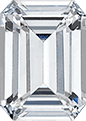
| Emerald | Clean, architectural, understated glamour | Step cuts hide less — inclusions and colour show more readily | 6 designs |
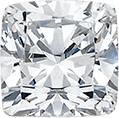
| Cushion | Soft, romantic, antique feel with plenty of fire | Compact for its weight; quality varies widely | 3 designs |
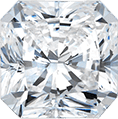
| Radiant | Brilliant sparkle in a rectangular outline | Corners can look cropped in very small sizes | 2 designs |
| Hexagon | Modern, geometric, genuinely unusual | Fewer matching wedding bands available | 4 designs |
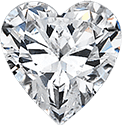
| Heart | Unambiguously romantic | Needs to be large enough to read as a heart; symmetry is critical | 2 designs |
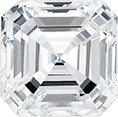
| Asscher | Art Deco character; deep, hall-of-mirrors depth | Compact footprint; shows inclusions like an emerald cut | 1 design |
| Rose cut | Flat, soft, candlelit glow; historic look | Far less sparkle than a brilliant — this is deliberate | 2 designs |
| Baguette | Slim, clean lines; superb as side stones and bands | Rarely used as a centre stone | 4 designs |
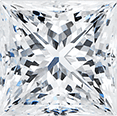
A note on what we do not stock: princess cut and old European cut are not currently in our collection. If your heart is set on either, we will not pretend otherwise or steer you into a substitute — we make bespoke rings at no extra design cost, so tell us and we will source and set the stone properly.
So which shape is best?
It depends entirely on what “best” means to you. Pick the row that sounds most like you.
Best for sparkle
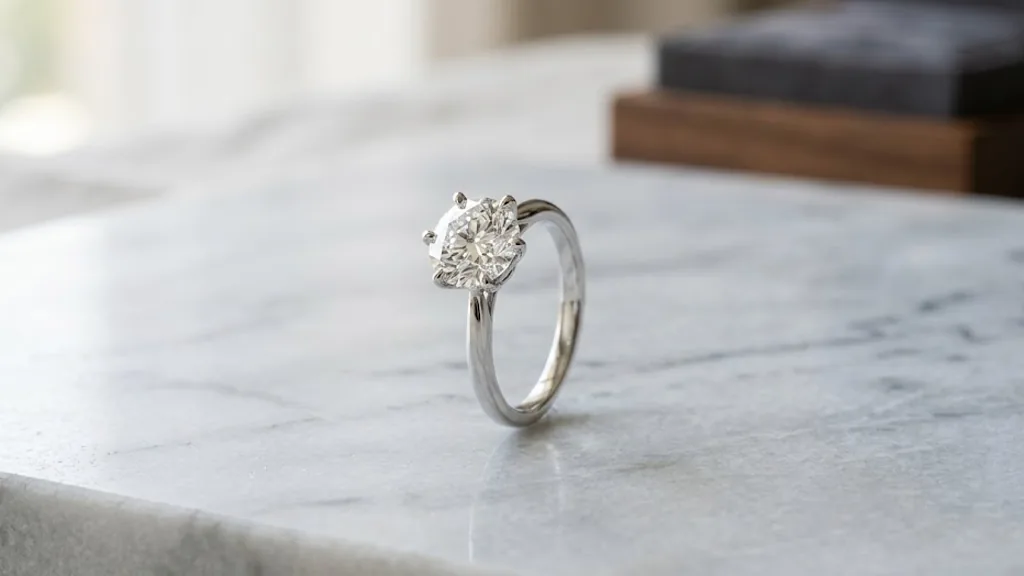
Round brilliant. Nothing else returns light as efficiently. A solitaire round cut engagement ring in platinum is the purest version of that — no distractions, just the stone and a strong white metal that will not need re-plating.
Best for looking big
Marquise, then pear, then oval. All three spread their weight lengthways along the finger rather than packing it into a compact circle, so they cover more skin for the same carat weight and the same money.
Best for a quieter, more modern look
Emerald cut. It is a step cut, meaning long parallel facets rather than lots of tiny triangular ones, so it flashes broad slabs of light instead of scattering it. It reads as confident rather than showy. A solitaire emerald cut engagement ring is a good place to see the effect.
Best for a hard-working pair of hands
Round, oval or cushion — shapes with no sharp points to snag or chip. Diamond is the hardest natural material there is, but hardness is not the same as toughness, and a sharp point can chip if you knock it hard enough. Whatever the shape, a bezel setting adds real protection.
Best value for money
Pear, marquise and emerald generally cost less per carat than round, because they waste less of the original rough crystal during cutting. Choosing one of them buys you a bigger-looking ring at the same budget. Our pear cut engagement ring in yellow gold is a good example of the effect. Prices are correct at the time of writing.
Best if you genuinely cannot decide
Round. It is the safest choice, it flatters every hand and every metal, it is the easiest to match a wedding band to, and if tastes change it is the shape that ages best. There is no shame in choosing the classic.
The four questions that actually settle it
- What jewellery does she already wear? Delicate and minimal, or bold and geometric? The ring should look like it belongs with the rest.
- What are her hands like day to day? Gardening, nursing, climbing, lifting — all point away from sharp points and tall settings.
- Does size or sparkle matter more? You can have plenty of both, but the shape you pick tips the balance one way.
- Will there be a wedding band alongside it? Round and emerald sit flush against a straight band easily. Pear and marquise usually want a shaped or curved band.
Frequently asked questions
Does the shape affect the price?
Yes, quite a lot. Round is typically the most expensive per carat because cutting one wastes the most rough material. Elongated shapes such as pear and marquise use the crystal more efficiently and generally cost less for the same weight.
Which shape looks the biggest for the money?
Marquise, by a clear margin, followed by pear and oval. If maximum presence is the goal, that is your shortlist. Our guide to how big a 2 carat diamond actually is shows the millimetre differences shape by shape.
Is a round diamond boring?
Only if the setting is. A round stone in a twisted, vintage, three-stone or hidden-halo setting looks nothing like a plain solitaire. Shape is one variable out of several.
Should I pick the shape she likes or the one that suits her hand?
The one she likes, every time. “Suits her hand” is a soft guideline about proportion, not a rule, and nobody has ever regretted a ring because it was the wrong shape for their knuckles.
Are unusual shapes harder to insure or repair?
No, but pointed shapes need a jeweller who understands them. Points should be held by a V-shaped claw, and that is something to check on any pear or marquise ring, wherever you buy it.
Can I compare oval and round side by side?
Yes — we have written a dedicated comparison of oval versus round diamonds, since it is the closest-run decision most buyers face.
Have a browse
Shapes are much easier to judge with your eyes than with a table. Look through the full engagement ring collection, or jump straight to the pear cut rings if you want the shape that gives you the most ring for the money. Every centre stone is lab-grown with a free IGI certificate, and everything comes with free insured UK delivery and 30 days to change your mind.
Ready to find your perfect ring?
Explore our lab-grown diamond collection or book a virtual appointment with our team.