Which Is More Expensive, Lab-Grown or Natural Diamonds?
Natural diamonds cost more than lab-grown. Why the gap exists, what it buys you, and why lab-grown prices vary so much.
Natural diamonds are more expensive than lab-grown diamonds. That has been true for years now, the gap has widened rather than narrowed, and for a comparable stone it is not a close contest.
What is worth understanding is why — because the reasons explain a lot about what you are actually buying, and they also explain why lab-grown prices themselves vary so much from one seller to the next.
They are the same material
Start here, because everything else follows from it. A lab-grown diamond is a diamond. Pure crystallised carbon, arranged in the same cubic lattice, with the same hardness, the same refractive index and the same way of splitting light into colour. It is not a simulant. Cubic zirconia and moissanite are different materials that look a bit like diamond; a lab-grown diamond simply is diamond.
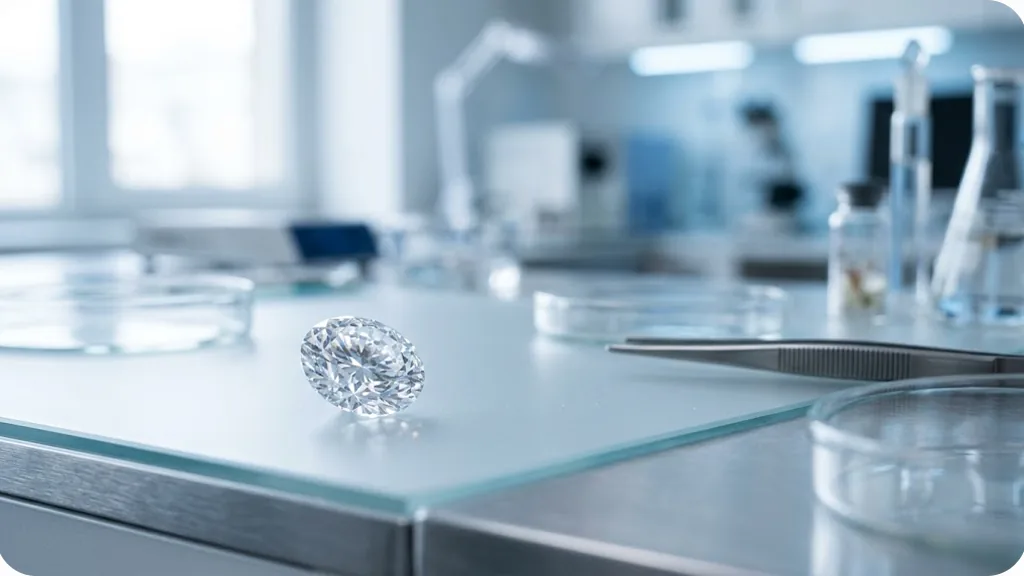
The difference is where it grew. A natural diamond formed deep in the earth over an enormous span of time and was brought near the surface by volcanic activity. A lab-grown diamond is made in a controlled chamber over a period of weeks, using one of two methods:
- CVD (chemical vapour deposition) — carbon is deposited layer by layer onto a small diamond seed from a carbon-rich gas.
- HPHT (high pressure high temperature) — a press recreates the pressure and heat found deep underground.
Both are graded by the same independent laboratories on the same scales. A certificate for a lab-grown diamond looks like a certificate for a mined one, with the growth method stated.
Why the price gap exists
Supply is the short answer. Natural diamonds of gem quality are finite, expensive to find and expensive to extract. Growing capacity for lab diamonds, by contrast, has expanded enormously and continues to. When supply of one is constrained and supply of the other is not, prices diverge.
Cost of production. Mining involves exploration, enormous plant, and processing vast quantities of rock for a small yield. Growing involves electricity, equipment and time. The second got cheaper as the technology matured. The first did not.
Scarcity as a product. Part of a natural diamond’s price is the fact that it is rare and old. That is not a trick — it is a genuine attribute, and some people value it highly. But it is a value that exists in the mind rather than in the stone, because the stone itself is chemically indistinguishable.
Resale expectations. Natural diamonds retain some secondary-market value; lab-grown ones currently retain very little. Honestly, neither is a good financial investment — you rarely get back what you paid for either. But if resale matters to you at all, it is a real difference and you should know about it.
Comparing like with like
| Lab-grown diamond | Natural diamond | |
|---|---|---|
| Material | Crystallised carbon | Crystallised carbon |
| Hardness | 10 on the Mohs scale | 10 on the Mohs scale |
| Sparkle | Identical for the same cut | Identical for the same cut |
| Graded on | Cut, colour, clarity, carat | Cut, colour, clarity, carat |
| Formed in | Weeks, in a chamber | A very long time, underground |
| Told apart by | Specialist laboratory equipment only — never by eye, never by a standard diamond tester | |
| Price for equivalent grades | Substantially lower | Substantially higher |
| Resale value | Currently very limited | Some, but usually well below purchase price |
What the gap buys you in practice
The useful way to think about this is not as a discount but as a trade. For the same money you can have a noticeably larger stone, better grades, or a better setting — or all three.
Put concretely: the budget that buys a modest natural solitaire will often buy a lab-grown stone of a step or two better in colour and clarity, in a bigger size, set in solid gold or platinum rather than a lighter mount. Whether that trade appeals depends entirely on what you value.
Some people want the geological history and are happy to pay for it. That is a completely reasonable position and we would never argue someone out of it. Others care about how the ring looks and how much diamond they get, in which case lab-grown is the obvious answer. Neither is the wrong choice; they are just different purchases.
Why lab-grown prices vary so much between sellers
Once you have decided on lab-grown, you will notice that prices for what sound like identical stones are all over the place. Four reasons account for most of it.
The grades are doing more work than you think. Colour is graded D (completely colourless) to Z (visibly tinted). Clarity runs from FL and IF at the top, through VVS1, VVS2, VS1, VS2, SI1, SI2 and down to I1–I3, where the tiny internal marks called inclusions become visible without magnification. Moving two colour grades and two clarity grades can change the price enormously while barely changing what you see.
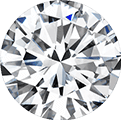
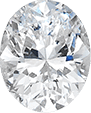
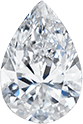
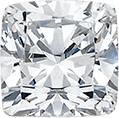
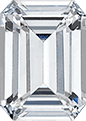
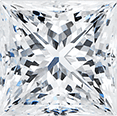
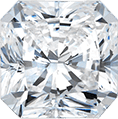
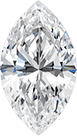
Shape. Round brilliants cost the most per carat — cutting a round wastes the most rough, and demand is highest. Oval, pear, emerald and marquise typically cost less for equivalent grades.
Certification. An independent report costs money to obtain. Uncertified stones are cheaper and far harder to compare fairly. We include a free IGI certificate on every centre stone so this variable is off the table.
Supply chain length. Every intermediary between the grower and you adds a margin. A workshop that buys close to source and sets the stone in-house prices very differently from a retailer buying finished goods through several hands.
Add to that the fact that lab-grown prices have fallen substantially over recent years and are still moving. Two quotes taken months apart are not really comparable.
What this looks like on our shelves
Every diamond we set is lab-grown, which is why a hand-made solid gold or platinum ring can start a little over £500 rather than several times that. Our Solitaire Round Cut Engagement Ring in White Gold starts from around £563 — the most traditional shape in the most traditional setting, at a price the same ring in a natural stone simply could not reach.
Where the gap really shows is in pieces with a lot of diamond in them. The Halo Marquise Cut Engagement Ring in White Gold surrounds an elongated centre stone with a full ring of small diamonds, and the Stackable Round Cut Full Eternity Band carries stones the whole way round the finger. Multi-stone designs like these are where lab-grown pricing changes what is realistically affordable.
Browse the full engagement ring collection or the wedding ring range to see the difference across a whole catalogue rather than a single stone.
Frequently asked questions
Can anyone tell a lab-grown diamond from a natural one?
Not by looking, and not with a standard handheld diamond tester — both will read as diamond, because both are diamond. Identifying growth origin requires specialist laboratory instruments that detect subtle differences in trace elements and growth patterns. This is precisely why certification matters: the report states the origin, so the two are never confused in the trade.
Do lab-grown diamonds get cloudy or lose their sparkle?
No. This myth comes from confusion with simulants such as cubic zirconia, which is a softer material that scratches and dulls with wear. A lab-grown diamond is 10 on the Mohs hardness scale — the same as any other diamond — and will look the same in fifty years as it does today, given ordinary care.
Are lab-grown diamonds better for the environment?
They avoid the land disturbance and waste rock associated with mining, but growing diamonds is energy intensive and the footprint depends heavily on the electricity used. It is fairer to say the impacts are different in kind rather than to claim one is simply clean. Be wary of anyone making sweeping claims in either direction without evidence.
Will a jeweller value or insure a lab-grown ring?
Yes. Lab-grown diamond jewellery is insured in the same way as any other, based on replacement cost. Your IGI certificate is the document your insurer will want, which is another reason we include one on every centre stone.
Is a lab-grown diamond a good engagement ring?
It is the same stone, in the same setting, at a price that leaves room for a better ring or for everything else a wedding involves. The only question worth asking is whether the natural origin matters to the person wearing it — and that is a conversation, not a technical question.
Natural diamonds cost more, and they will carry on costing more, for reasons that have very little to do with the stone itself. If those reasons matter to you, they are worth paying for. If they do not, lab-grown gives you every visible quality of a diamond and considerably more of it. Everything we make is hand-made in solid gold or platinum in North Harrow, London, with free insured UK delivery, 30-day returns and bespoke design at no extra cost.
Ready to find your perfect ring?
Explore our lab-grown diamond collection or book a virtual appointment with our team.