Is Colour or Clarity More Important in a Round Diamond?
For a round brilliant, colour usually matters more than clarity. Here is why, what the grades mean, and where to spend your budget.
If you are shopping for a round diamond for the first time, you will meet two words very quickly: colour and clarity. Both appear on the certificate. Both change the price. And almost everyone asks the same question — if I can only afford to be fussy about one, which one should it be?
The short answer, for a round brilliant cut, is colour. But the honest answer has a few conditions attached, and they matter. Here is the whole picture, explained from scratch.
What clarity actually means
Every diamond, whether it grew underground over millions of years or in a laboratory over a few weeks, forms with tiny natural features inside it. Gemmologists call the internal ones inclusions and the external ones blemishes. An inclusion might be a speck of carbon, a minute crystal, or a hair-thin feather-shaped fracture.
Clarity is simply a measure of how many of those features there are, how big they are, and how easy they are to spot. The grading is done under 10x magnification — that is, through a jeweller’s loupe, not with the naked eye. This is the single most important thing to understand about clarity, and we will come back to it.
The clarity scale in plain words
| Grade | What it stands for | What it means in real life |
|---|---|---|
| FL / IF | Flawless / Internally Flawless | Nothing visible at 10x magnification. Rare and priced accordingly. |
| VVS1 / VVS2 | Very Very Slightly Included | Inclusions so small that a trained grader struggles to find them at 10x. |
| VS1 / VS2 | Very Slightly Included | Small inclusions, easy for a grader to see at 10x, essentially never visible to your eye. |
| SI1 / SI2 | Slightly Included | Obvious at 10x. Often still invisible to the naked eye — but not always. Needs checking. |
| I1 / I2 / I3 | Included | Visible without magnification. Can affect sparkle and, at the low end, durability. |
The phrase you want in your head is eye-clean. That means: hold the diamond at normal reading distance, in ordinary light, and you cannot see anything inside it. Eye-clean is not a grade on the certificate. It is a practical test, and it is the one that governs how the ring actually looks on a hand.
What colour actually means
Colour grading measures the opposite of what most people assume. It does not grade how colourful a diamond is. It grades how little colour it has — specifically, how free it is of a faint yellow or brown tint.
The scale runs from D to Z. It starts at D purely by historical accident; the founders of the modern system wanted a clean break from older, sloppier terms like “river” and “AAA”, so they started at a letter no one had used.
| Range | Official name | What you would notice |
|---|---|---|
| D, E, F | Colourless | No tint at all. D and F look identical to almost everyone once set. |
| G, H, I, J | Near colourless | Faces up white. A trace of warmth may show against a D stone or a bright white metal. |
| K, L, M | Faint | A visible warm, creamy tone. Lovely in yellow gold, obvious in platinum. |
| N to Z | Very light to light | Clearly tinted to the naked eye. |
Note that grading reports print this as “Color”, because it is a formal term from the grading system. In everything else on this page, we use the British spelling.
Why the round brilliant changes the answer
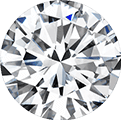
A round brilliant cut has 57 or 58 facets arranged to bounce light around inside the stone and throw it back at your eye. That churning, flashing light does two useful things at once.
First, it hides inclusions. A small feather or crystal that would sit there plainly in a flat, open, mirror-like cut gets lost in the visual noise of a round brilliant. This is exactly why round diamonds are the most forgiving shape for clarity, and why an SI1 round can look every bit as clean to the eye as a VVS1 round.
Second — and this is the part people miss — brilliance does not hide colour nearly as well as it hides inclusions. Colour is a body tint. It is spread through the whole stone. Sparkle does not cancel it out; it just breaks it into smaller flashes. So as you walk down the colour scale, there comes a point where the whole stone reads as warm rather than white, and no amount of cutting brilliance rescues it.
That asymmetry is the reason the usual advice for a round brilliant is: spend on colour, save on clarity.
So where should you actually land?
For a round brilliant at a typical engagement ring budget, a sensible target looks like this. Cut quality first — an excellent cut does more for how a diamond looks than any other factor, because it is the cut that creates the sparkle in the first place. Then colour in the G to F range. Then clarity at VS2 or a verified eye-clean SI1.
Three practical points sit behind that.
Size changes the maths. Under about 0.70ct, inclusions are physically smaller and harder to see, so clarity can relax further. Above roughly 1.50ct, both tint and inclusions become easier to spot, and it is worth nudging both grades up.
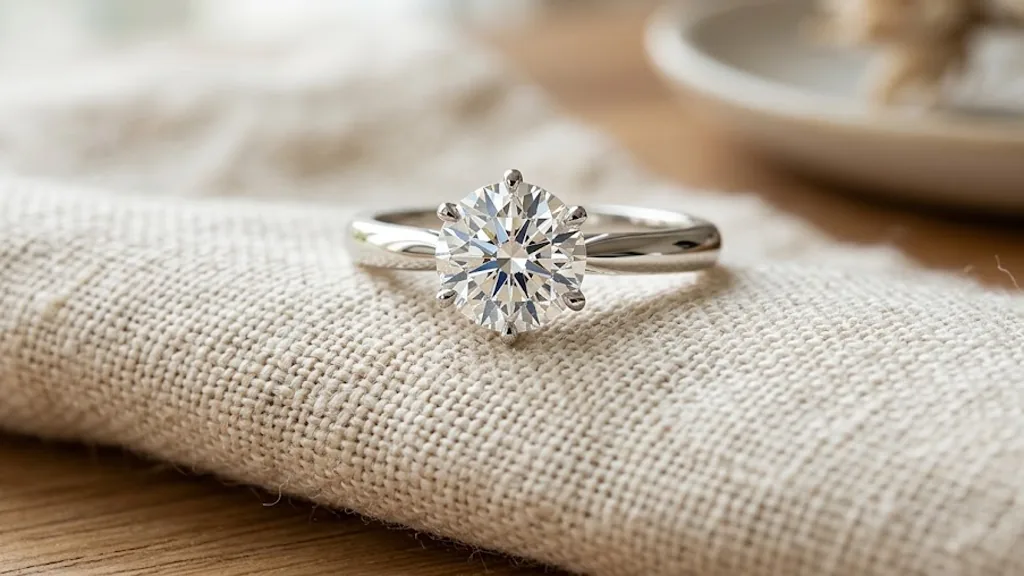
Your metal changes the maths too. A slightly warmer stone set in yellow or rose gold looks entirely white, because your eye compares it to the metal beside it. The same stone in a bright white setting, like a Solitaire Round Cut Engagement Ring in Platinum, is judged against a cool white background and will show its warmth more readily. If you are set on platinum or white gold, that is a genuine reason to prioritise colour.
Setting style changes it as well. In a halo or pavé design, the centre stone sits surrounded by small diamonds. Those small stones are usually very white, and they act as a permanent point of comparison. A Halo Round Cut Engagement Ring looks its best when the centre stone matches the halo rather than sitting a shade below it.
Where lab-grown diamonds change the conversation
Everything above is optical, and applies equally to natural and lab-grown diamonds — a lab-grown diamond is the same material, with the same hardness, the same refractive index and the same grading scales.
What changes is the price ladder. With natural diamonds, climbing from H to E colour, or from SI1 to VVS2 clarity, is expensive, and that is precisely why the “which one should I compromise on” question exists at all. With lab-grown, the whole ladder sits far lower. The steps between grades are still there, but in absolute money they are much smaller.
The practical result is that lab-grown buyers rarely need to make a painful trade-off. A colourless, high-clarity, excellently cut lab-grown round is achievable at a budget that would buy a considerably more compromised natural stone. So rather than choosing between colour and clarity, most of our customers simply take both up a notch and put the saving into carat weight, a heavier metal, or a more detailed setting like a Vintage Round Cut Engagement Ring in Yellow Gold.
Every centre stone we set comes with a free IGI certificate, so the colour and clarity grades are independently assessed rather than described by the seller. That is worth insisting on wherever you buy.
Frequently asked questions
Is a VVS diamond worth paying extra for in a round?
Visually, no. In a round brilliant, VVS and VS look identical to the naked eye, and both look identical to an eye-clean SI1. People choose VVS for the certificate and for peace of mind, which is a fair reason — just be clear that you are buying a grade, not a visible difference.
Can I see the difference between a D and a G diamond?
Side by side, unset, on a white grading tray, a careful eye often can. On a finger, in a ring, in normal light, almost nobody can. The difference becomes far more apparent if you compare D against J or K.
What is the lowest clarity I should consider?
SI1 is a reasonable floor for a round brilliant, provided you have confirmed the stone is eye-clean. Below that, into SI2 and I1, you are relying on luck. We would rather set an eye-clean SI1 than an SI2 with a dark inclusion sitting under the table.
Does clarity affect how strong a diamond is?
Only at the low end. A large feather reaching the surface, typically in I-grade stones, can be a genuine durability concern under a hard knock. In the VVS to SI range this is not something you need to think about.
Does the round shape hide colour better than other shapes?
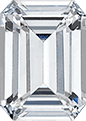
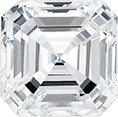
Better than step cuts such as emerald and Asscher, yes, because those have large open facets that show body tint plainly. But a round hides inclusions far more effectively than it hides colour, which is why the advice tilts towards protecting the colour grade.
Choosing yours
If you want to see how these grades behave in a real ring rather than on paper, browse our round cut collection or the wider range of engagement rings. Every piece is hand-made in our North Harrow workshop in solid gold or platinum, with free insured UK delivery and 30 days to return.
And if nothing on the page is quite right, we design bespoke at no extra design cost — tell us your budget and we will show you honestly where it is best spent.
More guides on this topic
Ready to find your perfect ring?
Explore our lab-grown diamond collection or book a virtual appointment with our team.