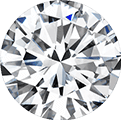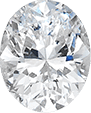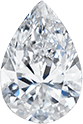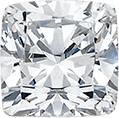
What Is the Best Cut and Clarity of Diamond?
Excellent cut and VS2 clarity is the combination we recommend most. Both scales explained, plus where the exceptions are.
Ask ten jewellers for the best cut and clarity of diamond and you will get ten answers, most of them designed to sell you something expensive. The genuinely useful answer is narrower than people expect, and it saves money rather than spending it.
Short version: aim for Excellent cut and VS2 clarity. That combination gives you a diamond that performs at the top of its ability and looks flawless to the naked eye, without paying for grades that exist only under a lens. Here is the reasoning, and the exceptions.
Cut and clarity are not the same kind of thing
People lump them together because they sit next to each other on a certificate, but they behave completely differently.
Cut is about workmanship — how well the diamond was shaped and polished. It is the only one of the four Cs that a human being controls, and it is the one that decides whether a diamond looks alive or dead. Cut is not a fixed quality of the raw material. It is a decision.
Clarity is about what nature put inside the stone — the tiny internal marks called inclusions. Nobody chooses these. They are simply there or not, and above a certain grade they stop being visible to you at all.
That difference drives everything. Improving cut improves what you actually see, every single day. Improving clarity beyond the point of visibility improves a piece of paper.
The cut scale, explained
Cut grading measures proportions, symmetry and polish. Get the angles right and light entering the top of the stone bounces off the internal walls and comes back out of the top as sparkle. Get them wrong and light leaks out of the bottom, leaving dull or dark patches.
| Cut grade | What it means | Worth buying? |
|---|---|---|
| Excellent (or Ideal) | Proportions in the optimum range. Maximum brightness and fire. | Yes — this is the target |
| Very Good | Very close to Excellent. Most people cannot tell them apart. | Yes, if it saves you money |
| Good | Noticeably less lively. Some light leakage. | Only on a tight budget |
| Fair / Poor | Visibly dull or dark. Weight kept at the expense of beauty. | No |
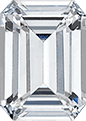
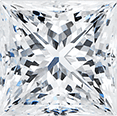
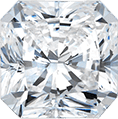
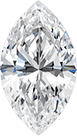
One important caveat. A formal cut grade is only issued for round brilliant diamonds. Fancy shapes — oval, pear, emerald, marquise, cushion and the rest — do not receive one, because there is no single agreed set of ideal proportions for them. Their certificates show polish and symmetry grades instead, and those are useful but not the same thing.
For a fancy shape, you judge cut with your eyes. Look for even brightness across the whole stone, no large dark zones, and in elongated shapes no heavy bow tie — the dark band that can sit across the middle of an oval, pear or marquise when the proportions are off.
The clarity scale, explained
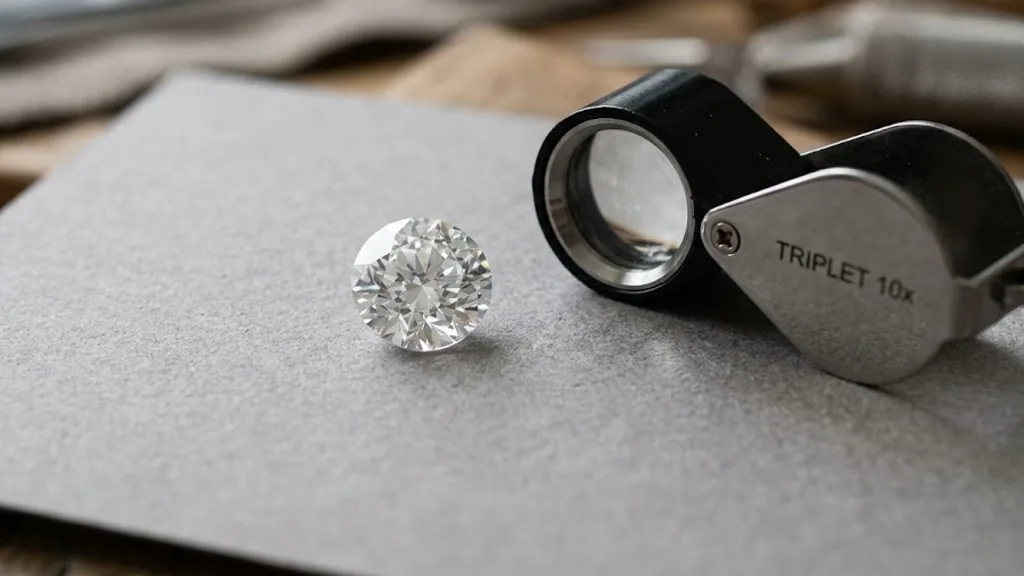
Clarity is graded at 10x magnification by a trained gemmologist. That single fact explains why the top of the scale is largely irrelevant to buyers.
| Grade | Meaning | Visible to you? |
|---|---|---|
| FL / IF | Flawless / Internally Flawless | No — and it never was |
| VVS1 / VVS2 | Very, Very Slightly Included | No |
| VS1 / VS2 | Very Slightly Included | No, in almost every case |
| SI1 / SI2 | Slightly Included | SI1 usually not; SI2 sometimes |
| I1 / I2 / I3 | Included | Yes, without magnification |
The trade calls a diamond “eye clean” when you cannot see anything in it at normal viewing distance in normal light. Eye clean typically starts around VS2 to SI1. VS2 is where you can buy with confidence in any shape. SI1 usually works in a brilliant cut but should be looked at first.
So why VS2 rather than Flawless?
Because the visible difference between a VS2 and a Flawless diamond is zero, and the price difference is not. Two people looking at the same ring across a table cannot distinguish them. Neither can the person wearing it.
The money you do not spend closing that invisible gap can go somewhere it shows: a better cut grade, a larger stone, a better colour grade, or a nicer setting. That is not a compromise. It is the correct allocation.
There is one honest counter-argument. If you specifically want the certificate to say something rare — as a collector, or because the paperwork matters to you emotionally — then buy the higher grade knowingly. Just do not tell yourself you will see it.
Where the exceptions are
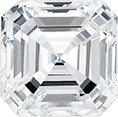
Step cuts need more clarity. Emerald, Asscher and baguette diamonds are cut with long parallel facets and a wide open table, which gives you a clear view straight into the stone. Brilliant cuts scatter light and hide inclusions; step cuts do the opposite. For an emerald or Asscher, treat VS2 as the floor, not the target, and go to VS1 on larger stones.
Big stones need more clarity. An inclusion at a given grade is physically larger in a 2 carat stone than in a 0.5 carat one. Above about 1.5 carats, move up a grade.
Big stones need better cut too. Any cutting weakness scales up with size. On a large diamond, Excellent is not a luxury.
Halos are forgiving. A ring of small diamonds around the centre stone adds sparkle at the perimeter and makes the eye read the whole cluster. You can safely drop to SI1 in a halo setting where you might not in a bare solitaire.
The order to spend in
If you only remember one thing, remember the order:
- Cut — never economise here. It is the difference between a diamond that catches the light across a room and one that does not.
- Colour — the D-to-Z scale, where D is completely colourless and Z is visibly tinted. G to H looks white to the eye and costs far less than D.
- Clarity — stop at VS2, or SI1 in a brilliant cut you have seen.
- Carat — whatever is left. Weight is the easiest thing to buy and the least interesting.
What that looks like in practice
A well-cut round brilliant in a plain setting is the purest expression of this advice. Our Solitaire Round Cut Engagement Ring in Platinum puts nothing between you and the stone, which is exactly why cut quality has to be right — there is no decoration to distract from a dull diamond.
If you would rather buy a slightly lower clarity grade and spend the saving on presence, the Halo Round Cut Engagement Ring is the classic route. The surrounding stones add brightness and make the centre look larger.
And if the emerald cut has caught your eye, the Three Stone Emerald Cut Engagement Ring shows the shape at its best — long, clean lines and those broad architectural flashes. Just hold the clarity grade up where the shape needs it.
Compare shapes across the round diamond collection or browse the full engagement ring range.
Frequently asked questions
Is Excellent cut always better than Very Good?
Technically yes, visibly not always. The grades are bands, and a top-end Very Good can outperform a bottom-end Excellent. If you can compare the two stones face-up and cannot tell, take the cheaper one.
What is the best clarity for a 1 carat diamond?
VS2 in any shape. SI1 works well in a round, oval, pear or cushion if you check the stone first. For a 1 carat emerald or Asscher, stay at VS2 or better.
Why does my fancy-shape certificate have no cut grade?
Because cut grading is only standardised for round brilliants. Your report will show polish and symmetry instead. For fancy shapes, judging the stone by eye — or having someone do it for you — matters more than any line on the report.
Do lab-grown diamonds get cut and clarity grades?
Yes, identical ones. Lab-grown diamonds are real diamonds and are graded on the same scales by the same independent laboratories. Every centre stone we set comes with a free IGI certificate showing exactly these grades.
Is a higher clarity grade worth it for resale?
Diamonds of any origin are poor investments, and resale rarely returns what you paid. Buy the stone you want to look at, not the stone you hope to sell.
Excellent cut, VS2 clarity, G to H colour — that is the combination we recommend more than any other, and it is the one that leaves the most budget for the parts you can actually see. Every piece is hand-made in solid gold or platinum in North Harrow, London, with free insured UK delivery, 30-day returns and bespoke work at no extra design cost if you want something built exactly to these specifications.
More guides on this topic
Ready to find your perfect ring?
Explore our lab-grown diamond collection or book a virtual appointment with our team.