Does Diamond Clarity Affect Sparkle? What Really Creates Brilliance
Clarity barely affects sparkle - cut does nearly all of it. What brilliance, fire and scintillation really come from, and the one exception.
Short answer: hardly at all. Clarity has very little to do with how much a diamond sparkles. Cut does almost all of that work, and the exceptions are narrow enough to name individually.
This surprises people, because clarity is the grade most heavily marketed to buyers and it sounds as though a “cleaner” stone must be a brighter one. It is not how diamonds work. Here is what actually creates sparkle, and where clarity does and does not come into it.
Sparkle is three different things
The trade splits what people call sparkle into three separate effects. It helps to know which one you are looking at.
| Effect | What you see | What creates it |
|---|---|---|
| Brilliance | White light bouncing back out of the top of the stone | Cut proportions and polish quality |
| Fire | Flashes of rainbow colour | How the facets split white light into its colours |
| Scintillation | The flickering as the stone or the light moves | The number, size and arrangement of facets |
Every one of those three is produced by the geometry of the cut. None of them is produced by clarity.
Why cut, not clarity, does the work
A diamond behaves like a system of tiny mirrors. Light enters through the top, travels down into the stone, and either bounces back up to your eye or leaks out through the bottom and is lost.
Whether it bounces or leaks depends entirely on the angles of the facets — how steep the pavilion is, how deep the stone is, how wide the table facet on top is. Get those right and a diamond is brilliant. Get them wrong and the stone looks dull and glassy, no matter what any other grade says.
A well-cut SI1 diamond will out-sparkle a poorly cut VVS2 every single time, and cost considerably less. If your budget forces a choice, cut is the C to protect.
The one case where clarity does dim a diamond
There is a real exception, and it is worth knowing: a large, dense cloud.
A cloud is a group of microscopic crystals packed close together. Small clouds are harmless. But when a cloud is big enough and dense enough to spread across a significant part of the stone, it scatters light internally instead of letting it pass cleanly. The result is a diamond that looks slightly milky or sleepy — noticeably less lively than its grade would suggest.
This can happen even in stones graded SI1 or SI2, which is exactly why reading the characteristics on a report matters more than reading the letter grade. Look for a report where the clarity grade is driven by a single “cloud” comment covering a wide area of the plot, and treat that stone with caution.
Beyond clouds, only the very bottom grades — I2 and I3 — have enough material inside to block a meaningful amount of light. At those grades the inclusions are visible anyway.
Which clarity grade sparkles the most?
Among eye-clean stones, no grade sparkles more than another. A Flawless diamond and a VS2 diamond of identical cut, in identical light, return light in exactly the same way.
So if someone asks which clarity sparkles most, the honest answer is that the question has the wrong grade in it. The right question is which cut grade sparkles most — and there the answer is genuinely Excellent or Ideal, whatever the laboratory’s top category is called.
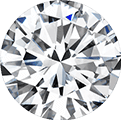
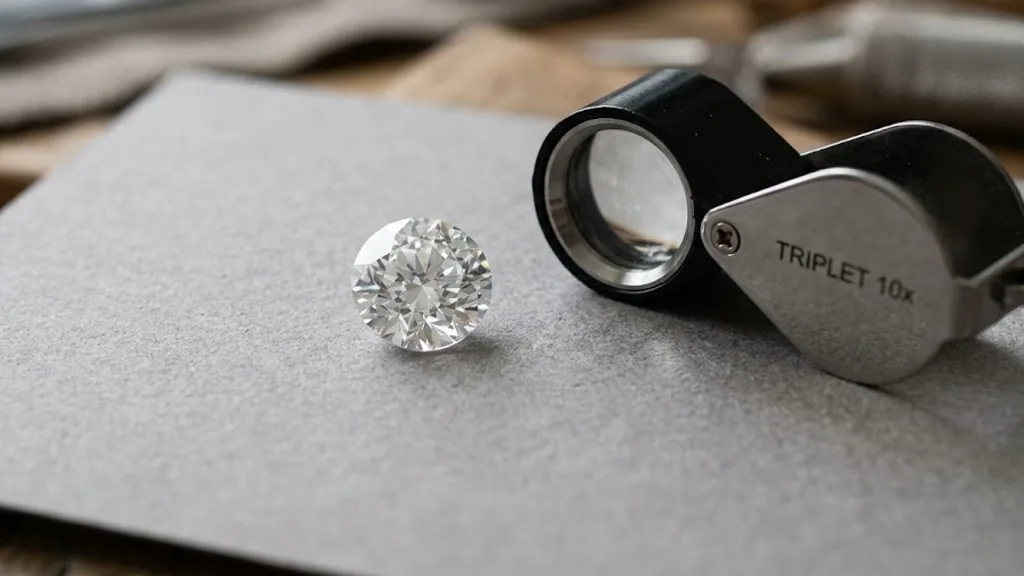
Shape plays a part too. Brilliant cuts with many small facets, like the round, produce the most scintillation. A twisted round cut engagement ring is a good example — a round brilliant centre with a band that catches light along its curve, which multiplies the flicker as the hand moves.
Does colour affect sparkle instead?
Slightly more than clarity does, but still much less than cut.
Colour describes how close to colourless the diamond is, graded from D at the top through to Z. A warmer stone lower down the scale does not sparkle less — it still returns just as much light — but the light it returns carries a faint warm tint, so the white flashes look a little less crisp.
The effect is subtle and heavily dependent on the metal around it. In yellow or rose gold, a warmer stone looks perfectly at home and the tint is effectively invisible. In white gold or platinum, a colder white stone sits more comfortably against the metal.
Between the two, if a stone is already eye-clean, colour has a very slightly larger claim on your attention than clarity — but only very slightly, and only in brilliant cuts set in white metal.
What genuinely makes a ring sparkle more
If sparkle is your priority, these are the levers that work, in order:
- Buy the best cut grade you can. This is not negotiable and it outranks everything else.
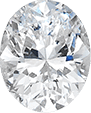
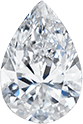
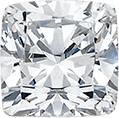
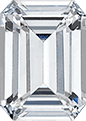
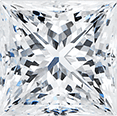
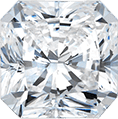
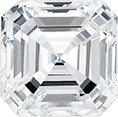
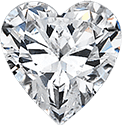
- Choose a brilliant-cut shape. Round, cushion, radiant, oval and pear all produce far more scintillation than step cuts like emerald and Asscher, which give broad flashes instead.
- Add more diamonds. A halo or a pavé band multiplies the number of light sources. A halo round cut engagement ring visibly out-sparkles a plain solitaire with the same centre stone, simply because there is more going on.
- Keep it clean. This is the one people neglect, and it is the biggest single factor in real life. See below.
- Consider the setting height. A stone raised slightly off the finger lets light in from the sides as well as the top.
A design like a leaf round cut engagement ring in platinum shows how setting shape and open metalwork let light reach the stone from more directions than a heavy, enclosed mount would.
The dirt problem
Nine times out of ten, when someone tells us their diamond has “lost its sparkle”, the stone is simply dirty.
Hand cream, soap, sun cream and skin oils build a thin film on the underside of the diamond — the part you never look at. That film stops light entering and returning through the pavilion, and the effect is dramatic. A stone can lose most of its liveliness in a fortnight of ordinary wear.
The fix takes five minutes: warm water, a drop of washing-up liquid, a soft toothbrush around and underneath the stone, rinse, and pat dry with a lint-free cloth. Do it every couple of weeks and your ring will always look its best — far more effective than any clarity grade you could have bought.
Frequently asked questions
Do inclusions block sparkle?
Individually, no. A crystal or feather is far too small to interrupt a meaningful amount of light. Only a large, dense cloud or the very bottom grades change light return in a way you would notice.
What makes a diamond sparkle — colour or clarity?
Neither, really. Cut makes a diamond sparkle. Between colour and clarity, colour has a marginally greater effect on how crisp the white flashes look, but the difference is small and both are dwarfed by cut quality.
Do lab-grown diamonds sparkle the same as natural ones?
Yes. They are the same material with the same optical properties, and sparkle depends on how the stone is cut, not where the crystal grew.
Does a bigger diamond sparkle more?
It has more surface area returning light, so there is more of it, but it is not more brilliant per square millimetre. A small, superbly cut stone can look livelier than a large, badly cut one.
Why does my ring sparkle more in some rooms?
Because sparkle needs directional light. Sunlight, candlelight and spotlights all have a single strong source, which produces distinct flashes. Flat, diffuse overhead lighting — most offices, for instance — spreads light evenly and gives a diamond very little to work with.
Where to go next
If you are choosing grades, our guide to what clarity to buy gives specific recommendations by shape and size, and how clarity affects a diamond covers price and durability too.
To see the difference cut makes, browse the round brilliant collection — the shape engineered specifically for maximum light return — or the wider engagement ring range.
Ready to find your perfect ring?
Explore our lab-grown diamond collection or book a virtual appointment with our team.