What Clarity Diamond Should You Buy? A Practical UK Guide
The right diamond clarity grade for your shape, size and setting, plus the grades to avoid and a three-question shortcut.
For most people buying most diamonds, the answer is VS2 or SI1. That is the range where a stone is reliably clean to the eye and you have stopped paying for quality that only a microscope can find.
But “most people” is doing a lot of work in that sentence. The right clarity grade shifts with the shape of your diamond, its size, and the setting it goes into. This guide gives you a specific answer for your specific situation.
First, the only thing you are really buying
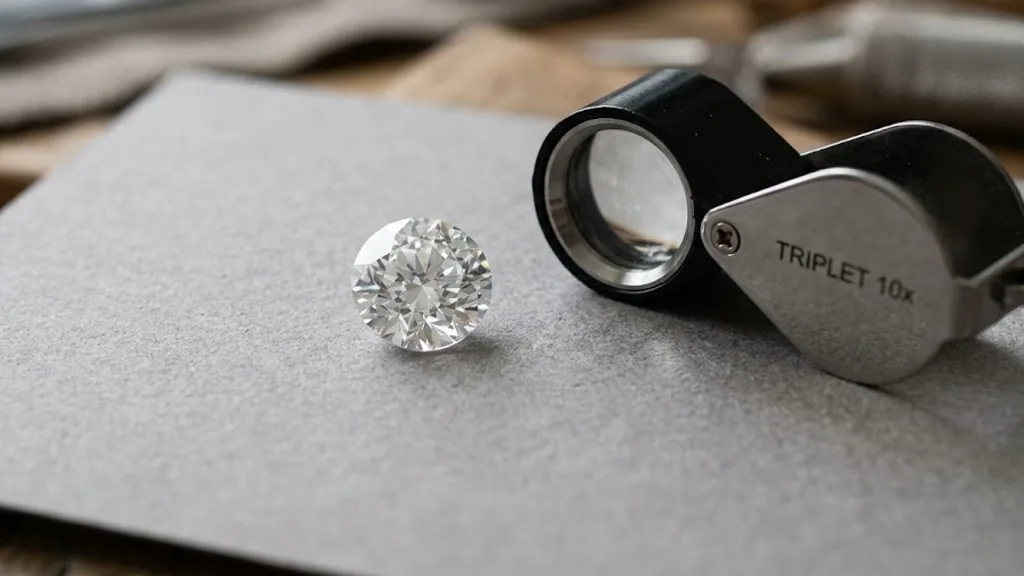
Clarity is graded at ten times magnification. Your eye works at one. So the practical goal is not a high grade — it is an eye-clean stone, meaning no inclusion visible to a person looking at the diamond normally, from about 20 to 30 centimetres away.
Once a diamond is eye-clean, every further clarity grade you buy changes the certificate and the price and nothing else. That is the whole game: find the lowest grade that is still eye-clean for your stone, and spend the difference on cut or carat.
What counts as a good clarity rating, by shape
Shape matters more than any other factor, because different cuts hide inclusions to wildly different degrees. This is a rule of thumb used across the trade rather than a measured figure, but it is a reliable starting point.
| Shape | How well it hides inclusions | Sensible grade |
|---|---|---|
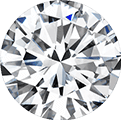
| Round brilliant | Best of all — 57 facets scatter light in every direction | SI1, or SI2 if the stone is verified eye-clean |
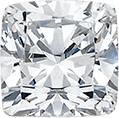
| Cushion | Very good — soft, broad sparkle | SI1 |
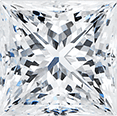
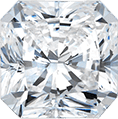
| Radiant | Very good — brilliant faceting under a rectangular outline | SI1 |
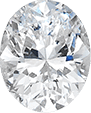
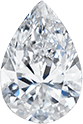
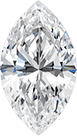
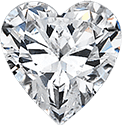
| Oval, pear, marquise, heart | Good, though the narrow ends show more | VS2 to SI1 |
| Hexagon and other fancy brilliants | Good — depends on the individual faceting pattern | VS2 to SI1 |
| Rose cut | Open and flat, with few facets to hide behind | VS2 |
| Baguette | Step cut, but usually small enough that it does not matter | VS2 on small stones |
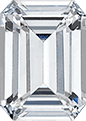
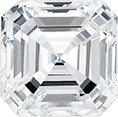
| Emerald and Asscher | Worst — long open facets act like a window | VS1 or better |
The gap between the top and bottom rows of that table is real money. A solitaire round cut engagement ring in white gold will happily carry an SI1 centre stone with nothing visible. A stackable Asscher cut wedding band in yellow gold uses small step-cut stones where the same logic applies at a smaller scale — but an Asscher centre stone of a full carat would need VS1 to look its best.
Then adjust for size
The larger the diamond, the bigger its table facet — the flat surface on top — and the more room any inclusion has to become noticeable. Adjust your target grade accordingly:
| Carat weight | Adjustment |
|---|---|
| Under 0.5ct | Go one grade lower than the table above. Inclusions have almost nowhere to show |
| 0.5ct to 1.5ct | Use the table as written |
| 1.5ct to 2.5ct | Go one grade higher |
| Above 2.5ct | Go one to two grades higher, and always view images of the actual stone |
Then adjust for the setting
A setting can hide an inclusion completely, and this is a genuinely underused way to save money.
- Bezel settings wrap metal around the girdle, concealing everything near the edge. You can comfortably drop a grade.
- Halo settings surround the stone with sparkle, which draws the eye outward. Drop a grade.
- Pavé and side stones add light along the band, with a similar effect.
- Plain solitaires with thin prongs show you everything. Do not drop a grade here.
- Three-stone designs put two extra diamonds beside the centre — helpful, though the centre is still the focus.
A pear cut engagement ring in yellow gold at £938 (correct at the time of writing) is a good example of a design where the surrounding stones and warm metal both work in your favour.
Grades to avoid, and why
I1, I2 and I3. These have inclusions visible without magnification, and at the lower two a large fracture can genuinely weaken the stone. We do not use them.
SI3. This is not a grade on the IGI or GIA scale at all. It was created by other laboratories to describe the gap between SI2 and I1, and a stone labelled SI3 would usually regrade as I1. We explain it fully in our guide to whether SI3 is a real clarity grade.
Clarity-enhanced stones. Diamonds whose fractures have been filled with glass-like material, or whose inclusions have been laser-drilled. These should always be disclosed. We do not sell them.
Anything without a report. A clarity grade with no named laboratory behind it is an opinion. Ask for the report number and verify it on the laboratory’s own site.
The three-question shortcut
If you want to skip all of the above, answer these three questions:
- Is it a step cut — emerald, Asscher or a large baguette? If yes, buy VS1. Stop here.
- Is it over two carats? If yes, buy VS1 or VS2.
- Otherwise: buy SI1, or VS2 if you want a comfortable margin. Do not go higher.
That will serve you well in the overwhelming majority of purchases, and it is roughly what we would tell a friend.
What we do at CarbonstoneUK
We set lab-grown diamonds, and every centre stone comes with a free IGI certificate — so the grade is independently assessed rather than something we assert. Rings are hand-made in solid gold and platinum in North Harrow, London, with free insured UK delivery and 30-day returns.
If you want a particular clarity, colour and carat combination that is not shown on a listing, ask us. We source to specification, and bespoke design carries no extra design cost.
Frequently asked questions
Is VS2 a good clarity?
Yes — it is arguably the best value grade on the whole scale. VS2 stones are eye-clean in the very large majority of cases, and the grade sits just below the point where prices begin climbing for benefits nobody can see.
Is SI1 too low?
Not for a brilliant-cut stone under about 1.5 carats. SI1 is usually eye-clean, and it is the grade where many experienced buyers land. Just check the report for a dark crystal under the table, which is the one thing that spoils an SI1.
Does clarity affect sparkle?
Barely. Sparkle comes from cut. The exception is a heavy cloud that makes a stone look milky — that is worth avoiding, and it shows on the report as a cloud spread widely across the plot.
What clarity do the accent stones need?
Very little. Small stones in a halo, a pavé shoulder or an eternity band are only a few millimetres across, and clarity differences do not register at that size. Setting quality matters far more.
Should I buy higher clarity for resale?
We would not advise buying any diamond for resale. Resale prices — for lab-grown and natural stones alike — are typically well below what you paid at retail. Buy what you want to wear.
Getting started
Pick your shape first, then apply the table above. If you want more background, our guide to every clarity grade from FL to I3 covers the whole scale, and how clarity affects a diamond explains where it genuinely changes what you see.
Otherwise, browse the engagement ring collection or filter straight to the oval cut range.
Ready to find your perfect ring?
Explore our lab-grown diamond collection or book a virtual appointment with our team.