How Does Clarity Affect a Diamond? Price, Looks and Durability
Clarity affects a diamond in four ways, and only one of them matters much. An honest look at price, appearance, brightness and durability.
Clarity affects a diamond in four separate ways, and they are not equally important. It affects price heavily, appearance only past a certain point, brightness rarely, and durability almost never.
Understanding which of those four is doing the work is the difference between spending well and spending unnecessarily. Let us take them one at a time.
1. Clarity affects price the most
This is the effect nobody disputes. Moving up the clarity scale raises the price of an otherwise identical diamond at every single step, and the steps get steeper towards the top.
The uncomfortable part is that the price curve keeps rising long after the visual difference has stopped. Somewhere around VS2, most diamonds become eye-clean — meaning no inclusion is visible to a person looking at the stone normally. Every grade above that point costs more and looks the same.
That is the single most useful fact about clarity. It is not that high clarity is bad; it is that you stop receiving anything for your money at a point well below the top of the scale.
2. Clarity affects appearance — but only below a threshold
Whether clarity changes how a diamond looks depends entirely on which end of the scale you are at.
| Grade range | Effect on appearance |
|---|---|
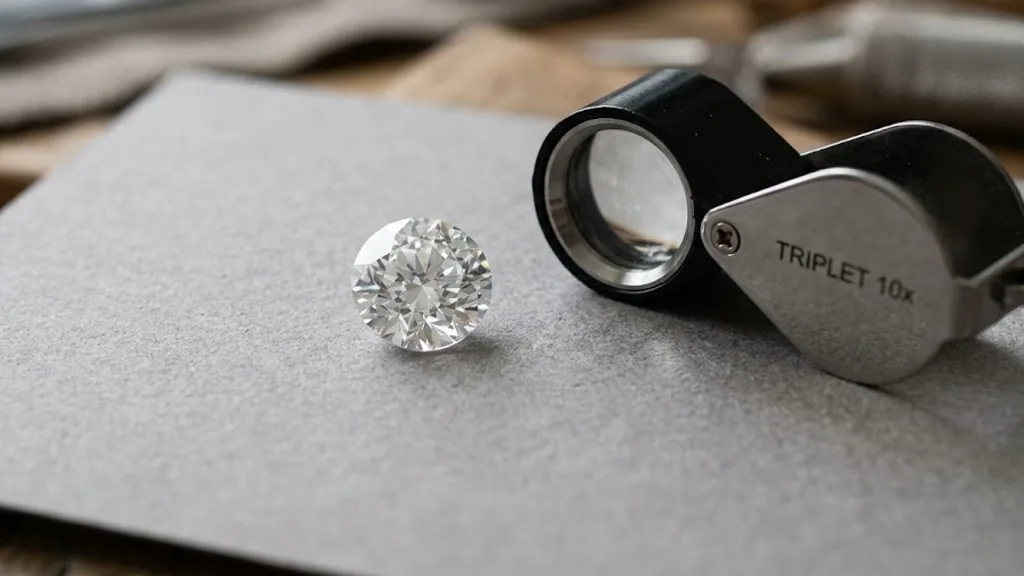
| FL to VS1 | None visible. Differences exist only under 10x magnification |
| VS2 | Almost always eye-clean. No practical difference from the grades above |
| SI1 | Usually eye-clean. Depends on the individual stone |
| SI2 | Sometimes eye-clean, sometimes not. Must be judged stone by stone |
| I1 to I3 | Inclusions visible without magnification, increasingly obvious |
The threshold is not fixed, because it moves with two things: the size of the stone and the shape of the cut.
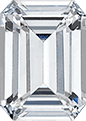
Bigger stones have wider table facets, giving inclusions more space to become noticeable, so the eye-clean threshold rises as carat weight goes up. And step cuts hide nothing. A stackable emerald cut half eternity band uses small emerald-cut stones where this hardly matters, but a large emerald-cut centre stone is a clear window into the diamond and demands a higher grade than a round of the same size would.
3. Clarity affects brightness only at the bottom
People often assume inclusions dim a diamond. In practice, they only do so when there are enough of them to physically block light.
The one case worth naming is a large, dense cloud — a mass of microscopic crystals packed together. A heavy cloud can give a stone a milky, slightly sleepy look even when the certificate grade sounds acceptable. This is one reason to read the characteristics on a report rather than the grade alone, and one of the few instances where clarity genuinely takes brightness away.
Otherwise, brightness comes from cut. Cut is the arrangement of angles and proportions that decides how much light entering the diamond comes back out of the top rather than leaking through the bottom. A well-cut SI1 will look brighter and livelier than a badly cut VVS2, every time and at lower cost.
This is why, if you have to choose, cut deserves your budget before clarity does. On a solitaire round cut engagement ring in rose gold, what you notice across a room is light return and shape — never a clarity grade.
4. Clarity affects durability almost never
Diamond is the hardest natural material there is, and an ordinary inclusion does not change that. For the grades most people actually buy — SI1 and upwards — durability is simply not a clarity question.
There is one narrow exception. A large feather, meaning an internal fracture, that reaches the surface at a vulnerable point can create a genuine weak spot. Vulnerable points are thin girdles, the corners of square cuts, and the sharp tips of marquise and pear shapes. This is rare, and it is the kind of thing a laboratory report and a competent jeweller will flag.
If you are looking at a stone below SI2, ask the specific question: does any feather reach the surface, and where? That is far more useful than the letter grade.
So — is clarity important?
Yes, but less than the way it is marketed suggests. Here is an honest ranking of what actually changes a diamond you will wear every day:
- Cut — creates all the sparkle. Nothing else comes close.
- Carat weight and shape — decides visual size, which is what people notice.
- Colour — matters, though it interacts with your metal choice; warmer grades hide well in yellow and rose gold.
- Clarity — matters up to the eye-clean point, then stops mattering entirely.
Clarity is the C where a modest grade buys you the most freedom elsewhere. Drop from VVS2 to VS2 and, on most shapes, you have lost nothing visible and gained real budget for size or cut.
Where clarity matters least of all
On small stones. Once a diamond is a couple of millimetres across, clarity differences are academic — there is not enough surface for an inclusion to register.
This applies to every accent stone in a design: the pavé along a shoulder, the halo around a centre stone, the row of stones in an eternity band. In a cluster round cut engagement ring, what determines how good it looks is the evenness of the setting and the consistency of the stones, not their clarity grades.
Frequently asked questions
Will people be able to tell what clarity my diamond is?
No. Nobody can read a clarity grade by looking at a ring, and anything at or above the eye-clean threshold is indistinguishable from Flawless in normal wear. Even a jeweller would need a loupe.
Does clarity affect resale value?
Clarity is one of the grades a buyer looks at, so it plays a part. But resale for any diamond — lab-grown or natural — is generally well below the retail price paid, and that is true across every clarity grade. Buy a ring because you want to wear it, not as an investment.
Does clarity affect how a diamond ages?
Not at all. Inclusions are locked into the crystal and never change. What ages is the surface: facet edges soften and scratches accumulate with wear, on any diamond regardless of grade. A professional clean and polish restores it.
Should I buy a higher clarity for a bigger diamond?
Yes, generally. A larger table facet gives inclusions more room to show. Above roughly two carats, moving up one grade from what you would otherwise choose is sensible.
Is clarity more important than colour?
It depends on the shape and the metal. Step cuts show clarity and hide colour, so clarity wins there. Brilliant cuts in white metal show colour more and hide clarity, so colour tends to matter more. Neither is universally more important.
A practical conclusion
Choose your shape first. Ask whether that shape hides inclusions or displays them. Buy the lowest clarity grade that stays eye-clean for it — and then spend everything you saved on cut quality and size, which are the things you will actually see.
For the detail on each grade, read our guide to the diamond clarity scale from FL to I3. To start with rings, browse the engagement ring collection or the wedding ring range. Every centre stone comes with a free IGI certificate, and everything is hand-made in solid gold and platinum with 30-day returns.
Ready to find your perfect ring?
Explore our lab-grown diamond collection or book a virtual appointment with our team.