Why Does a Lab-Grown Diamond Still Cost What It Does?
Growing is only the start. Reactor time, yield, cutting and IGI certification cost the same whether the crystal grew underground or in a press.
Lab-grown diamonds cost what they do because growing the crystal is only one line on the bill. Reactor time, the weight lost when a rough crystal is cut, the cutter’s week of work, the mount, the gold and the free IGI certificate all cost roughly the same as they would for a mined stone.
What actually costs money when a diamond is grown?
Growing a diamond costs money in four places, and the electricity bill is only the first. A press or a reactor has to be held at extreme heat and pressure for weeks to finish one batch, the seed plates and gases are consumed, the equipment wears and needs servicing, and a good deal of what comes out is not gem quality at all. The failures are paid for by the stones that survive.
Yield is the word the trade uses for that survival rate, and it is the single biggest cost nobody sees on a price tag. A batch that produces one clean 2 carat crystal and a handful of cloudy offcuts has to earn back the same reactor time as a batch that produces four. That is why two lab-grown diamonds of the same weight can leave the growing house at genuinely different costs.
Why does cutting cost the same as it does for a mined stone?
Cutting a lab-grown diamond costs the same as cutting a mined one because it is the same job on the same material. A cutter works to the same hardness, the same grain direction and the same fine tolerances, and a 1 carat finished stone still starts as rough weighing roughly twice that. Half the crystal leaves as dust. The polishing wheel does not know or care where the carbon came from.
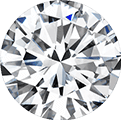
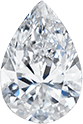
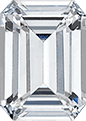
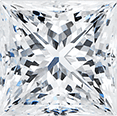
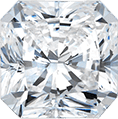
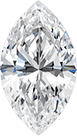
Skilled cutting is also slow. A well-proportioned round brilliant has 57 or 58 facets, each one placed by hand to a fraction of a degree, and a fancy shape such as a pear or a marquise takes longer still because there is no published formula to follow. That labour is a fixed cost per stone, so it takes a much bigger bite out of a cheaper diamond than an expensive one.
Where does certification sit in the price?
Certification sits near the end of the price, after the stone is cut and before it is set into a ring. An independent laboratory measures the diamond, grades it and issues a report, and that report is what lets you compare two stones you will never see side by side. We use IGI, and the certificate on the centre stone is included free with every ring we make.
The grades on that report are what you are actually paying a premium or a discount for. Clarity is the one buyers misread most often, and our explanation of what P1, P2 and P3 clarity mean covers the grades at the bottom of the scale that turn up on bargain listings.
One change matters here and it is recent. On 1 October 2025 GIA stopped grading lab-grown diamonds on the familiar D to Z colour and IF to I3 clarity scales, and now describes them only as “Premium” or “Standard”. IGI still issues the full 4Cs grades for lab-grown stones, which is exactly why our certificates are IGI. If a listing quotes a GIA colour letter for a lab-grown diamond, check the date on the report.
How much of a ring’s price is the stone at all?
A finished ring’s price splits between the diamond and everything around it, and at the lower end the metal and the making are often the larger share. A plain solitaire under £600 carries a modest centre stone, several grams of solid gold, a hand-made mount and a day of bench work. Step up to platinum and the metal on its own can cost more than the diamond sitting in it.
That is why the price of a ring does not fall away to nothing as the stone gets cheaper. Our solitaire round cut ring in white gold is £563 and the same design in platinum costs £657, both correct at the time of writing, and the difference between them is metal rather than diamond.
The same arithmetic applies at the small end. A slim band with a tiny stone still needs the gold, the setting, the hallmark and the box, which is why a promise ring rarely comes in as cheap as people expect. If you are planning one, our guide to words for giving a promise ring covers the part that costs nothing at all.
The table below shows the five places the money goes in a finished lab-grown diamond ring, and whether a mined stone carries the same cost.
| Cost centre | What it pays for | Does a mined stone pay it too? |
|---|---|---|
| Growing the rough crystal | Reactor time, consumables and the batches that fail | Yes, as extraction and sorting instead |
| Cutting and polishing | A cutter’s time and the weight lost as dust | Yes, identically |
| Certification | An independent IGI report on the centre stone | Yes |
| Metal and bench work | Solid gold or platinum, the mount, hallmarking | Yes |
| Getting it to you | Photography, insurance, delivery and returns | Yes |
What can nobody honestly tell you about the cost of growing?
Nobody outside the growing industry can honestly tell you what it costs to produce a single lab-grown diamond, and we are not going to pretend otherwise. Every public figure we have seen traces back to a grower, a marketing agency or a mining body, and each of those has a reason to want the number to look high or low. No reliable independent figure exists, so we publish none.
The same limit applies to the supply chain behind any stone. What a jeweller can promise honestly is narrower than the marketing suggests, and what the conflict-free claim actually covers sets out where the paper trail genuinely ends. Being straight about the edge of what we know is more use to you than a confident number we cannot stand behind.
What we can tell you is which cost centres exist, which of them we pay ourselves, and what our finished rings sell for. Everything upstream of the polished stone is a supplier price we are not free to publish, and any blog quoting a neat cost-per-carat to grow a diamond is quoting somebody’s estimate, not a measured figure.
Why has the price of a lab-grown diamond changed so much?
Prices for lab-grown diamonds have fallen a long way over the past decade, and the reason is capacity rather than any change in the stones. More growers, larger reactors and better yields put far more gem-quality material on the market each year. What has not fallen at the same rate is cutting, setting, hallmarking and certifying, so the floor under a finished ring is higher than the headlines suggest.
That gap between a falling stone price and a steady making cost is the thing most price articles miss. If you want the fuller picture, whether lab grown diamonds are getting cheaper covers the direction of travel, and how much do lab diamonds cost per carat gives the current guidance ranges with their caveats.
Every ring we make is hand-made in solid gold or platinum in our North Harrow workshop, with a free IGI certificate on the centre stone, free insured UK delivery and 30-day returns. A good place to see what the money buys is our minimalist round cut engagement ring at £587, or the wider engagement ring collection. Anything you cannot find there we will design bespoke at no extra design cost.
Frequently asked questions
Why are lab-grown diamonds not almost free?
Because growing the crystal is one cost among five, and the other four are unchanged. Cutting, certifying, the gold or platinum, the bench work and the cost of selling a ring safely all apply exactly as they would to a mined stone. Even a free diamond would leave a finished ring costing several hundred pounds to make.
Does the growth method change the price?
Yes, though not predictably. The two methods are high pressure high temperature, which squeezes carbon in a press, and chemical vapour deposition, which builds a crystal from gas. Each suits different sizes and colours, and each has its own yield problems. What reaches you is priced on the finished stone’s grades, not on the machine that made it.
Does a bigger reactor make a stone cheaper?
No, not on its own. A larger chamber can hold more seed plates, which spreads the running cost over more crystals, but only if the yield holds up. Bigger growth runs are harder to keep stable, and a batch that comes out cloudy costs the same to run as one that comes out clean. Scale helps; it does not guarantee.
Why do two sellers quote different prices for the same weight?
Because carat weight alone tells you very little. Two 1 carat stones can differ in cut quality, colour, clarity, fluorescence and which laboratory graded them, and any one of those moves the price. Add different metals, different mount weights and different service, and two rings described the same way are not the same product.
Does a lab-grown diamond hold its value?
No, and neither does a mined one in the way people hope. Any diamond bought at retail sells second-hand for a fraction of what you paid, because you are reselling into a trade that buys to resell. Buy a ring because you want to wear it, not as a store of money, whichever kind of stone it holds.
Is a cheaper lab-grown diamond a worse one?
No, not automatically. A lower price can mean a lower clarity grade, a warmer colour, a weaker cut or simply a smaller stone, and some of those you would never see on a finger. It can also mean a seller with lower overheads. Read the certificate rather than the price, and look at the stone itself.
More guides on this topic
Ready to find your perfect ring?
Explore our lab-grown diamond collection or book a virtual appointment with our team.