What Is a Lozenge Cut Diamond?
A lozenge cut diamond is a long four-sided rhombus shape. A 1 ct lozenge is about 9.85 x 6.40 mm, much longer than a 6.5 mm round of the same weight.
A lozenge cut diamond is a diamond with a four-sided, rhombus outline, like the diamond symbol on a playing card stretched long. It has two sharp points at the ends and two wider corners at the sides, and it is usually step-cut, with long flat facets. A 1 ct lozenge measures about 9.85 mm long, against 6.5 mm across for a 1 ct round.
What does a lozenge cut diamond look like?
A lozenge cut diamond looks like a long, slim diamond symbol: four straight sides, two pointed ends and two side corners, with both halves matching. Our 1 ct lozenge measures 9.85 x 6.40 mm, a length-to-width ratio of about 1.54 to 1. Most lozenges are step-cut, with facets in parallel bands like steps, so they flash in broad sheets of light.
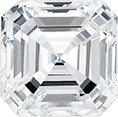
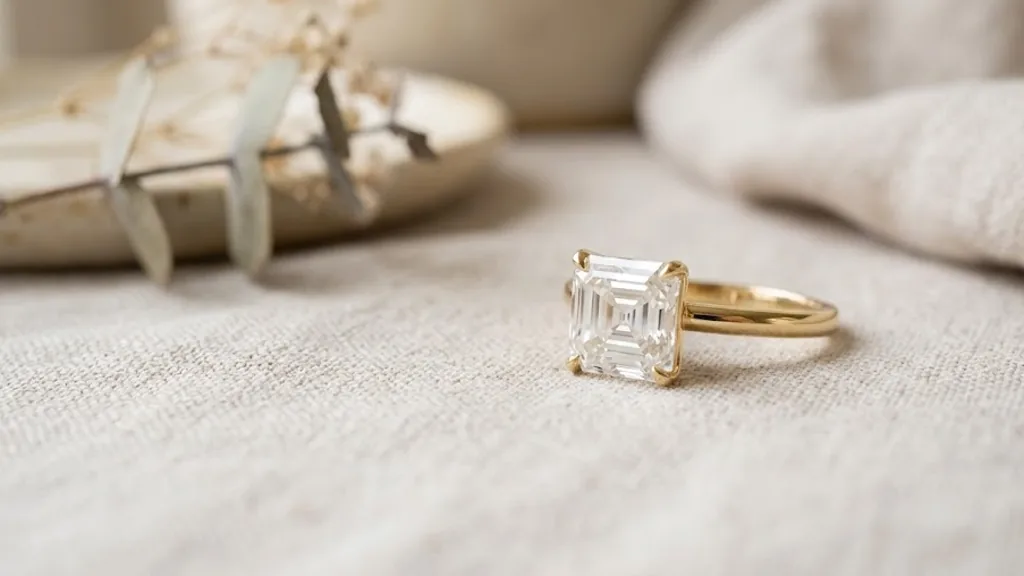
That step-cut face is the same family as the emerald cut, which our guide to step cut diamonds explains.
Why is the lozenge cut so rare?
The lozenge cut is rare because, for most of its history, it was cut as a small accent stone rather than a centre stone. Lozenges built patterns in Georgian jewellery and in Art Deco pieces of the 1920s and 1930s. Few cutters make larger ones today, and most are cut to order. No reliable public figure exists for how many are cut each year.
Small kite and trapezoid stones are related shapes, but they are normally used as side stones, not as the main diamond.
How is a lozenge different from a kite or a marquise?
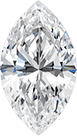
A lozenge is different from a kite or a marquise in its sides and its symmetry. A lozenge has four straight sides and matches both ways, top to bottom and side to side. A kite also has four straight sides, but one end is longer than the other. A marquise has two curved sides meeting in points, so a 1 ct marquise of about 10 x 5 mm looks softer and slimmer.
The table below compares typical 1 ct face-up sizes, and the conclusion is that a lozenge covers more finger length than a round of the same weight.
| Shape | Outline | Typical 1 ct size |
|---|---|---|
| Lozenge | Four straight sides, symmetrical both ways | About 9.85 x 6.40 mm |
| Kite | Four straight sides, one end longer | Varies, mostly side stones |
| Marquise | Two curved sides meeting in points | About 10 x 5 mm |
| Round | Circle | About 6.5 mm across |
Is a lozenge cut diamond durable enough for daily wear?
A lozenge cut diamond is durable enough for daily wear when its two points are protected. Diamond scores 10 on the Mohs hardness scale, so it resists scratches, but a sharp point is thin and can chip from a direct knock. A bezel (a rubover rim of metal) or a V-shaped claw over each point removes that risk. At the bench, we check the points first.
Our Bezel Lozenge Cut Engagement Ring in Yellow Gold wraps the whole outline in metal for exactly this reason.
How much does a lozenge cut engagement ring cost?
A lozenge cut engagement ring with a lab-grown centre starts at £939 in our collection at the time of writing, for a 1 ct stone graded E colour and VVS2 clarity. Natural lozenge diamonds trade in such small numbers that no reliable public price list exists, so each is priced individually and usually costs far more. Lab-grown keeps the shape within reach.
The Lozenge Cut Bridal Set in Rose Gold adds an open-gap band, also from £939 at the time of writing. CarbonstoneUK, based in North Harrow, London, makes both by hand, with a free IGI certificate. See our lab-grown engagement ring collection.
Frequently asked questions
Is a lozenge cut the same as a rhombus cut?
Yes. Rhombus is the geometric name for the same four-sided outline, and some sellers call it a diamond-shaped diamond. Lozenge is the usual trade word. Whatever the name, check the measurements: a 1 ct lozenge should be roughly 1.5 times longer than it is wide, such as 9.85 x 6.40 mm.
Does a lozenge cut diamond sparkle like a round brilliant?
No. A round brilliant has 57 or 58 facets arranged to break light into many small sparkles. A step-cut lozenge has fewer, longer facets, so it gives broad flashes and a clear, glassy look. Many buyers choose a lozenge because it looks calmer and more architectural than a round.
What carat sizes can I get in a lozenge cut?
Our lozenge engagement ring takes a centre stone from 1.00 to 2.00 ct, and the bridal set from 1.00 to 3.00 ct. As a guide, a 1.50 ct lozenge measures about 11.25 x 7.30 mm and a 2.00 ct about 12.26 x 8.11 mm. Made-to-order sizes can vary slightly.
Can a lozenge diamond be set east-west on the finger?
Yes. A lozenge can be turned sideways so its points face across the finger rather than along it. At almost 10 mm long for 1 ct, an east-west lozenge looks bold and modern on a slim band. We can make this bespoke, with no extra charge for the design work.
Which metal suits a lozenge cut diamond best?
Yellow gold suits a lozenge best if you love its Art Deco roots, because warm metal frames the crisp outline. White gold and 950 platinum give a cooler, icier look, while rose gold softens the points. Our lozenge designs come in solid yellow, white or rose gold and in platinum.
Will a lozenge diamond come with an IGI certificate?
Yes. Every centre stone we sell, including our lozenge stones, comes with a free IGI certificate recording measurements in mm, carat weight, colour and clarity. Labs do not all use the same name for unusual outlines, so check the measurements on the report match your stone.
More guides on this topic
For another geometric shape, read our guide to the hexagon cut diamond. For every shape side by side, see our complete guide to diamond shapes and cuts.
Ready to find your perfect ring?
Explore our lab-grown diamond collection or book a virtual appointment with our team.