What Is a Split Shank Engagement Ring?
A split shank is a band that splits into two strands near the stone. It widens the top to 4 mm or more and is usually as easy to resize as a plain band.
A split shank engagement ring is a ring whose band divides into two strands as it rises towards the centre stone, leaving a small open gap between them. The band is called the shank, so split shank simply means split band. The split usually starts on the shoulders, and it typically widens the top of the ring to 4 mm or more.
Why choose a split shank engagement ring?
A split shank engagement ring gives width and presence without a heavy band, because two slim strands do the work of one wide one. The open gap keeps the ring light while it looks generous. The two strands also give a large centre stone a broader base, which balances a 3 ct oval of about 11.33 x 8.09 mm. Some call it a split band or double shank.
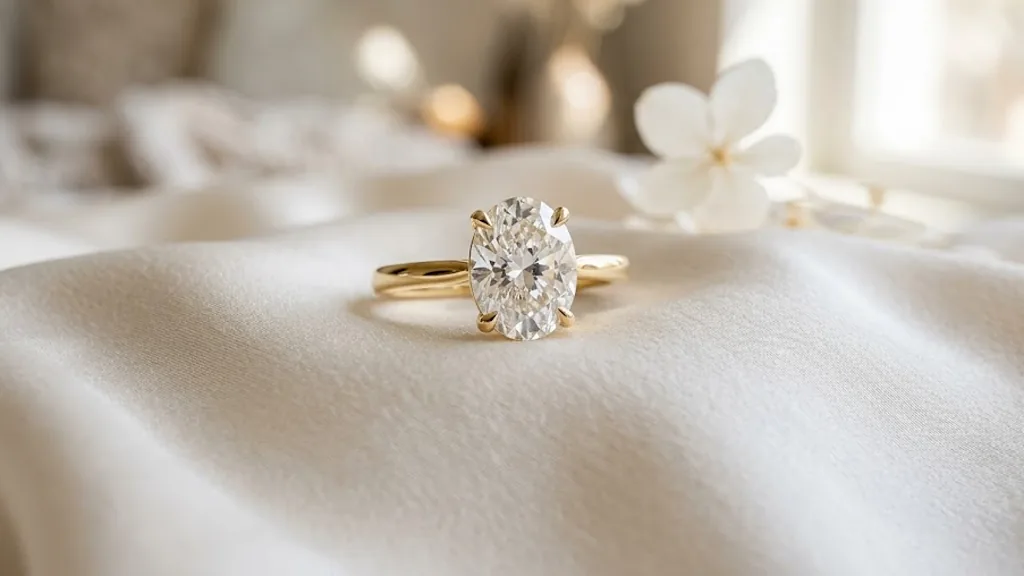
Our Hidden Halo Oval Cut Engagement Ring sets a 1 to 5 ct oval on a split shank, from £1,021 at the time of writing. For its hidden halo, see what hidden halo means on a ring.
Does a split shank make a ring harder to resize?
A split shank does not usually make a ring harder to resize, because the resize is done at the base of the band, where it is still a single strand. A change of 1 or 2 UK sizes, each about 1.25 mm of circumference, is normally routine on a plain base. The job gets harder if the split runs all the way round, or if diamonds line the whole band, so ask first.
As our guide to the different engagement ring settings explains, plain metal at the base keeps resizing simple.
Will a wedding band sit flush next to a split shank?
A wedding band will often sit flush next to a split shank, because the split happens at the shoulders while the base stays a single slim band. Our split shank designs have a base 1.80 to 2.10 mm wide, which sits neatly beside a straight band of similar width. A gap can appear if the strands flare low, so try both rings together.
If a gap shows, a curved band helps. See our guide on how to wear an engagement ring and wedding band covers stacking order.
How is a split shank different from a bypass or double band?
A split shank is different from a bypass or a double band because it starts as one band and divides only near the top. A bypass ring has two band ends that slide past each other at the centre. A double band is two complete rows running the whole way round. A split shank is usually the easiest to resize, because its base stays one strand of around 1.80 mm.
The table below shows that a split shank keeps the practical benefits of a single band at its base.
| Style | Where the band divides | Resizing |
|---|---|---|
| Split shank | Only at the shoulders | Usually simple at the single base |
| Bypass | Band ends slide past each other at the top | Usually simple at the base |
| Double band | Two full rows all the way round | Harder, with two strands to cut |
Which diamond shapes suit a split shank?
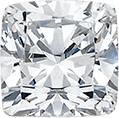
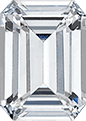
Diamond shapes that suit a split shank are usually larger, elongated or rectangular stones, such as ovals, emerald cuts and cushions. As a rule of thumb in the trade, not a measured figure, the style looks most balanced from about 1 ct upwards, because the strands need a stone to frame. Under about 0.5 ct, the split can overpower the diamond.
The Hidden Halo Emerald Cut Engagement Ring sets an emerald cut east-west on a split shank, from £1,016 at the time of writing. CarbonstoneUK, of North Harrow, London, includes a free IGI certificate on every centre stone. Compare styles in our lab-grown engagement ring collection.
Frequently asked questions
Is a split shank stronger than a single band?
Yes, at the shoulders, in most cases. Two strands share the load around the centre stone, so a knock is spread across both. The base is still a single band, typically 1.70 to 2.00 mm thick, so it is no weaker there than a normal ring. Avoid strands that look wiry.
Does dirt build up in the gap of a split shank?
Yes. Soap, cream and dust collect in the gap and under the stone. Soak the ring in warm water with a drop of washing-up liquid for 10 to 15 minutes, then brush gently through the gap with a soft toothbrush. A professional clean every 6 to 12 months helps.
Can a split shank have diamonds on both strands?
Yes. Small pavé diamonds, often around 1 mm each, can run along one strand or both for extra sparkle. A plain strand beside a pavé strand gives a softer contrast. Stones on the band make later resizing more delicate, so keep the base plain if your size may change.
Is a split shank comfortable for everyday wear?
Yes. The part that touches the inside of your finger is a single slim band, around 1.80 mm wide on our designs, so it feels like any other engagement ring. The wider split sits on top of the finger, and most people soon stop noticing it.
What is the difference between a shank and a band?
Shank is simply the trade word for the band, meaning the part of a ring that goes around your finger, so there is no real difference. Jewellers say shank when describing construction, such as width and thickness in mm. A split shank, split band and double shank usually mean the same idea.
Can a split shank ring be made in platinum?
Yes. Our split shank designs can be made in 950 platinum, as well as solid yellow, white or rose gold. Platinum is dense and hard-wearing, which suits two slim strands. We can design a split shank under another stone bespoke, with no extra design charge.
More guides on this topic
Before choosing, see how a halo engagement ring works.
Ready to find your perfect ring?
Explore our lab-grown diamond collection or book a virtual appointment with our team.