Are Lab-Grown Diamonds Better Than Mined Diamonds?
Same material, different origin. Where lab-grown genuinely wins, where mined does, and how to decide between them.
“Better” is a word that hides a question. Better at what? Better for whom? Lab-grown and mined diamonds are the same material, so asking which is the better diamond is a bit like asking whether a house built in 1890 is better than one built last year. It depends entirely on what you want the house to do.
Here is a straight comparison, with the places where each genuinely wins.
Are lab-grown and mined diamonds the same stone?
Both are crystalline carbon. Both score 10 on the Mohs hardness scale. Both bend light identically, so they sparkle identically. Both are graded by the same laboratories, using the same 4Cs. Nothing about wear, sparkle, longevity or repair differs.
That means the comparison is not about the material at all. It is about price, supply, sentiment and traceability.
Where do lab-grown diamonds win?
Price, decisively
A lab-grown stone costs a fraction of a mined stone of similar size and grade. That is not a small edge, it is the whole reason the category exists. It changes what a normal budget can buy from a modest stone in a modest setting to a good stone in a properly made piece.
What that money can then do
The saving does not have to go into a bigger stone. Spent well, it goes into the parts of a ring that determine whether it survives twenty years of washing up.
- Solid gold or platinum instead of thin plated metal
- Hand-set stones rather than glued or pressure-fitted ones
- A heavier shank that will not go oval within two years
- Better cut grade on the centre stone
Our Bezel Cushion Cut Engagement Ring in Platinum is a good example of that trade in action. The bezel wraps metal fully around the stone, which is the most protective setting there is, and platinum is the most durable metal we work in. That combination is what the lab-grown saving buys.
Traceability
You can say where a grown stone was made. Mined stones pass through cutting centres and trading houses, and while the Kimberley Process exists to keep conflict stones out, the chain is long. A shorter chain is a modest but genuine advantage.
Availability of larger and better-graded stones
A two-carat, high-clarity, well-cut stone is an ordinary request in lab-grown and an expensive one in mined. If size matters to you, this is the practical difference.
Where do mined diamonds win?
We sell lab-grown, and we still think this section is important. Skipping it would be dishonest.
The story
A mined diamond formed deep in the earth over an unimaginably long time and was carried to the surface by volcanic activity. Some people find that moving in a way that a reactor cannot replicate. That is not irrational, and no amount of technical argument should talk you out of it.
Resale, relatively
Neither type is a good investment, but mined stones currently have a stronger second-hand market. If reselling in ten years is genuinely part of your plan, mined loses less. Expect a substantial drop from retail either way.
Rare natural colours
Naturally coloured diamonds, particularly strong pinks, blues and greens, are extraordinarily rare, and rarity is the entire basis of their value. Grown coloured stones exist and can be beautiful, but they are not scarce, and collectors buy scarcity.
How do lab-grown and mined diamonds compare side by side?
| Lab-grown | Mined | |
|---|---|---|
| Chemical composition | Carbon | Carbon |
| Hardness | 10 | 10 |
| Sparkle and fire | Identical for equal cut | Identical for equal cut |
| Certification | IGI or GIA, same 4Cs | IGI or GIA, same 4Cs |
| Price for equal size and grade | Much lower | Much higher |
| Resale market | Weak | Weak, but stronger of the two |
| Supply | Can be scaled | Finite and falling |
| Origin trail | Short and documented | Long, multi-country |
Which is better for the environment?
You will find dramatic percentage claims from both sides of this argument. We are not going to repeat them, because the underlying studies are commissioned by interested parties and the figures do not survive scrutiny.
What can be said fairly is this. Mining moves enormous volumes of rock and permanently changes landscapes. Growing diamonds consumes a great deal of electricity, and how clean that is depends on the energy supply behind the reactor. Neither is free. Anyone offering you a single tidy number is overselling.
How do you actually decide between the two?
Work through it in this order and the answer usually appears quickly.
- Set the total budget for the finished ring, not for the stone alone.
- Decide what matters most: size on the hand, colourlessness, setting quality, or origin story.
- If origin story is top of the list, buy mined and enjoy it.
- If anything else is top of the list, lab-grown will get you further for the same money.
- Insist on a certificate either way, and read the cut grade first.
That last point is the one buyers most often skip. Cut governs how a diamond looks far more than colour or clarity does, and it is the grade that cannot be fixed later.
What does the same budget buy either way?
Numbers make this concrete in a way that arguments do not. We will not quote specific market prices for mined stones, because they move and any figure we printed would be out of date within months. But the shape of the trade-off is stable and worth understanding.
Take a fixed budget for a finished engagement ring. Roughly speaking, here is how it divides.
| Element | Choosing mined | Choosing lab-grown |
|---|---|---|
| Centre stone size | Smaller for the money | Noticeably larger for the same money |
| Colour and clarity | Often compromised to afford size | High grades affordable without compromise |
| Cut grade | Frequently traded down | Excellent cut comfortably within reach |
| Metal | Budget pressure towards lighter or plated bands | Solid gold or platinum without strain |
| Setting quality | Often mass-produced to save cost | Hand-set becomes affordable |
That final row is where we would put a customer’s money before anywhere else. Prices on our site are correct at the time of writing, and the reason a hand-made solid gold ring like our Solitaire Marquise Cut Engagement Ring sits where it does is precisely this trade-off working in the buyer’s favour.
The honest summary: if your priority is having the largest and best-graded stone your budget allows, lab-grown wins clearly. If your priority is the origin of the carbon, no amount of value engineering changes that, and you should buy mined without apology.
Frequently asked questions
Can anyone tell the difference by looking?
No. Not by eye, not with a jeweller’s loupe, and not with a standard thermal tester, which will read a lab-grown stone as diamond because it is one. Specialist laboratory equipment distinguishes them by tiny differences in growth pattern.
Is a mined diamond more durable?
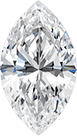
No. Hardness is a property of the crystal structure and both have the same one. Chipping risk depends on the shape and the setting, not the origin. Pointed shapes such as marquise and pear benefit from a setting that protects the tips.
Are lab-grown diamonds worth anything at all?
They have real material value and are insured like any fine jewellery, but private resale is poor for both types. Buy for wearing, not for reselling.
Do lab-grown diamonds come in the same shapes?
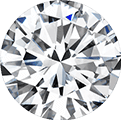
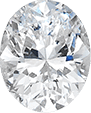
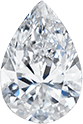
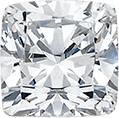
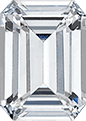
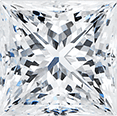
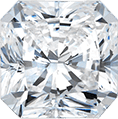
Almost all of them. We currently hold round, pear, emerald, marquise, baguette, hexagon, cushion, oval, heart, radiant, rose cut and asscher. We do not stock princess cut or old European cut, and if you want either we will make it bespoke at no extra design cost.
Which should I buy for a wedding band?
Whichever you chose for the engagement ring, mainly so the stones match in colour. A band such as our Stackable Round Cut Full Eternity Band sits against the engagement ring all day, and mismatched warmth between the two is more noticeable than most people expect.
Why do we sell lab-grown diamonds?
We make hand-finished rings in solid gold and platinum in North Harrow, London, and we set lab-grown stones because we think the money goes further in the parts of a ring that last. That is a preference, not a verdict on anyone else’s choice.
If you want to see what the difference buys in practice, compare a simple Solitaire Round Cut Engagement Ring in Platinum against the more detailed pieces in our engagement ring collection, or browse by shape starting with the cushion cut rings. Every centre stone comes with a free IGI certificate, UK delivery is free and insured, and returns are open for 30 days.
Ready to find your perfect ring?
Explore our lab-grown diamond collection or book a virtual appointment with our team.