Is It Wrong to Buy a Lab-Grown Diamond?
The four worries people have about lab-grown diamonds, answered honestly, including the two that contain a grain of truth.
People rarely ask this question out loud. They think it, usually late at night, somewhere between admiring a ring and putting the card details in: is it bad to buy a lab-created diamond? Am I cutting a corner? Will someone judge me?
The honest answer is no, there is nothing wrong with it. But the reasons people worry are worth taking seriously rather than brushing aside, because two of them contain a grain of truth.
The four worries, one at a time
“It feels like cheating”
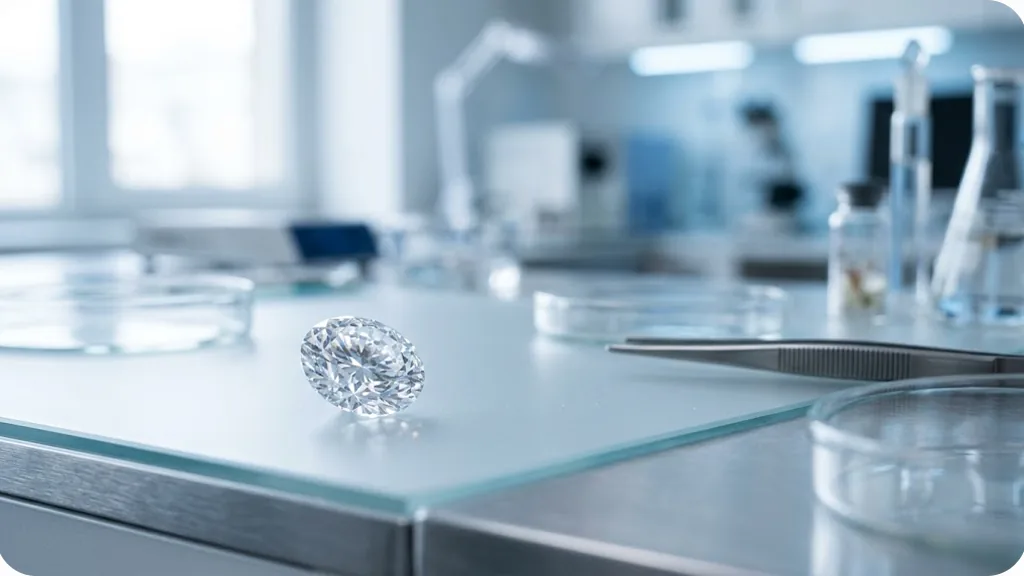
This is the most common one, and it rests on a mistake. A lab-grown diamond is not a cheaper-looking stand-in for a diamond. It is a diamond: the same carbon, the same crystal structure, the same hardness, graded on the same scale by the same laboratories. Nobody is getting a lesser object.
What you are getting is the same material without the cost of finding it. Mining is expensive because most of what you dig is not diamond. Growing removes that search. The saving is real and it is not a compromise in the stone.
“Am I taking work away from mining communities?”
This is a fair thing to think about, and it deserves a straight answer rather than a slogan. Diamond mining does employ large numbers of people, and in some countries it funds public services. Nobody should pretend otherwise.
It is also true that the industry has a documented history of conflict financing, unsafe informal mining and heavy environmental disturbance, which is exactly why the certification schemes exist. Both things are true at once. We would not tell you that buying lab-grown fixes global inequality, because it does not. What we can say honestly is that we know where our stones came from, and that is a shorter and clearer chain than most.
“It will be worthless”
Here is the grain of truth. Lab-grown diamonds do not hold their value well on resale. Neither, in practice, do mined diamonds: the retail price includes cutting, setting, certification, insurance and a shop, and none of that comes back when you sell privately.
The honest framing is that fine jewellery is not an investment. It is something you wear. If you need an asset, buy an asset. If you want a ring you will look at every day for forty years, buy the ring. A piece like our Solitaire Oval Cut Engagement Ring earns its keep by being worn, not by being sold.
“People will look down on it”
This has changed enormously and quickly. Lab-grown diamonds are now sold by mainstream UK jewellers, worn on red carpets and specified by designers. In everyday life, nobody can tell by looking, because there is nothing to see.
If you are worried about a particular person’s reaction, our advice is to say it plainly and early. “It is a lab-grown diamond, so we got a bigger stone and a better setting for the budget” is a complete answer and ends the conversation nine times out of ten.
What you actually gain
Set against those worries, the practical advantages are concrete.
| What you get | Why it matters day to day |
|---|---|
| More stone for the money | The budget stretches to a larger centre stone, or to a better one |
| Better setting quality | Money moves from the stone to solid gold or platinum and proper hand-setting |
| Clear origin | You can say where the stone was made, not just where it was traded |
| Same certification | IGI grades lab-grown stones on the identical 4Cs scale |
| Same durability | Mohs 10, the hardest natural material there is |
The second row is the one buyers underrate. The stone is only half a ring. A beautifully graded diamond in a thin, hollow, plated band is a bad purchase. Shifting a few hundred pounds from the stone into the metal and the setting is usually the single best decision a first-time buyer makes, and it is exactly what lab-grown makes possible.
The environmental question, honestly
You will see confident percentage claims on both sides of this. We will not repeat them, because the reliable figures do not exist in a form anyone can verify, and inventing them would be worse than saying nothing.
What can be said fairly: mining moves very large quantities of rock and disturbs land, water and habitat. Growing diamonds uses a lot of electricity, and how clean that is depends entirely on the grid or the supply powering the reactor. A lab-grown diamond grown on a coal-heavy grid is not automatically greener than a well-run mine. Anyone who tells you the answer is simple is selling something.
What is genuinely simpler is traceability. A grown stone has a short, documented history. That is a modest, true claim, and we prefer it to a dramatic one we cannot back.
When mined might be the better call
There are situations where we would say buy mined, and we say them to customers.
- You are buying because you love the idea of a stone formed a billion years ago. That feeling is real and lab-grown will not give it to you.
- You are matching or repairing an heirloom and want consistency of origin.
- You are buying a rare fancy colour as a collector, where natural rarity is the point.
Outside those cases, the practical arguments run the other way.
What to do with the money you save
This is the part of the decision that gets least attention and repays it most. Choosing lab-grown frees up a meaningful sum. Where it goes determines whether you end up with a ring that lasts.
In rough order of how much difference each pound makes:
- Cut grade on the centre stone. The single biggest driver of how a diamond looks. Excellent cut is worth paying for, and it cannot be improved after the stone is cut.
- Solid metal rather than plated. Solid 14ct or 18ct gold, or platinum. Plating wears through at the back of the band within a couple of years of daily wear and there is no permanent fix.
- A heavier shank. Thin bands go oval, dig in and eventually crack. A little extra weight in the band is invisible and adds years.
- Proper hand setting. Claws cut and closed by hand hold a stone far better than mass-produced pressed settings.
- Carat weight. Worth having, but last on this list rather than first, because a bigger stone in a weaker ring is a poor trade.
Most first-time buyers arrive convinced the decision is about carat weight. Almost all of them, once they have handled a well-made ring next to a cheap one, change their minds. The difference is obvious in the hand and impossible to see in a photograph, which is why online shopping tends to push people the wrong way.
Frequently asked questions
Is a lab-created diamond a real diamond?
Yes. It is chemically, physically and optically diamond. The distinction is origin, not identity, and a standard thermal diamond tester will read it as diamond because it is one.
Will a jeweller value it for insurance?
Yes. Provide the IGI certificate and the purchase receipt. Insurers treat it as they treat any fine jewellery, and the sum insured will reflect the replacement cost.
Do lab-grown diamonds get scratched more easily?
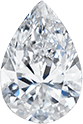
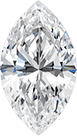
No. Hardness is a property of the material, so a lab-grown diamond resists scratching exactly as a mined one does. Both can chip if struck hard on an exposed corner, which is why protective settings matter for pointed shapes like marquise and pear.
Are the prices going to keep falling?
Lab-grown prices have fallen as production has scaled, and further movement is possible. Buy the ring you want at a price you are happy with today rather than trying to time it, in the same way you would with any manufactured product.
Can I have something made if I do not see it on the site?
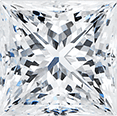
Yes. We design bespoke at no extra design cost. We do not stock princess cut or old European cut stones, so those are always a bespoke commission rather than something we can pull off the shelf.
A sensible way to decide
Ask what the ring is for. If it is to be worn, admired and handed on, the origin of the carbon is not the important variable. Cut quality, setting quality and how it looks on the hand are. Our Three Stone Oval Cut Engagement Ring and the Vintage Round Cut Engagement Ring in Yellow Gold are worth putting side by side for exactly that reason: same idea, very different feeling on the finger.
Browse the full engagement ring collection or the oval cut rings when you are ready, and ask us anything before you commit. Every centre stone comes with a free IGI certificate, delivery within the UK is free and insured, and you have 30 days to change your mind.
Ready to find your perfect ring?
Explore our lab-grown diamond collection or book a virtual appointment with our team.