Are Lab-Grown Diamonds Fake? The Honest Answer
No. A lab-grown diamond is real diamond, same carbon and same hardness. Here is why people think otherwise, and what to check before you buy.
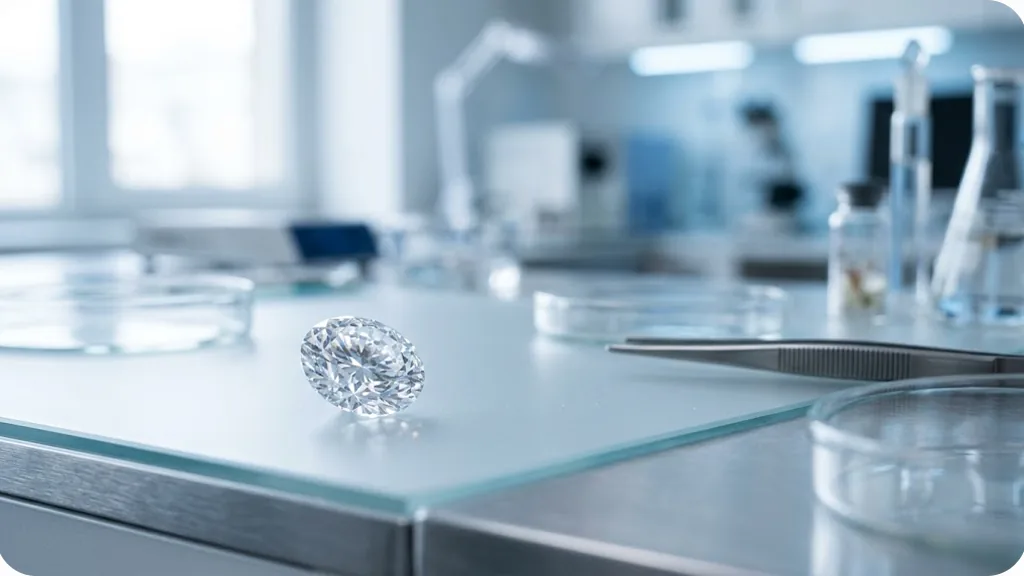
It is the question we are asked more than any other, usually in a slightly worried voice: are lab-grown diamonds fake? The short answer is no. A lab-grown diamond is a real diamond. It is not a substitute, an imitation or a clever piece of glass. It is carbon, arranged in the same crystal structure as a diamond pulled out of the ground, and it behaves like one in every way that matters.
But “no” on its own is not very satisfying, and it does not explain why the question keeps coming up. So here is the longer version, in plain English.
What “real diamond” actually means
A diamond is defined by what it is made of and how those atoms are arranged. Pure carbon, locked into a rigid three-dimensional lattice, formed under enormous heat and pressure. That structure is what gives diamond its famous hardness and the way it bends and splits light.
A lab-grown diamond has exactly that. Same carbon. Same lattice. Same hardness (10 on the Mohs scale, the top of the scale). Same refractive index, so it sparkles the same way. The only difference is where the heat and pressure came from: a machine in a laboratory rather than the earth’s mantle.
This is not a marketing position, it is the position of the gemmological laboratories. The IGI certificate that comes free with the centre stone in every one of our rings grades a lab-grown diamond on the same 4Cs scale used for mined stones, because it is the same material being measured.
Fake versus lab-grown: the difference that matters
A fake diamond is a different material pretending to be a diamond. Cubic zirconia is zirconium dioxide. Moissanite is silicon carbide. White sapphire is aluminium oxide. All three are real gemstones in their own right, and none of them is a diamond, because none of them is carbon.
A lab-grown diamond is not pretending to be anything. It is the thing.
| Stone | Made of | Is it a diamond? | Hardness (Mohs) |
|---|---|---|---|
| Mined diamond | Carbon | Yes | 10 |
| Lab-grown diamond | Carbon | Yes | 10 |
| Moissanite | Silicon carbide | No | About 9.25 |
| Cubic zirconia | Zirconium dioxide | No | About 8 to 8.5 |
| White sapphire | Aluminium oxide | No | 9 |
Why some people say lab diamonds “look fake”
This is the version of the question we find most interesting, because there is something real behind it, and it is almost never the diamond’s origin.
When a lab-grown diamond looks wrong to someone, one of a small number of things is usually going on.
The cut is poor
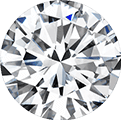
Cut is the single biggest driver of how a diamond looks. A badly proportioned stone leaks light out of the bottom instead of returning it to your eye, and the result is a flat, glassy, slightly dead appearance. That happens to mined diamonds too. It just gets blamed on the lab when the stone is lab-grown.
Because lab-grown rough is more affordable, some sellers put the savings into a bigger stone rather than a better cut. We would rather do the opposite. A well-cut smaller stone, like the one in our Solitaire Round Cut Engagement Ring, outperforms a larger, sloppier stone every time.
The stone is very large for the setting
Human eyes read context. A three-carat stone on a slim band on a small hand can read as “too much” and the brain jumps to “fake”, even when the stone is a natural diamond. Proportion is doing the work, not authenticity.
It is genuinely not a diamond
Some pieces sold loosely as “lab diamonds” online are moissanite or cubic zirconia with vague wording. This is the real problem hiding inside the myth. The protection is simple: buy certified. An IGI or GIA report on the centre stone tells you exactly what you have, in writing, from a third party with no stake in the sale.
Fluorescence or a very high colour grade
A small number of stones fluoresce strongly under ultraviolet light, which can look slightly milky in bright sunshine. It is uncommon, it affects mined and lab-grown stones alike, and a certificate tells you before you buy.
Can a jeweller tell the difference?
Not by eye. Not with a loupe. Not with the pen-style thermal testers you see in shops, which check whether a stone conducts heat like a diamond, and a lab-grown diamond does, because it is one.
Specialist laboratory equipment can tell, and it is looking for tiny differences in the growth pattern of the crystal, in the same way a geologist can tell which mine a natural stone came from. That is how certification works. It is a record of origin, not a judgement about quality.
Do proper jewellers sell them?
Yes, and increasingly so. Lab-grown diamonds have moved from a niche curiosity to a normal part of the fine jewellery trade in the UK. High street chains, independent workshops and online specialists all stock them.
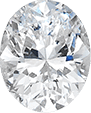
What varies enormously is how they are made up. A real diamond set into a thin, plated, mass-produced band will not last, and that is where “fake feeling” jewellery genuinely comes from. Everything we make is hand-made in solid gold or platinum, in North Harrow, London. A piece like our Hidden Halo Oval Cut Engagement Ring is built to be worn daily for decades, not to survive a season.
Where lab-grown and mined genuinely differ
Being honest cuts both ways. There are real differences, and they are worth knowing before you buy.
- Price. Lab-grown stones cost substantially less than mined stones of comparable size and quality. That is the main reason people choose them.
- Resale. Neither type resells well to the public. Mined diamonds hold a slightly stronger second-hand market, but expect a large drop from retail on both. Buy jewellery to wear, not as an investment.
- Origin story. Some people want a stone that spent a billion years underground. That is a perfectly good reason to choose mined, and we will not argue you out of it.
- Supply. Lab-grown production can be scaled, mined supply cannot. This is why lab-grown prices have moved downwards in recent years.
Notice what is not on that list: appearance, durability, sparkle, or whether it counts as a proper diamond.
How to check a seller in five minutes
Since the real risk is misdescription rather than lab-grown diamonds themselves, here is a quick test you can apply to any jeweller, online or on the high street.
- Ask what the centre stone is, in one word. “Lab-grown diamond” and “mined diamond” are answers. “Diamond simulant”, “diamond hybrid”, “diamond essence” and “created gemstone” are not, and all four are used to sell things that are not diamond.
- Ask which laboratory certified it. IGI and GIA are the names you want. An in-house certificate from the seller is a description, not independent grading.
- Ask for the report number and look it up. Both laboratories publish free online verification. Thirty seconds tells you whether the paperwork matches the stone.
- Ask what the band is made of. Solid 9ct, 14ct or 18ct gold, or platinum. “Gold plated”, “gold filled” and “gold vermeil” are thin coatings over a base metal and will wear through.
- Ask about returns. A seller confident in what they sell offers a proper return window. We give 30 days.
A seller who answers all five plainly is almost certainly straight with you. A seller who becomes vague on any of them has told you what you need to know.
Frequently asked questions
Will my lab-grown diamond cloud over or lose its sparkle?
No. Diamond does not degrade, oxidise or go cloudy. What dulls any diamond is a film of soap, hand cream and skin oil on the underside of the stone, and warm water with a drop of washing-up liquid and a soft brush clears it in a minute.
Is a lab-grown diamond a “diamond simulant”?
No. A simulant imitates the look of diamond using another material. A lab-grown diamond is diamond, so the word does not apply. Anyone using it that way is either confused or being careless.
Do I have to tell people it is lab-grown?
Only if you want to. It is a real diamond either way, so nothing is being hidden. In our experience most people say it plainly, because the reason they chose it, more stone for the money and a clearer supply chain, is a reason they are happy to give.
Does it come with paperwork?
Yes. Every centre stone we set comes with a free IGI certificate confirming carat, colour, clarity, cut and that the stone is laboratory-grown. Keep it with your insurance documents.
What if I want a shape you do not stock?
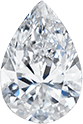
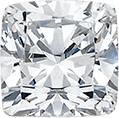
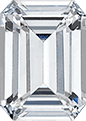
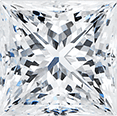
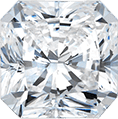
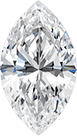
We hold round, pear, emerald, marquise, baguette, hexagon, cushion, oval, heart, radiant, rose cut and asscher. We do not stock princess cut or old European cut. If that is what you want, we make it bespoke at no extra design cost rather than talk you into something else.
Where to look next
If the “is it real” question is settled for you, the useful next step is looking at shapes and settings rather than reading more about the science. Our engagement ring collection is a good place to start, and the round cut selection shows how much difference cut quality makes when everything else is held steady. If you would like a second opinion on a stone you are considering elsewhere, send us the certificate number and we will read it with you, whether or not you buy from us.
Ready to find your perfect ring?
Explore our lab-grown diamond collection or book a virtual appointment with our team.