What Clarity and Colour Should You Choose for a Diamond Ring?
Which clarity and colour grades are worth paying for, shape by shape and metal by metal - and where to save without anyone noticing.
Once you know what the letters on a diamond certificate mean, a harder question arrives: which ones should you actually buy? Clarity and colour are the two grades where it is easiest to spend money on something nobody will ever see — and equally easy to save money in the wrong place and end up with a ring that looks dull.
Here is how we advise customers in the workshop, with the reasoning shown so you can decide for yourself.
Does clarity matter in diamonds?
It matters, but not in the way most people assume.
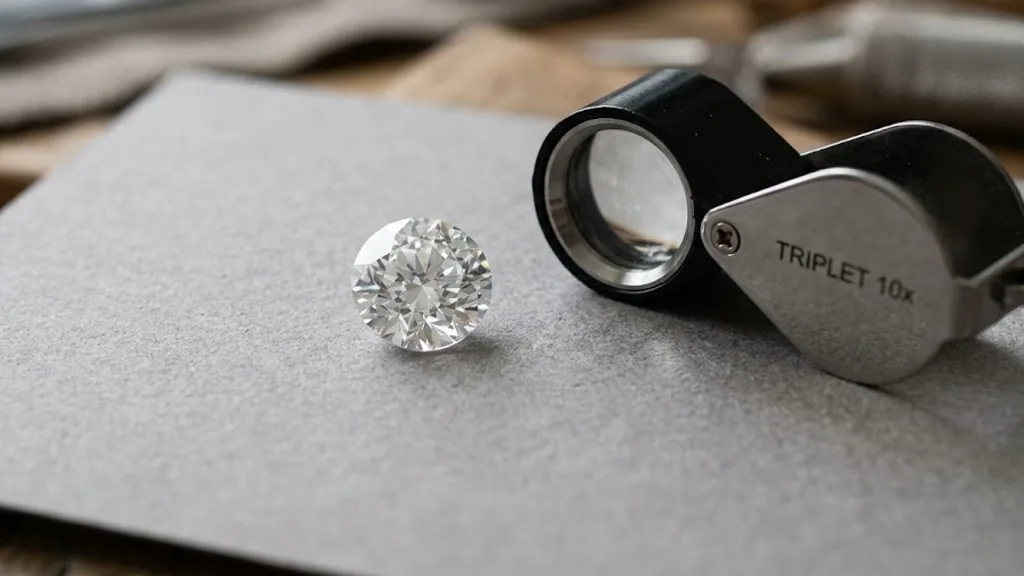
Clarity is graded under 10x magnification — a jeweller’s loupe. The grade describes what a trained grader sees through a lens, not what anyone sees when the ring is on a hand. That gap is the whole story.
So clarity matters for two real reasons:
- Visibility. Below a certain point, inclusions become visible without a lens, and a visible dark speck genuinely spoils a diamond.
- Light performance. Heavy inclusions, or a dense cloud of microscopic ones, can scatter light and make a stone look hazy rather than bright.
And it matters far less than people think for one reason: above the point where a stone is clean to the naked eye, extra clarity is invisible. You are paying for a certificate line, not for beauty.
Honestly, clarity is not the grade that transforms a diamond. Cut is. A well-cut SI1 will out-sparkle a badly cut VVS1 every single time, in any lighting, to any eye. If your budget forces a choice, protect the cut first.
The term that matters more than the grade: eye-clean
“Eye-clean” means you cannot see any inclusion when you look at the diamond face-up, from about 30 centimetres away, in normal light. It is not a formal grade and it does not appear on a certificate. It is the practical standard the trade actually uses.
Eye-clean is not tied to one letter. Some SI2 stones are eye-clean and some VS2 stones are not, because position and type of inclusion matter as much as quantity. A tiny white crystal near the edge disappears. A dark carbon speck under the flat top facet does not, even at a higher grade.
This is why “what is the best clarity letter” has no single answer. The best letter is the lowest one that is still eye-clean in your shape, at your carat weight.
What clarity to choose, shape by shape
Shape changes the answer more than anything else, because different cuts hide inclusions differently.
| Shape family | Examples | Sensible clarity target | Why |
|---|---|---|---|
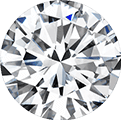
| Round brilliant | Round | SI1, sometimes SI2 | Fifty-seven facets throwing light in all directions. The most forgiving shape there is. |
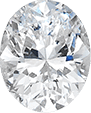
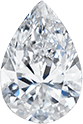
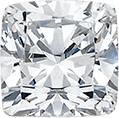
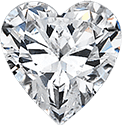
| Fancy brilliants | Oval, pear, marquise, cushion, radiant, heart | VS2 to SI1 | Still very sparkly, but larger open areas near the tip or centre show more. |
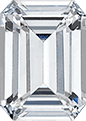
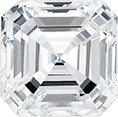
| Step cuts | Emerald, asscher, baguette | VS1 to VS2 | Long mirror-like facets and almost no sparkle to distract the eye. Inclusions show early. |
| Rose and flat cuts | Rose cut | VS2 or better | A large open face and fewer facets, so less visual noise to hide behind. |
| Small accent stones | Pavé, eternity bands, halos | SI is fine | Under about 0.10 carat, inclusions are effectively invisible to the eye. |
Carat weight nudges these one step. A 0.50ct stone can carry a lower clarity grade comfortably; at 2.00ct there is simply more diamond to look through, so move up a step.
What colour to choose
Colour runs D to Z and measures how little warm tint a diamond shows. D is completely colourless; by Z there is an obvious yellow or brown cast.
The crucial point is that the metal you set it in changes the answer. A diamond picks up colour from its surroundings, so a warmer stone looks whiter in warm metal.
| Metal | Sensible colour target | Reasoning |
|---|---|---|
| Platinum or white gold | D to G | Bright white metal sits right against the stone and shows any warmth by contrast. |
| Yellow gold | G to J, sometimes K | The gold reflects warm tones into the stone anyway. A G looks identical to a D here. |
| Rose gold | H to K | Rose gold is the most forgiving of all. Many people prefer a slightly warm stone in it. |
This is the single easiest place to save money without any visible compromise. A Solitaire Round Cut Engagement Ring in Rose Gold simply does not need a D colour stone. A platinum solitaire does benefit from one.
What clarity and colour are most popular?
We should be straight with you here: we are not aware of a reliable published statistic on the single most popular clarity and colour combination among UK buyers, and any specific percentage you see quoted online is almost certainly invented. We will not add to that.
What we can tell you honestly is what our own customers most often choose, and what the trade generally treats as the sweet spot. Both point the same way:
- Clarity around VS2 to SI1 — the point where a brilliant-cut stone is reliably eye-clean and the price stops climbing for something you cannot see.
- Colour around G to H — “near colourless” grades that read as white face-up in almost any metal.
Treat that as a rule of thumb in the trade, not a measured figure. It is a good starting point, not a rule.
Where to spend and where to save
If you have a fixed budget, here is the order we would protect things in.
- Cut quality first. It is the only grade that creates sparkle rather than merely permitting it. Never trade this away.
- Eye-clean clarity second. Reach it, then stop. Every grade above eye-clean is invisible.
- Colour matched to your metal third. Match it to the setting, not to the top of the scale.
- Carat last. Weight is the easiest thing to adjust and the most obvious thing to see. Decide how much of your budget it deserves after the rest is settled.
One extra trick: a halo or a cluster design makes a centre stone read considerably larger without buying more carats, and the surrounding small diamonds are so tiny that their own clarity is irrelevant. Our Halo Round Cut Engagement Ring uses exactly that effect, and a Three Stone Emerald Cut Engagement Ring spreads the impression of size across three stones instead of one.
Does lab-grown change the calculation?
It changes the budget, not the logic. A lab-grown diamond is the same material, graded on the same scales by the same laboratories, so eye-clean is still eye-clean and warm is still warm.
What changes is that higher clarity and colour grades are considerably more affordable, because growth conditions are controlled rather than left to geology. In practice that means most people buying lab-grown do not need to compromise as hard, and can sit comfortably in the VS range with a near-colourless stone.
Every centre stone we sell comes with a free IGI certificate, so you can see exactly which letters you are getting rather than taking anyone’s word for it.
Frequently asked questions
What colour and clarity is good for a diamond ring?
For most people, a near-colourless grade of G or H with a clarity of VS2 or SI1 gives a stone that looks white and clean to the eye with nothing wasted. Move colour warmer for yellow or rose gold, and clarity higher for emerald and asscher cuts.
What is the best clarity letter for a diamond?
The lowest letter that is still eye-clean in your chosen shape. That is usually SI1 for a round brilliant, VS2 for ovals and pears, and VS1 to VS2 for step cuts. There is no universal best letter, and anyone who gives you one without asking about the shape is guessing.
Is it worth paying for VVS or Flawless?
Only if you personally want it, or if you enjoy looking at stones under a loupe. Visually, on a hand, a VVS1 and a well-chosen SI1 are indistinguishable. There is no shame in wanting the higher grade — just buy it knowing what you are buying.
Can I choose a lower clarity to get a bigger diamond?
Yes, and it is often the smartest trade in the whole budget. Dropping from VS1 to SI1 while staying eye-clean typically frees up meaningful money towards carat weight. Just have the stone checked as eye-clean rather than assuming.
Which grade should I never compromise on?
Cut. A poorly cut diamond leaks light out of the bottom and looks flat no matter how perfect its other letters are.
Choosing yours
The short version: get the cut right, buy eye-clean rather than flawless, match colour to your metal, and put whatever is left into size. That approach produces a ring that looks better in real life than one bought purely off a certificate.
If you would like a hand applying it, browse our engagement rings or the emerald cut collection — and if you already know the exact grades you want in a setting we do not list, we design bespoke at no extra design cost. Everything is hand-made in solid gold or platinum here in North Harrow, with free insured UK delivery and 30 days to return.
Ready to find your perfect ring?
Explore our lab-grown diamond collection or book a virtual appointment with our team.