How Many Carats Is an 8mm Cushion Cut Diamond?
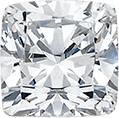
An 8mm cushion cut is roughly 2.5 carats. Full mm-to-carat chart, why the weight varies, and how to avoid paying for hidden depth.
An 8mm cushion cut diamond usually weighs somewhere between about 2.4 and 2.8 carats, with roughly 2.5 carats being the typical answer. It is a range rather than a single figure, and understanding why the range exists will save you money and stop you being misled by a listing.
Why one number cannot answer the question
Carat and millimetre are measuring two entirely different things.
Carat is weight. One carat equals 0.2 grams. It says nothing about how big a stone looks.
Millimetres (mm) are length. An “8mm cushion” is 8mm across the top from one flat side to the other. That top face is what you see once the ring is on a finger.
A diamond is a three-dimensional object, so two stones can measure 8 x 8mm across the top and still weigh different amounts, because one is cut deeper than the other. The extra weight is hidden underneath, inside the setting, where nobody will ever see it.
Cushion cuts are particularly prone to this. They are cut deep by nature, and cutters often go deeper still to preserve weight from the rough crystal. A deep 8mm cushion might reach 2.8 carats or more; a shallower, better-spread one might come in nearer 2.3 carats and look exactly the same size on the hand — while costing meaningfully less.
Cushion cut: millimetre to carat conversion
| Size (mm) | Approximate carat weight |
|---|---|
| 4.5 x 4.5 | 0.40 ct |
| 5.0 x 5.0 | 0.50 ct |
| 5.5 x 5.5 | 1.00 ct |
| 6.0 x 6.0 | 1.25 ct |
| 6.5 x 6.5 | 1.50 ct |
| 7.0 x 7.0 | 2.00 ct |
| 7.5 x 7.5 | 2.25 ct |
| 8.0 x 8.0 | 2.40 – 2.80 ct (about 2.50 ct typically) |
| 8.5 x 8.5 | 3.00 ct |
| 9.0 x 9.0 | 3.50 ct |
These are trade approximations for square cushions with normal proportions. The certificate for any individual stone always overrides the chart.
If your cushion is rectangular
Plenty of cushion cuts are slightly rectangular. If the stone is 8mm long but only 6.5mm wide, the weight drops to roughly 2.0 to 2.2 carats. When someone says “8mm cushion”, always ask for both measurements before assuming anything about the weight.
How an 8mm cushion compares to other shapes
This is where the difference between weight and visible size becomes really useful.
| Shape at 8mm | Approximate carat weight |
|---|---|
| Cushion (8.0 x 8.0mm) | about 2.50 ct |
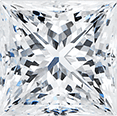
| Princess (8.0 x 8.0mm) | about 2.80 ct |
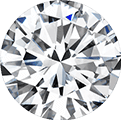
| Round (8.0mm diameter) | about 2.00 ct |
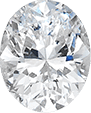
| Oval (8.0 x 6.0mm) | about 1.25 ct |
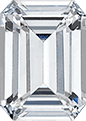
| Emerald (8.0 x 6.0mm) | about 1.60 ct |
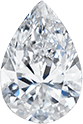
| Pear (8.0 x 5.5mm) | about 1.00 ct |
Read that table carefully, because it contains the single most useful buying insight on this page. To reach 8mm of visible width you need about 2.5 carats of cushion, but only 2 carats of round and around 1.25 carats of oval. Deep shapes such as cushions and princess cuts make you pay for weight you cannot see. Elongated shapes give you far more surface area per carat.
None of this makes the cushion a bad choice — the shape has a warmth and a sparkle that nothing else replicates. It simply means you should budget for the fact that a big-looking cushion is a heavy cushion.
What an 8mm cushion looks like on the hand
Large. On a typical UK size L to N finger, an 8mm square stone spans most of the finger’s width. Corner to corner it measures more than 8mm, since the diagonal of a square is always longer than its side, so it reads even wider than the number implies.
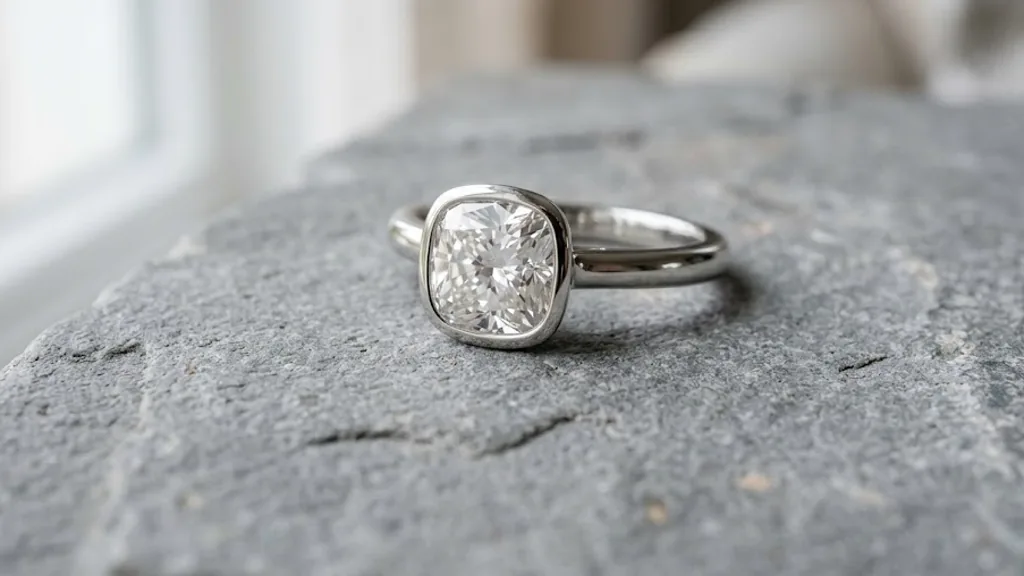
It is a statement stone, and it sits high. If it is going to be worn every single day, think about the setting as carefully as the stone: a bezel, which is a rim of metal wrapped around the edge of the diamond, or a low basket will keep it from catching on clothing.
How to check what you are actually being offered
Ask for the certificate and look at three lines on it.
- Measurements. Given as length x width x depth in millimetres. This is the truth about how big the stone is.
- Depth percentage. Depth divided by width. On a cushion, a figure in the high sixties or above generally means a deep stone that is carrying hidden weight. A lower figure spreads better.
- Table percentage. The width of the flat top facet relative to the whole stone. It affects how the sparkle looks.
Every centre stone we supply comes with a free IGI certificate, which lists all of these. If a seller cannot show you exact millimetre measurements, walk away — you are being asked to buy on a carat number alone, and that is precisely how people end up with a stone that looks smaller than they expected.
Our cushion cut rings
Our ready-made collection is built around everyday centre stones rather than 8mm ones, but these show how the shape works in different settings. Prices are correct at the time of writing.
- Bezel Cushion Cut Engagement Ring in Platinum — £904. The most practical way to wear a cushion daily; the metal rim protects the whole edge of the stone.
- Three Stone Cushion Cut Engagement Ring — £957. Two flanking stones widen the ring along the finger.
- Solitaire Cushion Cut Wedding Band in Sterling Silver — £904. A cushion set into a band, for pairing with an engagement ring.
For a true 8mm centre stone, that is a bespoke commission. We design bespoke at no extra design cost, so you pay for the diamond, the metal and the making. See the full cushion cut collection or browse all engagement rings to pick a setting style first.
Frequently asked questions
Is 8mm the same as 8 carats?
No, and this confusion is very common. Millimetres measure length; carats measure weight. An 8mm cushion is around 2.5 carats. An 8 carat cushion would be roughly 11 to 12mm across — an enormous stone.
Why do two 8mm cushions have different prices?
Usually because they differ in weight, colour, clarity or cut quality. A deeper 8mm stone weighs more and therefore costs more, without looking any bigger. This is why the shallower stone is often the smarter purchase.
Should I shop by millimetres or by carats?
Shop by millimetres if what you care about is how the ring looks, which for most people it is. Use carat weight for comparing prices and reading certificates. Ideally, decide on the millimetre size you want and then find the lightest stone that achieves it.
Does the crushed ice look change the size?
Not the measurements, but it changes the impression. Crushed ice cushions, with hundreds of tiny sparkles, can look slightly less defined at the edges than chunky antique-style cushions, which have larger, bolder facets and a crisper outline. Ask which style a stone is before buying.
Do lab-grown cushions follow the same conversions?
Yes. A lab-grown diamond is a real diamond with identical density, hardness and optical behaviour to a mined one — it is simply grown in a controlled environment over weeks rather than forming underground. The millimetre-to-carat maths is exactly the same.
Know the millimetre size you want before you start comparing carat weights, and you will buy a better stone for less. If you would like help working out what suits a particular hand, we are in North Harrow, London, and happy to talk it through.
More guides on this topic
Ready to find your perfect ring?
Explore our lab-grown diamond collection or book a virtual appointment with our team.