How to Choose a Diamond Colour Grade
There is no single best colour letter. Straight recommendations by metal, size and shape, and where the money is better spent instead.
There is no single best colour letter for a diamond. There is a best colour letter for the metal you have chosen, in the size you are buying, at the budget you have — and once you know those three things the answer becomes obvious. For most people buying a white metal ring, that answer lands somewhere between G and I.
This guide takes you through the scale, shows where the money actually goes, and gives you a straight recommendation for each situation rather than a shrug.
How the colour scale works
Diamond colour is graded from D to Z. D is completely colourless. Z has an obvious light yellow or brown tint. There is no A, B or C — the scale deliberately began at D so it could not be confused with older systems that had already used those letters.
What you are really measuring is nitrogen. Nitrogen atoms in the crystal absorb blue light and leave a yellow cast, so each step down the alphabet means slightly more nitrogen. Less nitrogen is scarcer, so it costs more.
Grades are assigned in laboratory conditions: the stone is loose, face-down, in a white tray, under a controlled lamp, compared against master stones. That is far harsher than any real-world viewing. It is why a grade that sounds mediocre on paper often looks perfect on a hand.
| Grade band | Name | What you actually see |
|---|---|---|
| D, E, F | Colourless | No tint at all, even against white and even side by side with a D |
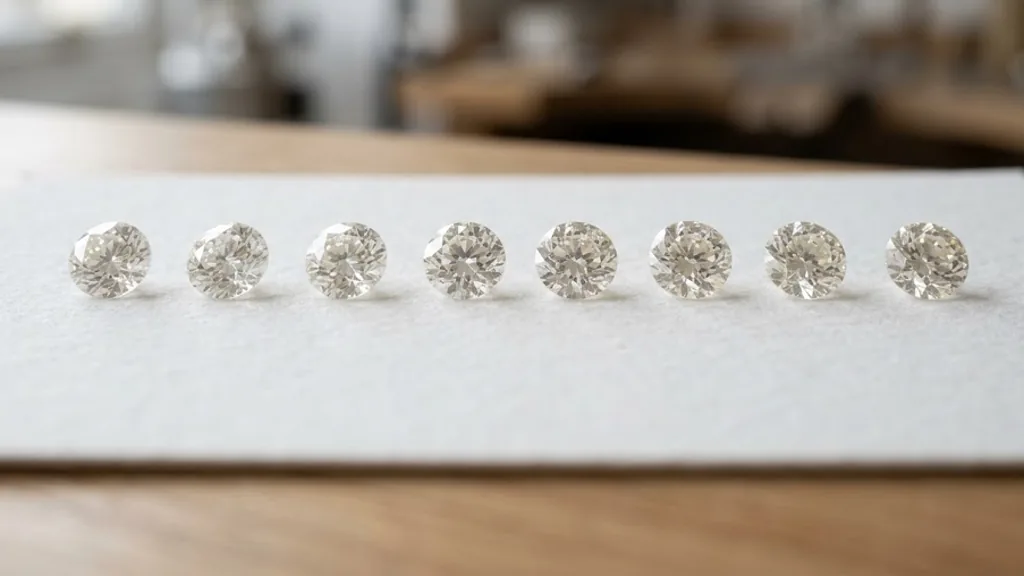
| G, H, I, J | Near colourless | No tint face-up on its own; a hint of warmth only when compared directly against a higher grade |
| K, L, M | Faint colour | A gentle warm tone, visible face-up to an attentive eye, and lovely in warm metal |
| N to R | Very light colour | Clearly tinted |
| S to Z | Light colour | Obviously yellow or brown; rarely used in fine jewellery |
The three things that decide your answer
The metal. This matters more than anything. White gold and platinum are bright white and give the eye a reference point, so any warmth in the stone shows. Yellow and rose gold reflect their own colour into the diamond, which completely masks a faint tint. A K set in yellow gold can look flawless; the same stone in platinum will read as warm.
The size. Colour is easier to see in a larger stone, because there is more material for light to travel through. Under about half a carat, the difference between grades is very hard to spot in any metal. Above about one and a half carats, it is worth being a grade or two more careful.
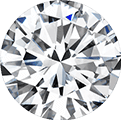
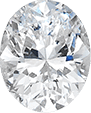
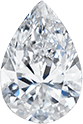
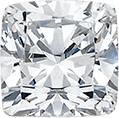
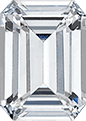
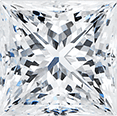
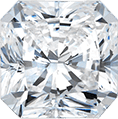
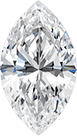
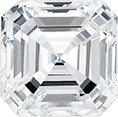
The shape. Brilliant cuts — round, oval, pear, marquise, cushion — chop light up into so many flashes that body colour is partly disguised. Step cuts, meaning emerald, Asscher and baguette, have large flat facets that act like windows. They show colour honestly, so they benefit from a slightly higher grade.
Straight recommendations
| Your situation | Grade to aim for |
|---|---|
| White gold or platinum, brilliant cut, up to 1.5 carat | G to I |
| White gold or platinum, emerald or Asscher cut | F to H |
| Yellow or rose gold, any brilliant shape | H to K — the metal hides the rest |
| Large stone, 2 carats or more, in white metal | F to H |
| Small accent stones and eternity bands | Anything near-colourless; consistency between stones matters more than the letter |
| You want the absolute top and budget is not the constraint | D to F |
The honest summary for most buyers: G or H in white metal, H to K in warm metal. Below that the tint starts to show; above it you are paying for something almost nobody will ever see.
Where the money is better spent
Colour is one of four grades, and it is not the one that makes a diamond beautiful. Cut is. Cut decides how much light comes back to your eye, and a poorly cut D will look duller than a superbly cut I every single time.
A sensible order of priority for most budgets: cut first, then carat if size matters to you, then colour, then clarity. Dropping from F to H frees up real money. Putting that money into a better cut, or a slightly larger stone, gives you something you can actually see.
The other overlooked lever is the setting. A halo makes a stone look considerably larger. A hidden halo does it without visibly changing the design. A three stone ring gives presence for less than one big stone would cost.
Matching this to real rings
If you are going white metal and want the stone to be the whole story, the solitaire round cut engagement ring in white gold is the classic — £563 at the time of writing. For a step cut where colour shows more, the solitaire emerald cut engagement ring rewards a slightly higher grade and looks wonderfully clean.
If you are going warm, you can relax about colour entirely. The vintage round cut engagement ring in yellow gold gets its character from the metal and the detailing, so the colour grade fades into the background.
Every centre stone we set comes with a free IGI certificate stating the colour grade in writing — no guessing, and nothing taken on trust. Browse the full engagement ring collection, or if you already know your shape, start with our oval cut rings. If you would like the wedding band designed at the same time, look at the bridal sets.
You may also find our individual grade guides useful — we have written separately about F colour and G colour diamonds.
Colour and clarity together: which to drop first
Almost every buyer eventually faces the same trade-off. The budget will stretch to a higher colour grade or a higher clarity grade, but not both. Which should give way?
The answer depends on the shape, and it is one of the few genuinely useful rules of thumb in this whole subject.
| Shape | Protect | Reason |
|---|---|---|
| Round, oval, pear, cushion, marquise, heart | Colour can be relaxed; clarity can also be relaxed | Brilliant faceting scatters light and hides both |
| Emerald, Asscher, baguette | Both — these cuts hide nothing | Large open facets act like windows |
| Any shape set in yellow or rose gold | Clarity | The metal already handles colour for you |
| Any shape over 2 carats | Colour | More material means colour is easier to see |
A practical shortcut: for brilliant shapes, an eye-clean stone in the near-colourless band is the sweet spot for most budgets. “Eye-clean” means no inclusions visible without magnification, which is what actually matters — the grade letter on the report is a laboratory measurement, not a description of what you will see.
How to compare two diamonds properly
If you are looking at stones in person, a few habits make the comparison honest.
Look at them face-up, the way the ring will be worn, not face-down the way a grader would. Compare against a plain white background, not a dark cloth, which flatters everything. Look in daylight if you can — shop lighting is engineered to make diamonds look their best. And never judge colour with a single stone on its own, because the eye adapts within seconds and every diamond looks white in isolation.
Above all, once you have chosen, stop comparing. Every diamond can be made to look worse next to a better one, and no ring is worn beside a tray of alternatives.
Common questions
Can you see the difference between one colour grade and the next?
Very rarely, and almost never once the stone is set and viewed face-up. Two grades apart is difficult. Three or more starts to become noticeable to a careful eye in white metal.
Is D colour worth the extra money?
Only if knowing you have the top grade matters to you. Visually, a D and an F set in the same ring are extremely difficult to tell apart, and the price difference is significant.
Does colour affect sparkle?
No. Sparkle comes from cut — the angles and finish of the facets. Colour affects the tone of the stone at rest, not the amount of light it returns.
Do lab-grown diamonds use the same colour scale?
Yes, exactly the same D-to-Z scale, graded by the same laboratories using the same master stones. The report simply also states that the stone was grown in a laboratory.
What colour should the small side stones be?
Close to the centre stone, and consistent with each other. A well made ring matches its accent stones so nothing looks out of place. This is something a jeweller handles at the bench rather than something you need to specify.
Everything we make is hand-made in solid gold and platinum in North Harrow, London, with free insured UK delivery and 30 days to return it if it is not right.
Ready to find your perfect ring?
Explore our lab-grown diamond collection or book a virtual appointment with our team.