What Is VVS Clarity in Diamonds? VVS1 and VVS2 Explained
VVS clarity explained in plain English: what VVS1 and VVS2 mean, how they differ, and when the premium is actually worth paying.
VVS stands for Very Very Slightly Included. It is the third tier down on the diamond clarity scale, sitting just below Flawless and Internally Flawless, and it is split into two grades: VVS1 and VVS2.
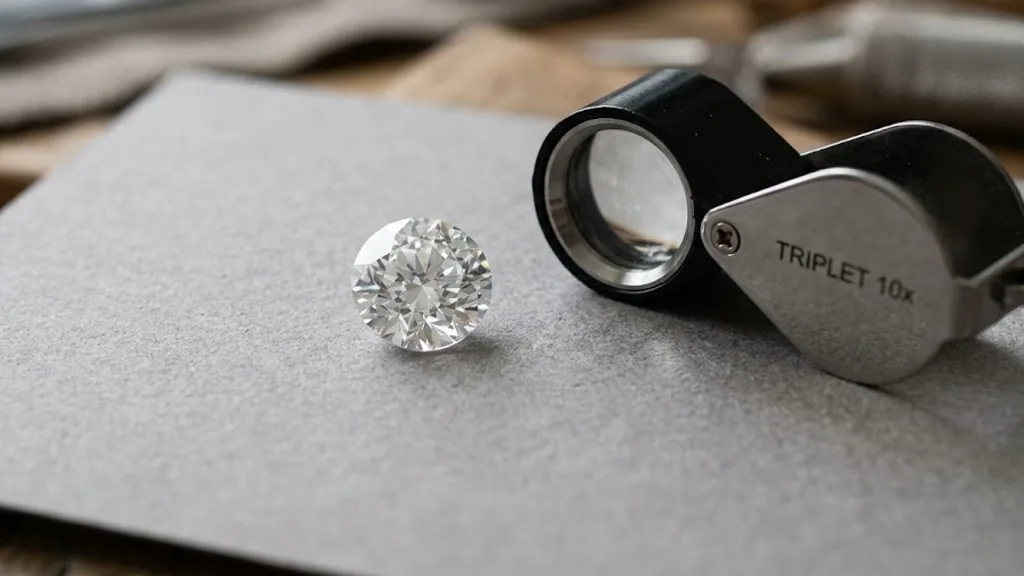
In practical terms, a VVS diamond has inclusions so small that a trained grader with a loupe has to search hard to find them. You never will. Here is what the grade actually means, how VVS1 differs from VVS2, and whether the premium is money well spent.
Where VVS sits on the scale
| Position | Grade | Grader’s task at 10x magnification |
|---|---|---|
| 1st | FL — Flawless | Finds nothing at all |
| 2nd | IF — Internally Flawless | Finds only a surface mark |
| 3rd | VVS1 | Extremely difficult to find inclusions |
| 4th | VVS2 | Very difficult to find inclusions |
| 5th | VS1 | Difficult to find inclusions |
| 6th | VS2 | Somewhat easy to find inclusions |
Note the wording. Every one of those top six grades is described by how hard the inclusions are to find, not how obvious they are. That tells you everything about how the scale works: it is written for someone holding a microscope, not for someone wearing a ring.
What a VVS inclusion actually is
Diamonds grow as crystals, and crystals rarely grow perfectly. The features trapped inside a VVS stone are usually one of these:
- Pinpoints — single microscopic crystals, often smaller than a full stop on this page magnified ten times.
- Needles — very thin, elongated crystals, usually transparent.
- Internal graining — faint lines showing where the crystal’s growth direction shifted.
- Tiny feathers — minute internal fractures, so small they catch no light.
None of these affect the strength of the diamond. None of them dim the sparkle. At VVS level they are, for all practical purposes, a laboratory’s footnote.
VVS1 versus VVS2 — what is the real difference?
Less than you would think. Both grades can contain inclusions of similar size and type. What usually separates them is position.
A VVS1 stone’s inclusions tend to be near the girdle — the thin rim around the widest part of the diamond — or hidden under a crown facet, where a grader has to tilt the stone repeatedly to catch them. A VVS2 stone’s inclusions are more likely to sit closer to the centre of the table, the large flat facet on top, where they are found sooner.
Sooner, in this context, still means “after deliberate searching under magnification”. The two grades are visually identical to the naked eye, and there is no situation in normal wear where you would be able to tell one from the other.
Why VVS is so heavily advertised
VVS has become a marketing term in a way that VS and SI never did. It appears in music lyrics, in jewellery advertising, and in a great deal of online listing copy — sometimes attached to stones that have no laboratory report at all.
Be careful with two things. First, “VVS” written in a product description with no certificate behind it means nothing; ask which laboratory graded it. Second, “VVS quality” or “VVS clarity simulant” is language sometimes used for cubic zirconia and other stones that are not diamond at all.
A genuine VVS grade comes on a report from a named laboratory such as IGI or GIA, with a report number you can look up. Every centre stone we set carries a free IGI certificate for exactly this reason.
Is VVS worth paying for?
Honestly, for most buyers, no — with two clear exceptions.
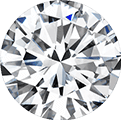
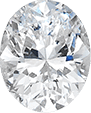
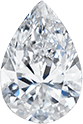
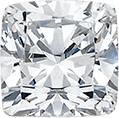
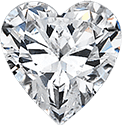
For most brilliant-cut shapes, it is not. A round, oval, cushion, pear or heart shape has dozens of facets scattering light in every direction, which breaks up and conceals small inclusions extremely effectively. A VS2 or SI1 stone in one of these shapes is eye-clean, and the money saved buys real, visible things — more carat weight, a better cut grade, a heavier setting.
A halo round cut engagement ring is a good illustration. The centre stone is surrounded by a ring of small diamonds, which adds even more scattered light around it. Paying VVS money for the centre of a halo design is almost never the best use of a budget.
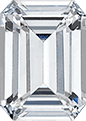
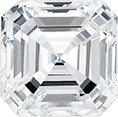
For step cuts, it can genuinely be worth it. Emerald, Asscher and baguette cuts are polished with long, flat, parallel facets rather than lots of small triangular ones. They give you clean flashes of light instead of fine sparkle — and they hide nothing. Looking into an emerald cut is like looking through a window.
If you are choosing a hidden halo emerald cut engagement ring or a three stone emerald cut engagement ring, moving up to VVS2 or VS1 is a defensible decision rather than vanity. The same applies to an Asscher, which is essentially a square step cut.
The second exception is size. The larger the stone, the bigger its table facet, and the more room an inclusion has to become noticeable. Above roughly two carats, buying a grade or two higher than you otherwise would is sensible insurance.
A simple way to decide
| Your situation | Sensible clarity choice |
|---|---|
| Round, oval, cushion, pear or heart, under 1.5ct | VS2 or SI1 — VVS is overpaying |
| Any brilliant shape, 2ct and above | VS1 to VVS2 |
| Emerald, Asscher or baguette centre stone | VS1 as a floor; VVS2 is justified |
| Small accent stones in a band or halo | Clarity is largely irrelevant at this size |
| You want the grade for its own sake | Buy VVS and enjoy it — that is a fair reason |
Frequently asked questions
Is VVS better than VS?
Higher on the scale, yes. Better to look at, no. Both are eye-clean in ordinary wear for the vast majority of stones, so the difference shows on the certificate and the price tag rather than on the hand.
Can lab-grown diamonds be VVS?
Yes. Lab-grown diamonds are graded on the identical eleven-point scale by the same laboratories, and VVS grades are perfectly common among them. They contain inclusions like any grown crystal — the types can differ slightly from mined stones, but the grading is the same.
Does VVS clarity make a diamond sparkle more?
No. Sparkle comes from cut — the angles and proportions that decide how light travels through the stone and back to your eye. Clarity only starts to affect brightness when inclusions are large or dense enough to block light, which is well below VVS.
Is VVS more durable than SI?
Not in any way that matters. Durability only becomes a clarity issue at the bottom of the scale, where a large feather reaching the surface could make a stone vulnerable to a knock. Anywhere from SI1 upwards, this is a non-issue.
How can I check a VVS claim?
Ask for the laboratory report number and look it up on that laboratory’s own website. If the seller cannot give you one, treat the grade as an opinion rather than a fact.
Choosing your stone
If you want to understand the whole picture, our guide to the full diamond clarity scale covers every grade from FL to I3 and where each one makes sense.
Otherwise, browse the engagement ring collection or the emerald cut range, where clarity is the grade that earns its keep. Everything is hand-made in solid gold and platinum, with free insured UK delivery and 30-day returns.
Ready to find your perfect ring?
Explore our lab-grown diamond collection or book a virtual appointment with our team.