Understanding VVS1 Diamond Clarity: Is It Worth It?
VVS1 sits just below flawless. What the grade means, how it differs from VVS2, and the shapes where it genuinely earns its cost.
VVS1 is the second highest clarity grade a diamond can receive. Only Flawless and Internally Flawless sit above it, and the difference between those three grades is something almost nobody can see, even with a loupe in hand.
So what are you actually buying when you buy VVS1? This guide explains what the grade means, where it genuinely earns its place, and where it is a very expensive way to improve a piece of paper.
What VVS1 means
VVS stands for Very, Very Slightly Included. The number after it splits the band into two: VVS1 is the higher of the pair.
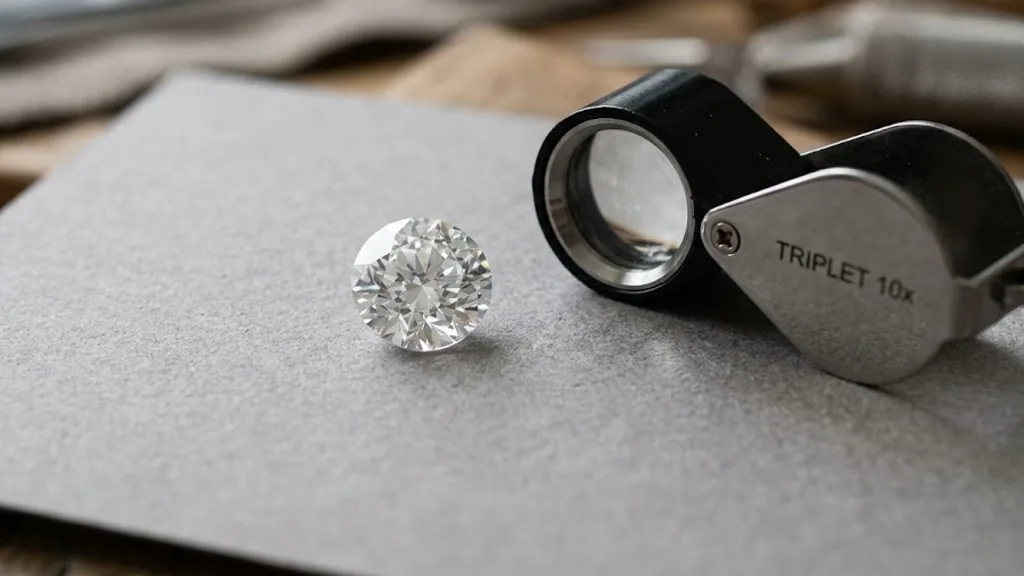
The formal definition is that inclusions are extremely difficult to see under 10x magnification — difficult for a trained grader with proper lighting and years of practice. In VVS1 stones the features are usually so small, so few and so awkwardly placed that a grader may need to hunt for them from several angles.
| Grade | Full name | What a grader experiences at 10x |
|---|---|---|
| FL | Flawless | Nothing inside, nothing on the surface |
| IF | Internally Flawless | Nothing inside; only minor surface blemishes |
| VVS1 | Very, Very Slightly Included 1 | Extremely difficult to find; often only visible from the pavilion side |
| VVS2 | Very, Very Slightly Included 2 | Very difficult to find, but slightly easier than VVS1 |
| VS1 / VS2 | Very Slightly Included | Difficult to somewhat easy to find |
| SI1 / SI2 | Slightly Included | Noticeable to easily noticeable |
| I1 to I3 | Included | Obvious, may affect brightness |
The difference between VVS1 and VVS2
Position, mostly. It is one of the subtlest distinctions in the whole grading system.
In a VVS1 stone, the tiny features tend to sit where they are hardest to observe — often in the pavilion, the lower cone-shaped part of the diamond, so a grader has to look at the stone from underneath to find anything. In a VVS2 stone, something small may sit slightly nearer the crown or the table, where it is fractionally easier to spot.
In both cases we are talking about pinpoints — single microscopic specks — or the faintest of needles. Neither grade has any visible effect on the stone whatsoever.
The honest part: you cannot see the difference
Here is the thing a good jeweller should say plainly. A VVS1 diamond and a VS2 diamond, set in the same ring, look identical to the naked eye. So do a VVS1 and a well-chosen SI1 in a brilliant cut.
Everything from VS2 upwards is eye-clean — you cannot see anything without magnification. Buying VVS1 does not make a diamond look cleaner than VS1. It makes the certificate say something different.
That is not an argument against VVS1. It is an argument for knowing why you are choosing it, so you spend the money deliberately rather than because someone implied a VS stone was compromised.
When VVS1 genuinely earns its place
There are real cases for it.
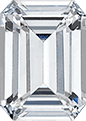
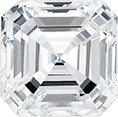
- Large step cuts. Emerald and asscher cuts use long, open, parallel facets that behave like windows rather than mirrors. They show everything inside the stone. In a big emerald or asscher, high clarity is not vanity — it is what keeps the stone looking clean. Our Hidden Halo Emerald Cut Engagement Ring, at £1,016 correct at the time of writing, shows just how open an emerald cut’s interior really is.
- Very large centre stones generally. Everything scales up with size, including how much of the interior you can see into.
- You want the top of the scale on paper. Some people simply want a certificate that reads near-perfect, and that is a legitimate reason to buy. Just make it a conscious choice.
- Lab-grown diamonds, where the step up costs less. More on this below.
When it is money better spent elsewhere
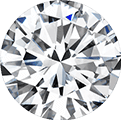
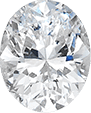
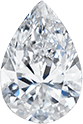
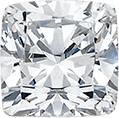
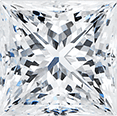
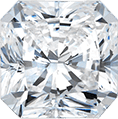
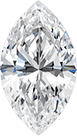
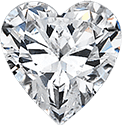
- Brilliant cuts. Round, oval, pear, marquise, cushion, heart and radiant have busy facet patterns that scatter light and hide small features. VS is comfortably clean in these shapes.
- Anything under about a carat. There is simply not enough stone to see into.
- Accent stones. The tiny diamonds in a pavé band or halo, known as melee, are far too small for anyone to inspect. High clarity in melee is invisible by definition.
- When it forces a compromise on cut. Cut is the only grade that changes how the stone behaves — how much light comes back out of the top instead of leaking through the base. A superbly cut VS1 will out-sparkle a mediocre VVS1 every single time.
Clarity does not create sparkle
This is the most common misunderstanding about high clarity grades, and it is worth stating flatly: a VVS1 stone does not sparkle more than a VS1 stone.
Sparkle comes from cut. The angles and proportions decide whether light entering the top of the diamond bounces around and returns to your eye, or slips out of the bottom unseen. A stone cut too deep goes dark in the centre. Too shallow and it looks watery.
Clarity only starts to affect brightness at the far end of the scale, where extensive clouds or heavy included material reduce transparency. Between VVS1 and VS2 there is nothing to affect at all.
If you want to see how the middle of the scale performs, our guide to VS1 and VS2 clarity covers where most sensible buyers land, and our guide to the clearest clarity grades covers the two grades above VVS1.
VVS1 in lab-grown diamonds
Lab-grown diamonds are graded on the same FL to I3 scale by the same laboratories at the same 10x standard. A VVS1 lab-grown stone meets the same definition as a VVS1 natural stone.
Growth conditions in a laboratory are controlled rather than geological, which means very high clarity grades are produced more readily than they are found in the ground. In practice that makes VVS grades far easier to reach in lab-grown stones, and the step up from VS to VVS is usually a smaller stretch than it would be in a natural diamond. Treat that as general guidance about how the two markets behave — the actual difference depends on size, supplier and the month you are buying in.
This is genuinely the strongest argument for VVS1: in a lab-grown emerald or asscher cut, you can often have the top of the clarity scale at a size and price that would be out of reach otherwise. Our Stackable Asscher Cut Wedding Band in Yellow Gold, at £1,416 correct at the time of writing, is the kind of step-cut design where clarity shows.
Every centre stone we set comes with a free IGI certificate recording the clarity grade and a plot diagram of any features.
How to read a VVS1 certificate
The plot on a VVS1 report is often nearly empty, which makes the comments section the interesting part.
- Pinpoint — a single microscopic crystal. The most common VVS feature and utterly harmless.
- Needle — a long, thin crystal. At VVS size, invisible.
- Internal graining — faint lines from crystal growth. Usually noted in comments rather than plotted.
- “Clarity grade based on internal graining not shown” — a standard laboratory phrase. It means the grade was set by a feature too subtle to draw.
If a report is this clean, the questions worth asking move on to cut proportions, polish and symmetry, which are what will actually change how the finished ring looks.
Choosing a setting for a VVS1 stone
A very clean stone deserves a setting that lets you see it. Simple solitaires, bezels and open designs put the diamond forward. Our Solitaire Round Cut Engagement Ring in Rose Gold, at £1,007 correct at the time of writing, is the sort of uncluttered mount that shows a centre stone honestly.
You can browse everything by shape — emerald, asscher — or look through all our engagement rings together. We currently hold one asscher design and six emerald cut designs, so if the shape you want is not there, do ask.
Frequently asked questions
Is VVS1 better than VVS2?
By one step on the certificate, yes. Visually there is no difference at all — both are eye-clean and both require a skilled grader to find anything under magnification.
Is VVS1 worth the extra cost?
In a large emerald or asscher cut, there is a real case for it. In a round brilliant under two carats, you are paying for the certificate rather than the appearance, and the money would show more if spent on cut or carat weight.
Can you see the difference between VVS1 and VS1?
Not with the naked eye, and rarely with a standard 10x loupe unless you know what you are looking for. Both grades are eye-clean in every normal viewing situation.
Is VVS1 the highest clarity grade?
No. Flawless is the highest, followed by Internally Flawless, then VVS1. Flawless stones are genuinely rare and priced accordingly.
Do lab-grown diamonds come in VVS1?
Yes, and more readily than natural diamonds do. Controlled growth conditions produce very high clarity more consistently than geology does, which puts VVS grades within reach at larger sizes.
Deciding with your eyes open
VVS1 is a superb grade. It is also, for most shapes and most sizes, an improvement to the paperwork rather than to the ring. Choose it for a large step cut, or because you want it — not because anyone suggested a VS stone was flawed.
All of our centre stones are lab-grown and IGI certified, hand-made into solid gold or platinum here in North Harrow, London, with free insured UK delivery and 30 days to return. If you want a particular clarity grade in a design we do not stock, we make bespoke pieces at no extra design cost — just tell us what you have in mind.
Ready to find your perfect ring?
Explore our lab-grown diamond collection or book a virtual appointment with our team.