What Is a Minimalist Engagement Ring?
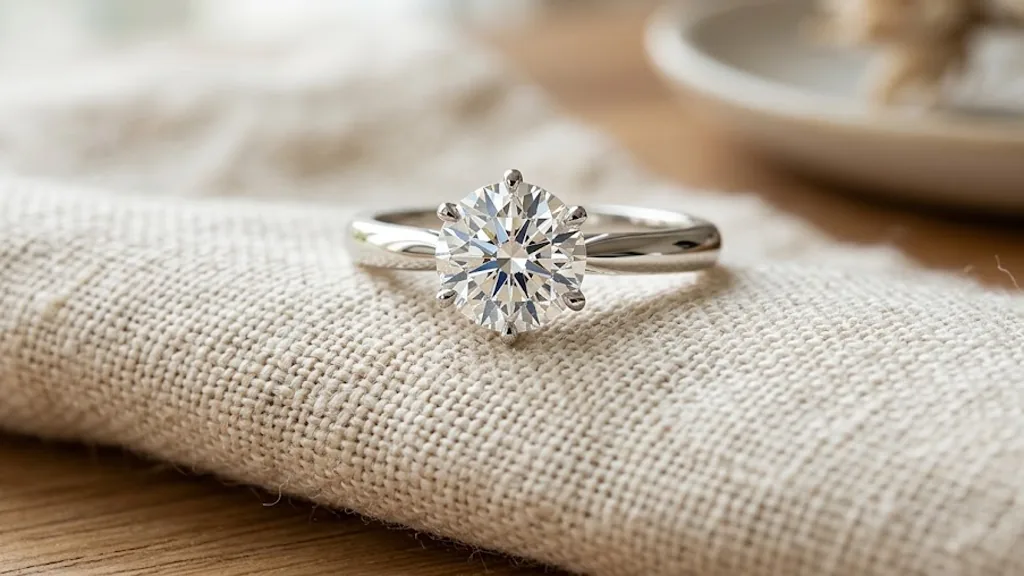
A minimalist engagement ring is slim and low, with a band of 1.5 to 2 mm and one modest diamond. Thinner than 1.5 mm, the band bends and wears sooner.
A minimalist engagement ring is a slim, low, simply set ring, usually a band of about 1.5 to 2 mm with one modest diamond and little or no extra decoration. The appeal is a ring that is easy to wear every day and pairs with almost any wedding band. The caveat is the band: go much thinner than 1.5 mm and it bends and wears through sooner.
What makes an engagement ring minimalist?
An engagement ring is minimalist when every part is pared back: a thin band, a modest centre stone, a low setting and no halo, pavé or engraving competing for attention. A typical minimalist ring has a band of 1.5 to 2 mm and a centre diamond of roughly 0.20 to 0.75 ct. Minimalism is about scale, not stone count. A large solitaire on a chunky band is classic, but it is not minimalist.
For the single-stone style in general, read what a solitaire engagement ring is.
How thin can a minimalist engagement ring band safely be?
A minimalist engagement ring band is safest at about 1.5 mm wide or more, with a similar thickness. Below that, the metal behind the stone can bend out of round when knocked, and everyday rubbing thins it further over the years. As a rule of thumb at the bench, a 1.3 to 1.5 mm band worn daily needs checking more often than a 2 mm one, especially in softer metals.
Our own minimalist ring sits on a band 1.70 mm wide and 1.70 mm thick, which keeps the slim look without the weakness.
Is a small diamond a false economy?
A small diamond is not a false economy if it is well cut and you are happy with its size for years, not months. A 0.50 ct round lab-grown diamond measures about 5.0 mm across, which already looks balanced on a slim band. It becomes a false economy only if you plan to upgrade soon, because replacing the stone often means a new setting, so you pay twice.
In short, a minimalist ring stays in proportion when the band, stone and setting all stay small.
| Element | Typical minimalist range | Why it matters |
|---|---|---|
| Band width | 1.5 to 2 mm | Slim look, still strong enough |
| Centre stone | 0.20 to 0.75 ct | Keeps the ring in scale |
| Round stone size | 3.8 to 5.8 mm | Balanced on a thin band |
| Setting | 4 claws or a rubover | Low and less likely to snag |
How does a minimalist engagement ring wear day to day?
A minimalist engagement ring wears well day to day because it sits low and has few edges to catch on jumpers, gloves or hair. A setting with 4 claws, or a rubover collar of metal around the stone, keeps the diamond close to the finger. The trade-off is the thin band, so have the claws and band checked once every 12 months.
How much does a minimalist engagement ring cost?
A minimalist engagement ring in lab-grown diamond is one of the most affordable styles, because it uses a small stone and little metal. At the time of writing, our minimalist round ring, with a centre stone of 0.18 to 0.50 ct, is listed from £587. A natural mined diamond of the same size and grades would typically cost several times more than its lab-grown equivalent.
The Minimalist Round Cut Engagement Ring sits on that 1.70 mm band, and the Minimalist Round Cut Wedding Band, 1.6 mm wide, is listed from £687 at the time of writing. CarbonstoneUK, of North Harrow, London, includes a free IGI certificate on every centre stone. You can also browse all lab-grown diamond engagement rings in stock.
Frequently asked questions
Is a minimalist engagement ring the same as a solitaire?
No. A solitaire is any ring with one centre diamond, whatever its size, while minimalist describes the scale of the whole ring. A 2 ct solitaire on a wide band is not minimalist. Most minimalist rings are solitaires, but some carry a tiny accent stone or none at all.
Will a thin engagement ring stack well with a wedding band?
Yes. A thin engagement ring of 1.5 to 2 mm stacks neatly with a wedding band of the same width, and the pair still looks slim together. Choose a straight band if the setting sits high enough to clear it, or a curved band if the stone sits low.
Can I upgrade the diamond in a minimalist ring later?
Yes, but it is rarely a simple swap. A larger stone needs a larger setting, so moving from 0.30 ct to 1.00 ct usually means new claws and sometimes a new band to keep the proportions right. If an upgrade is likely, choosing the larger stone now often costs less overall.
Does a small diamond look cheap on the hand?
No. A small diamond looks cheap only when it is badly cut or set on a band too heavy for it. A well cut 0.30 ct stone, about 4.3 mm across, on a slim 1.70 mm band looks delicate and deliberate. Proportion matters more to the eye than carat weight.
Which metal is best for a thin minimalist band?
Platinum 950 and 18ct gold are the best metals for a thin minimalist band, because both hold their shape well at 1.5 to 2 mm. Platinum is the toughest of the two. Sterling silver is softer and bends more easily at that width, so it suits occasional wear better than daily wear.
Is a minimalist engagement ring practical for hands-on jobs?
Yes, more than most styles. A low setting with 4 claws or a rubover catches less on gloves and fabric than a raised halo. Even so, take any ring off for heavy lifting, gardening or work with chemicals, and have the claws checked every 12 months.
More guides on this topic
Still deciding? Read whether you actually need an engagement ring and what a solitaire diamond ring is.
Ready to find your perfect ring?
Explore our lab-grown diamond collection or book a virtual appointment with our team.