Why Does Diamond Colour Start at D? The Grading Scale Explained
The diamond colour scale begins at D for a historical reason, not a gemmological one. Here is the full scale and what to buy.
Almost every buyer notices it eventually. Diamond colour is graded with letters, and the scale starts at D. Not A, not 1, not “colourless”. D. It looks like a mistake, and there is a reason for it that has nothing to do with the diamonds themselves.
Here is why the scale begins where it does, what each letter actually means when you look at a ring, and how much any of it should influence what you buy.
Why D and not A
Before the modern system existed, the diamond trade used a chaotic mix of labels. Some dealers used A, AA and AAA. Others used Roman numerals, or terms like “river”, “top Wesselton” and “Cape”, named after the places stones came from. The same stone could be sold as three different grades depending on who was selling it.
When the Gemological Institute of America built a single standardised scale in the middle of the twentieth century, it faced a problem. Every letter and number at the top of the alphabet was already dirty. “A” meant something different to every dealer, and often meant very little at all.
The solution was to start far enough down the alphabet that nobody could confuse the new grades with the old marketing terms. D was clean. It carried no baggage. And so the best colour grade a diamond can have is D, and the scale runs down to Z.
It is a piece of housekeeping, not a judgement. There is nothing above D.
What the scale is measuring
Colour grading measures the absence of colour, specifically faint yellow or brown tints. A D stone is completely colourless. A Z stone has a clearly visible light yellow or brown body colour.
Graders assess stones face down against a white surface, under controlled lighting, next to master stones of known grade. That is important, because that is not how you will ever see your ring. Face up, set in metal, in daylight, differences that are obvious in a lab are frequently invisible.
The full scale, grouped
| Group | Grades | What you would see face up |
|---|---|---|
| Colourless | D, E, F | No tint at all. Experts need controlled conditions to separate them. |
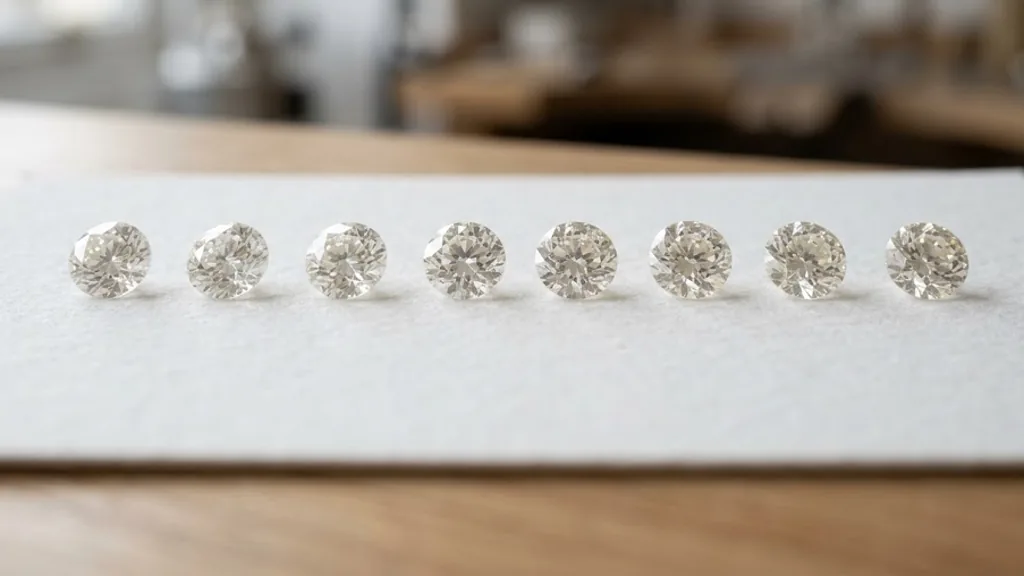
| Near colourless | G, H, I, J | No obvious tint face up. A trace may show face down or against a D stone. |
| Faint | K, L, M | A gentle warmth becomes visible, particularly in larger stones. |
| Very light | N to R | Clear warmth. Rarely used in fine jewellery. |
| Light | S to Z | Obvious yellow or brown body colour. |
Below Z the scale stops and a different system begins. Stones with strong, attractive colour are graded as “fancy coloured” diamonds and valued by the intensity of that colour rather than its absence.
The bit that saves money
The price gap between D and G is significant. The visible difference in a set ring, to an ordinary person at an ordinary distance, is close to nothing.
The trade rule of thumb is that G and H look colourless once set, particularly in white gold or platinum, and that is a rule of thumb rather than a measured figure. If you are choosing between a D stone and a G stone of the same size, the G will look the same on the hand and leave money for a better cut or a better setting.
Where it gets more nuanced is metal. Yellow and rose gold reflect warmth into the stone, so a slightly warmer grade sits comfortably in those settings. Our Vintage Round Cut Engagement Ring in Yellow Gold is an example where a G or H stone looks entirely at home. In bright white metal, a warm stone has nothing to hide behind, which is why buyers of pieces like our Solitaire Round Cut Engagement Ring in White Gold often step up a grade or two.
Shape changes what you see
Not all shapes hide colour equally, and this catches people out.
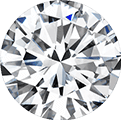
- Round brilliant hides colour best. Its faceting bounces light so busily that faint tint gets lost.
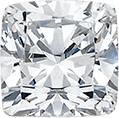
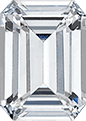
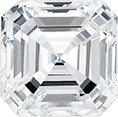
- Step cuts such as emerald, asscher and baguette have long open facets that act like windows. Colour shows more readily, so aim a grade higher.
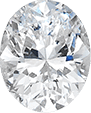
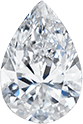
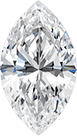
- Elongated brilliants such as oval, pear and marquise can concentrate colour at the points and tips.
- Larger stones show colour more than small ones, because there is more material for light to travel through.
If you are drawn to a step cut like our Solitaire Emerald Cut Engagement Ring, colour is one of the few places where paying a little more genuinely shows.
How colour ranks against the other three Cs
If you are prioritising, we would put them in this order for most buyers.
- Cut. It governs sparkle, it cannot be improved later, and a poor cut ruins a stone regardless of everything else.
- Carat. Size is what people actually notice from across a room.
- Colour. Matters, but only down to a point, and the point is usually G or H.
- Clarity. Anything eye-clean looks identical in wear.
Buyers who spend to the top of every scale are usually paying for something they will never see. Buyers who cut cut quality to afford a D grade almost always regret it.
How to compare two stones on paper
Once you know how the letters work, comparing certificates becomes far less intimidating. Here is the order we would read them in, and why.
- Cut grade. Read this before anything else. It tells you whether the stone returns light to your eye. Excellent is the target for round brilliants. Fancy shapes are not always given an overall cut grade, in which case check polish and symmetry instead.
- Measurements in millimetres. Two stones of identical carat weight can look different sizes. A shallow stone spreads wider and sparkles less; a deep one hides weight underneath. The diameter is what people actually see.
- Colour. Now apply everything above. White metal, aim G or better. Yellow or rose gold, H to J is comfortable. Step cut, go a grade higher than you otherwise would.
- Clarity. Ask whether it is eye-clean rather than chasing a grade. VS2 and SI1 are usually where the value sits.
- Fluorescence and comments. Faint and medium fluorescence is irrelevant. Very strong on a colourless stone is worth viewing in daylight before you commit.
The mistake we see most often is a buyer paying a premium for D or E colour and then accepting a Very Good rather than Excellent cut to stay within budget. That is precisely backwards. The colour upgrade is invisible on the hand; the cut downgrade is visible every day, in every light.
The second most common mistake is comparing carat weights without looking at millimetres. A 0.90 carat stone cut well can look larger than a 1.00 carat stone cut badly, and cost considerably less.
Frequently asked questions
Is there a grade better than D?
No. D is the top of the scale and represents a completely colourless stone. Any seller advertising something above D is inventing a category.
Do lab-grown diamonds use the same colour scale?
Yes, identically. IGI and GIA grade lab-grown stones D to Z on the same criteria, because it is the same material being measured. Your certificate will state the grade and that the stone is laboratory-grown.
What colour grade should I actually buy?
For white metal, G or H is the sensible sweet spot for most people. For yellow or rose gold, H to J is fine and often looks warmer and more natural. For emerald, asscher or baguette cuts, consider F or G.
Can two stones with the same letter look different?
Yes. Each letter covers a small range, and fluorescence, cut quality and the setting all influence appearance. This is why we recommend seeing stones rather than shopping by certificate alone.
Does colour affect how much a diamond sparkles?
Barely. Sparkle comes overwhelmingly from cut: the proportions, symmetry and polish that decide whether light returns to your eye. A well-cut J will out-sparkle a poorly cut D every time.
Putting it to use
The lettering is an accident of history, but the scale underneath it is genuinely useful once you know where the visible differences stop. Spend where your eye can see the difference, and save where it cannot.
Every centre stone we set comes with a free IGI certificate stating the colour grade, so you can check exactly what you are buying rather than taking anyone’s word for it. Browse the engagement ring collection to compare metals side by side, or start with the round cut rings if you want the shape that is most forgiving of colour.
Ready to find your perfect ring?
Explore our lab-grown diamond collection or book a virtual appointment with our team.