Does Diamond Colour Actually Matter?
Colour matters up to a point, then stops. Where that point sits, what a white diamond really is, and where to save.
Diamond colour matters, but far less than the price list suggests, and there is a specific point on the scale where it stops mattering to your eye and starts only mattering to your wallet. Knowing where that point sits is one of the most useful things a first-time buyer can learn.
There is a second question tangled up in this one. If the best grade is called “colourless”, what exactly is a white diamond, and does that mean anything below D is off colour? Let us take both.
What “colour” means on a diamond certificate
Confusingly, the colour grade does not measure colour. It measures how little colour there is.
Most diamonds carry a very faint yellow or brown tint, caused by traces of nitrogen caught in the crystal as it formed. The grading scale runs from D, meaning completely colourless, down to Z, meaning a light but clearly visible yellow or brown. The further down the alphabet, the more tint.
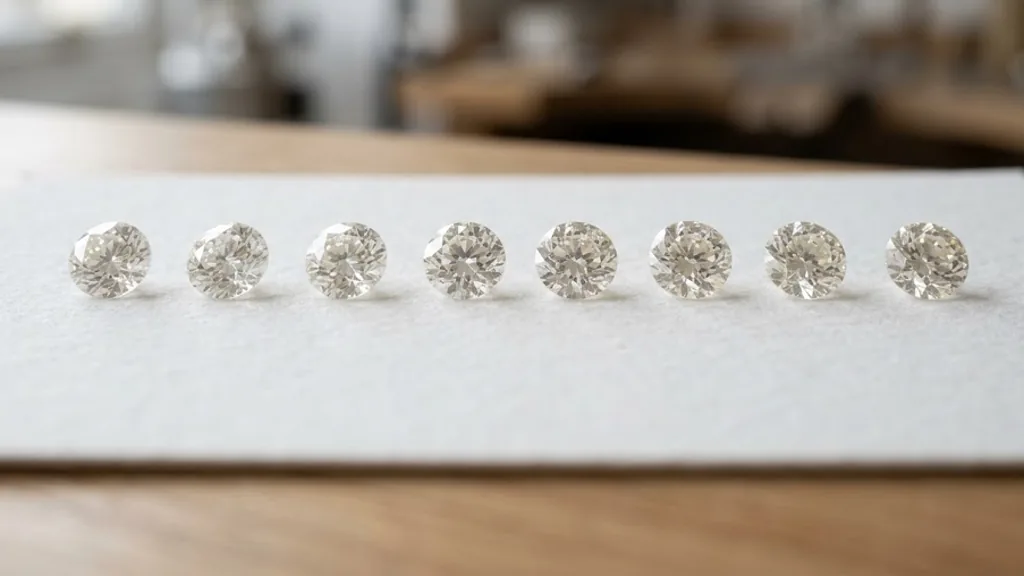
Grading is done in a laboratory, face down, on a white tray, under standardised lighting, against master stones of known grade. That is a deliberately harsh test designed to force consistent results. It is not remotely like looking at a ring on a hand.
Are white diamonds “off colour”?
No, and the phrase confuses two different ideas.
“White diamond” is trade shorthand for a diamond in the normal D to Z range, as opposed to a fancy coloured diamond such as a yellow, pink or blue. It does not mean the stone is literally white like a pearl or an opal. A good white diamond is transparent and colourless, and it appears white to us because it is throwing back the full spectrum of light at once.
“Off colour” is not a grading term at all. Sellers sometimes use it loosely for stones in the lower half of the scale, where warmth is visible. There is no official cut-off, so treat the phrase as marketing rather than information and look at the letter instead.
Where the visible difference actually stops
This is the practical heart of it.
| Grades | Group | Face up, set in a ring | Worth paying for? |
|---|---|---|---|
| D, E, F | Colourless | Indistinguishable from each other | Only if you want the certificate to say so |
| G, H | Near colourless | Read as colourless to almost everyone | Yes, this is the sweet spot |
| I, J | Near colourless | Very slight warmth, mostly in larger stones | Excellent value in yellow or rose gold |
| K, L, M | Faint | Visible warmth face up | Only if you like a warm, antique look |
| N to Z | Very light to light | Obvious body colour | Rarely used in fine jewellery |
Most people, shown a G and a D set into identical rings and not told which is which, cannot pick the D. The difference in price between them is not small.
Four things that change how much colour matters
1. The metal you set it in
This is the biggest factor and the one buyers most often ignore. White gold and platinum are bright and neutral, so any warmth in the stone has nowhere to hide. Yellow and rose gold reflect their own warmth into the stone, which makes a slightly warmer grade look completely at home.
Put another way: in a rose gold setting like our Halo Heart Cut Engagement Ring in Rose Gold, chasing a D grade is close to spending money on something invisible.
2. The shape
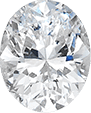
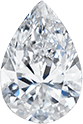
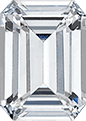
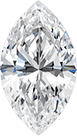
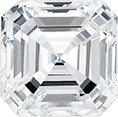
Round brilliants scatter light so energetically that faint tint disappears into the sparkle. Step cuts such as emerald, asscher and baguette have long, open, mirror-like facets that behave like windows into the stone, so colour shows more plainly. Elongated shapes such as pear, oval and marquise can pool a little colour at the tips.
3. The size
Colour is cumulative. Light travels further through a bigger stone, so the same grade reads warmer at two carats than at half a carat. Under about half a carat, colour is very hard to judge by eye at all.
4. Whether the stones need to match
In multi-stone designs, consistency matters more than the absolute grade. A three stone ring such as our Three Stone Emerald Cut Engagement Ring looks wrong if one stone is noticeably warmer than its neighbours, even if all three are good grades. The same applies to a wedding band worn tight against an engagement ring.
How colour ranks against the other three Cs
For nearly every buyer we advise, the order is: cut first, then carat, then colour, then clarity.
Cut earns its place because it determines whether the stone returns light to your eye. It is the only C that cannot be improved after the fact, and a poorly cut stone looks dull no matter how flawless its paperwork. A beautifully cut H will outshine a lazily cut D in any light, every time.
Clarity comes last because anything described as eye-clean looks identical in wear. Nobody is inspecting your ring with a loupe.
A grade recommendation by situation
Rather than one answer, here is what we would actually suggest depending on what you are buying. These are trade rules of thumb built on experience, not measured figures.
| What you are buying | Suggested colour grade | Reasoning |
|---|---|---|
| Round brilliant in white gold or platinum | G or H | Round faceting hides tint; bright metal shows it |
| Round brilliant in yellow or rose gold | H to J | Warm metal makes higher grades a waste of money |
| Emerald, asscher or baguette cut | F or G | Open step facets show colour plainly |
| Oval, pear or marquise | G, watch the tips | Colour can pool at the points |
| Anything over about two carats | One grade higher than you would otherwise | Bigger stones show colour more |
| Small accent or pavé stones | Match the centre stone | Consistency matters more than the grade itself |
| Eternity or wedding band worn against a ring | Match the engagement ring | A mismatch between touching pieces is very visible |
The last two rows are the ones people forget. Colour differences are far more noticeable side by side than in isolation. A stone that looks perfectly white on its own can suddenly read warm the moment a colder stone sits next to it, which is why we always ask what a new band will be worn alongside before we make it.
If you are buying an engagement ring now and a wedding band later, keep the certificate. Matching a band to a recorded grade years afterwards is straightforward. Matching it by memory is not.
Frequently asked questions
Does colour matter for lab-grown diamonds specifically?
It works exactly the same way. Lab-grown stones are graded D to Z by IGI and GIA on identical criteria, because they are the same material. The practical advantage is that the price step between grades is smaller, so a high colour grade is easier to afford.
What is the lowest colour grade you would recommend?
For white metal, we would not usually go below H unless you specifically like warmth. For yellow or rose gold, I and J look lovely and cost noticeably less. Below K, warmth becomes a design choice rather than a saving.
Can a jeweller tell the colour grade by looking?
An experienced grader can place a stone within a grade or two by eye, but exact grading needs master stones and controlled lighting. That is why certificates exist, and why we include a free IGI report on every centre stone we set.
Does fluorescence affect colour?
Sometimes. Blue fluorescence can make a slightly warm stone look whiter in daylight, which is occasionally a bonus. Very strong fluorescence can make a stone look faintly milky. The certificate records it, so you are never guessing.
Is a colourless diamond more sparkly?
No. Sparkle comes from cut. Colour affects the tone of the light returning to you, not how much of it comes back.
The short answer
Yes, colour matters, up to about G or H in white metal and about J in yellow or rose gold. Above that you are buying a better certificate rather than a better-looking ring, and that money almost always does more good spent on cut, size or the quality of the setting.
Every centre stone we set arrives with a free IGI certificate stating its colour grade in writing. Compare metals directly in our engagement ring collection, or look at the emerald cut rings to see the shape where colour choice makes the most visible difference.
Ready to find your perfect ring?
Explore our lab-grown diamond collection or book a virtual appointment with our team.