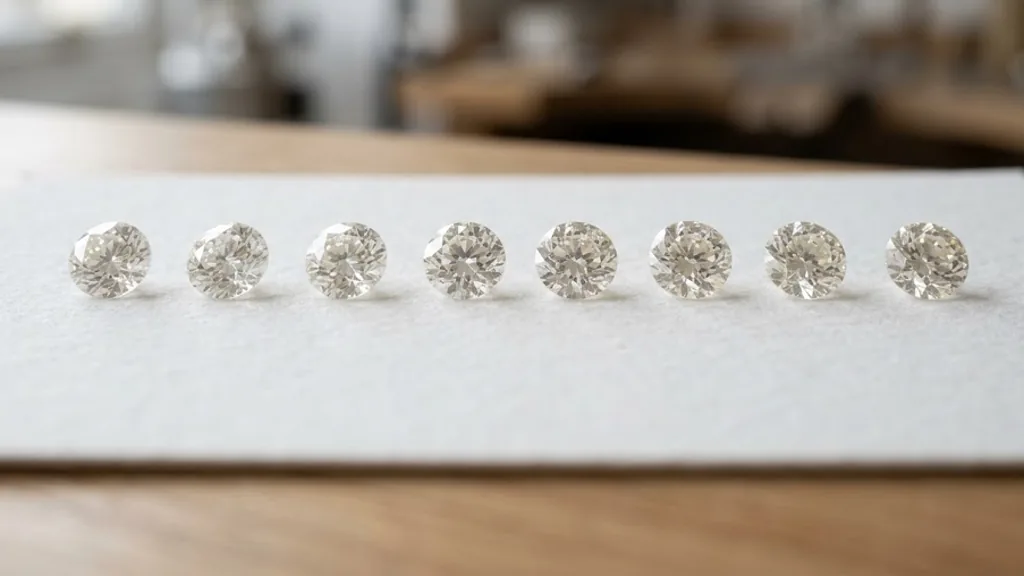
What Is a G Colour Diamond? The Quietly Sensible Grade
G colour sits at the top of the near colourless range and looks white in a finished ring. When it shows warmth, and when it does not.
A G colour diamond is a stone that sits at the very top of the near colourless range. To almost every eye, in almost every setting, it simply looks white — and that is why it is one of the most quietly sensible grades you can choose.
Here is what the letter actually means, when a G will and will not show its faint warmth, and how to decide whether it is the right grade for your ring.
Where G sits on the colour scale
White diamonds are graded for body colour on a letter scale running from D to Z. D is completely colourless. As you move through the alphabet, a faint warm tint — usually described as yellow or brown — gradually becomes stronger.
The scale is grouped into named bands:
| Grades | Band name | What you see face-up in a finished ring |
|---|---|---|
| D, E, F | Colourless | No tint whatsoever |
| G, H, I, J | Near colourless | Reads as white; faint warmth may show only in a side-by-side comparison |
| K, L, M | Faint | A warm tone many people can see, particularly in larger stones |
| N to R | Very light | Clearly tinted |
| S to Z | Light | Obvious yellow or brown cast |
G is the first grade in the near colourless band. It is one single step below F, and that step is genuinely tiny.
How grading is actually done
This detail explains why G is such good value, so it is worth understanding.
Diamonds are not graded face-up in a ring. A grader places the loose stone upside down in a white tray, under controlled lighting, next to a set of master stones of known grade. They compare it through the side of the stone, where body colour is most visible.
That is a deliberately harsh test. Turn the same stone the right way up and set it in a ring, and the facets throw so much light back at you that faint body colour becomes very hard to spot. A grade assigned under laboratory conditions is not the grade your eye experiences on a hand.
Why so many buyers land on G
The colour scale costs money in steps, but the eye does not see those steps evenly. Moving from J to G is a change many people can notice. Moving from G to D is a change most people cannot notice at all once the stone is set.
So G tends to be the point where you stop paying for a difference you can see and start paying for a difference only the certificate knows about. That is a rule of thumb in the trade rather than a measured figure, but it is a well-worn one.
This applies to lab-grown diamonds as it does to natural ones — the same D to Z scale, the same grading method, the same laboratories. The difference is that lab-grown stones reach the higher colour grades more readily, so the premium for stepping up from G to F or E tends to be smaller than it is in natural diamonds. Treat that as general guidance, not a quoted figure; it varies by supplier and by stone.
When a G diamond will look perfectly white
In most real situations, which is the honest answer:
- In white gold or platinum — a white metal setting can make a stone read slightly warmer by contrast, but at G the difference is negligible. Our Solitaire Round Cut Engagement Ring in White Gold is the sort of clean setting where you would notice a problem if there were one, at £563 correct at the time of writing.
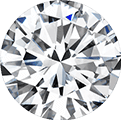
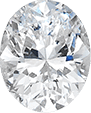
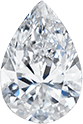
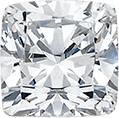
- In a brilliant cut — round, oval, pear, marquise, cushion, heart and radiant all bounce so much light around that body colour is masked. A Solitaire Oval Cut Engagement Ring hides colour well for its size, at £557 correct at the time of writing.
- At around one carat and below — smaller stones have less depth for colour to build up through.
- Viewed on its own — which is how your ring will be seen almost every day. Colour grading is a comparison exercise, and in real life there is nothing to compare against.
When you might notice the warmth
Being straight about the exceptions is more useful than pretending there are none.
- Large stones. Colour accumulates with depth. Above roughly two carats, faint tints become easier to see, and some buyers step up a grade or two for larger centres.
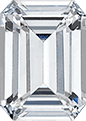
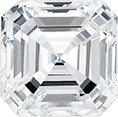
- Step cuts. Emerald and asscher cuts have big open facets and act more like a window than a mirror. They show body colour more honestly than a brilliant cut does, so a G emerald will look very slightly warmer than a G round of the same weight.
- Directly beside a D or E stone. Put them side by side on white paper and a trained eye will separate them. This is not how anyone looks at a ring in daily life.
- Against a very bright white metal in strong daylight. Even here, most people need to be told what to look for.
G against its neighbours
| Grade | Band | Practical difference from G |
|---|---|---|
| E | Colourless | Two steps whiter. Invisible in a finished ring to nearly everyone. |
| F | Colourless | One step whiter. The lowest grade still called colourless — a paper distinction more than a visual one. |
| G | Near colourless | The reference point. Looks white, costs less than the colourless band. |
| H | Near colourless | One step warmer. Still widely considered a white-looking stone, especially in brilliant cuts. |
| I / J | Near colourless | A gentle warmth that suits yellow and rose gold very well, and can look slightly creamy in platinum. |
If you want the detail on the grade directly above, read our guide to what an F colour diamond is.
Matching G to your metal
Metal choice changes the impression more than a single colour grade does.
- Platinum and white gold — a cool, bright background. G looks crisp and white against it, and the pairing is entirely safe.
- Yellow gold — warm metal reflects gently into the stone. A G looks beautifully white here, and honestly you could drop to H or I in yellow gold and lose nothing visually.
- Rose gold — the softest, warmest background. Any near colourless grade sits happily in it.
The practical takeaway: if you are set on platinum or white gold, G is a comfortable, confident choice. If you are choosing yellow or rose gold, you have room to spend the difference elsewhere — on carat weight, on a better cut, or on the setting itself.
Colour is not the grade that controls sparkle
A common mix-up is worth clearing up. Body colour does not drive brilliance. Two stones of the same cut, one D and one G, will flash the same way and throw the same coloured fire.
What controls sparkle is cut — the angles and proportions that decide whether light comes back out of the top of the stone or leaks out of the bottom. If you have a fixed budget, cut is the grade to protect first. Clarity and colour can both be traded down before cut can.
Our guide to whether colour or clarity matters more goes into how to balance the two.
What a G looks like in a real ring
Settings with lots of small accent diamonds are worth a specific mention. Melee — the tiny stones used in halos, pavé bands and hidden halos — are usually supplied within a colour range rather than individually graded.
If your centre stone is G and the accent stones around it are noticeably whiter or warmer, the mismatch is more visible than the centre grade itself. Ask any jeweller how they match accent stones to the centre. Our Hidden Halo Oval Cut Engagement Ring, at £1,021 correct at the time of writing, tucks its halo under the centre stone so the match is seen from the side rather than face-on.
You can browse our full range of engagement rings, or filter by oval and round shapes, which are the most forgiving on colour.
Frequently asked questions
Is a G colour diamond good enough for an engagement ring?
Yes. G is one of the most popular grades chosen for engagement rings precisely because it looks white to the naked eye while costing less than the colourless band above it.
Can you tell the difference between G and D without training?
Almost never in a finished ring. Even loose and upside down on white paper, separating them takes master stones and practice. Face-up in a setting, under ordinary lighting, the two grades look the same to most people.
Does a lab-grown G colour diamond look different from a natural G?
No. Both are graded against the same master set by the same laboratories, so a G is a G. Every centre stone we set comes with a free IGI certificate recording the grade.
Should I choose G colour for an emerald cut?
You can, but be aware that step cuts show body colour more openly than brilliant cuts. If you want an emerald or asscher and colour matters a lot to you, look at F or E — or view the stone in person before deciding.
Is G colour a good choice for a large diamond?
Up to around two carats, comfortably. Above that, the extra depth gives colour more chance to show, and it is worth comparing G against F side by side before committing.
A grade that quietly does its job
G is not a compromise dressed up as a bargain. It is the grade where the certificate and the eye stop agreeing, and where sensible buyers redirect their money towards cut, carat or a setting they will actually notice.
Every centre stone we set is lab-grown, IGI certified and hand-made into solid gold or platinum in North Harrow, London, with free insured UK delivery and 30 days to return. If you would like a particular colour grade in a design you have seen elsewhere, we make bespoke pieces at no extra design cost — just ask.
More guides on this topic
Ready to find your perfect ring?
Explore our lab-grown diamond collection or book a virtual appointment with our team.