Are Super Ideal Cut Diamonds Worth It? An Honest Look
Super ideal is a seller's term, not a lab grade. What it really means, whether you can see it, and where the money is better spent.
Somewhere in the process of choosing a diamond, most people meet the phrase “super ideal cut”. It usually arrives with a price attached, a diagram of red arrows, and the strong implication that anything less is settling.
It is worth knowing exactly what you are being sold here, because the honest answer involves both a real quality difference and a fair amount of marketing.
Starting with what cut grade means
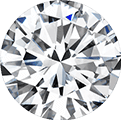
Cut grade is not the shape of the diamond. It is how well the facets — the flat polished faces — have been angled and proportioned so that light entering the top comes back out of the top.
Three parts matter:
- Table — the large flat facet on the very top. Light’s main way in and out.
- Crown — the sloping section between the table and the widest point of the stone.
- Pavilion — the cone underneath that comes to a point. It works as a mirror.
Get the pavilion angle right and light bounces off two internal walls and returns to your eye. Get it wrong and light passes straight out of the bottom, leaving a dull or glassy patch in the centre. That is the entire science of cut grade.
Laboratories grade this for round brilliants only. Fancy shapes such as oval, pear and emerald get polish and symmetry grades but no overall cut grade, so you judge those with your eyes.
| Grade | Who assigns it | What it means |
|---|---|---|
| Excellent (GIA) / Ideal (IGI) | The laboratory | Top official grade. Proportions within the best range. |
| Very Good | The laboratory | Very bright. Most people cannot tell it from the top grade. |
| Good | The laboratory | Noticeably less lively, some dark areas. |
| Fair / Poor | The laboratory | Dull or leaking light through the bottom. |
| Super Ideal | The seller | Not an official grade. A retailer’s own narrower selection within Excellent. |
| Hearts and Arrows | The seller | A symmetry pattern visible through a special viewer. Also not an official grade. |
That table contains the most important point in this article. “Super ideal” is not a laboratory grade. No certificate will ever say it. It is a term retailers use for stones they have picked out from within the Excellent or Ideal band using their own, tighter, self-defined criteria.
What super ideal stones genuinely have
That does not make it meaningless. A serious super ideal selection generally means the stone has been checked for things the standard grade does not capture:
Tighter proportion ranges. The Excellent band is broad. It contains stones at the very top of the range and stones sitting near its edge. A super ideal selection takes only the narrow middle.
Optical symmetry. Standard symmetry grading looks at how evenly the facets are placed on the surface. Optical symmetry looks at whether the facets line up with each other through the body of the stone — which is what “hearts and arrows” describes. Viewed through a special reflector, a stone with excellent optical symmetry shows eight clean arrows from the top and eight clean hearts from below.
Light performance testing. Some sellers run stones through instruments that map brightness, fire (the split of white light into colour) and how much light leaks out. These are useful tools, though every seller uses slightly different equipment and thresholds.
So a good super ideal stone is a genuinely well-cut stone, chosen with more care than the minimum. The question is whether that care is visible to you.
Can you actually see the difference?
Here is the honest answer, and it comes in two parts.
Between a poorly cut and a well-cut diamond: enormously. The difference between a Good cut and an Excellent cut is obvious to anyone, at arm’s length, in ordinary light. One looks alive and one looks like glass. This is why cut matters more than clarity and colour combined, and why it is the last thing you should ever economise on.
Between Excellent and super ideal: very little, in most conditions. Both are well cut. Both return most of the light entering them. Side by side under bright directional lighting, someone who knows what to look for may see a slightly crisper, more organised pattern in the super ideal. Across a dinner table, in daylight, on a moving hand, almost nobody can tell.
Hearts and arrows deserves a specific note. The pattern is real, and it does indicate genuine precision. But you cannot see hearts and arrows while wearing the ring — you need a purpose-built viewer and the stone out of its setting. It is a certificate of craftsmanship rather than something that changes daily appearance.
So is it worth it?
It depends entirely on what you are optimising for.
Worth it if: you find precision genuinely satisfying and would enjoy knowing your stone is cut to the tightest tolerances. You are buying a plain solitaire where the centre stone is the whole design and nothing else distracts the eye. Budget is not your limiting factor.
Not worth it if: you have a fixed budget and want the most visible beauty from it. In that case, buy Excellent or Very Good cut and put the difference into carat weight, a nicer metal, or a setting you love. That trade is visible on the hand. The super ideal upgrade largely is not.
Definitely not worth it if: you are buying a fancy shape. Super ideal and hearts and arrows are round brilliant concepts. Any seller applying them to an oval or a pear is using the words loosely.
Our own view, after many years of watching people choose: cut quality is the most important thing you can buy, and Excellent or Very Good already delivers the overwhelming majority of it. A well-cut stone in a design you love — something like our Solitaire Round Cut Engagement Ring in Platinum, where nothing competes with the stone — will always look better than a technically superior stone in a setting that does not suit the hand wearing it.
If you want the sparkle without spending it all on one certificate line, a halo does remarkable work. The ring of small brilliants in our Halo Round Cut Engagement Ring adds far more visible light than any proportion upgrade would. Or spread the effect across the whole band, as in our Stackable Round Cut Full Eternity Band.
The lab-grown angle
Lab-grown diamonds have quietly changed this conversation.
In mined diamonds, achieving ideal proportions means throwing away extra weight — and that weight was expensive. Cutters constantly traded beauty against carats, which is why so many mined stones are cut slightly deep to hold weight.
When the rough costs a fraction as much, that pressure eases. Cutters can afford to sacrifice weight for proportion, so excellent cut quality is far more widely available in lab-grown than the old market ever allowed. In practice this means the premium for top-tier cutting is smaller and easier to justify — you are simply less likely to be forced to choose.
Every centre stone we set comes with a free IGI certificate showing the cut grade, so you can check for yourself rather than taking anyone’s word for it. Lab-grown diamonds are chemically identical to mined ones and graded on the same scales by the same laboratories. Prices have fallen a great deal and are still moving, so treat any figure quoted anywhere online as a snapshot.
Frequently asked questions
Is super ideal an official diamond grade?
No. Laboratories grade cut as Excellent or Ideal at best. Super ideal is a seller’s own selection from within that band, defined by that seller.
Is hearts and arrows worth paying extra for?
It indicates real cutting precision, but you need a special viewer and an unset stone to see it. It changes how the diamond looks in daily wear far less than most buyers expect.
What cut grade should I actually buy?
Excellent or Very Good for a round brilliant. That captures nearly all the visible benefit. Never go below Good.
Do fancy shapes have a cut grade?
No. Ovals, pears, marquises and emerald cuts receive polish and symmetry grades only. For those, look at the stone itself for even brightness and no large dark band across the middle.
What matters more — cut or clarity?
Cut, comfortably. Clarity only needs to reach eye-clean, meaning no marks visible without magnification. Cut determines whether the diamond sparkles at all, and no setting can compensate for a poor one.
If you would rather judge cut quality with your own eyes than through someone else’s terminology, browse our round diamond pieces or the full engagement ring collection. Everything is hand-made in solid gold or platinum in London, with free insured UK delivery, 30-day returns, and bespoke work at no extra design cost if you want something we do not hold.
More guides on this topic
Ready to find your perfect ring?
Explore our lab-grown diamond collection or book a virtual appointment with our team.