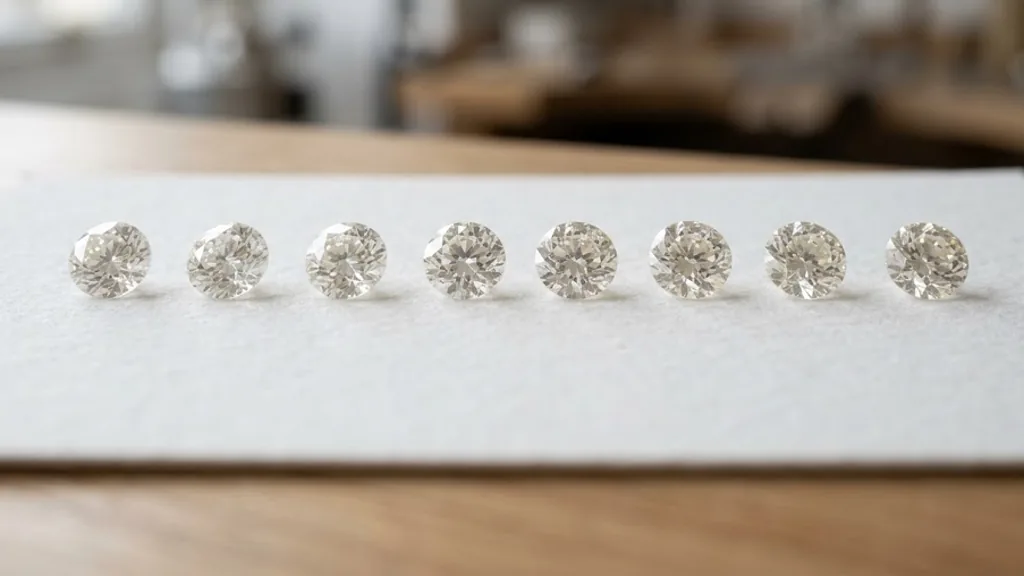
Yes, and nature makes eleven colour families. Which ones occur naturally, how often, and how to spot a colour that was added later.
Understand diamonds properly. Clear explanations of the 4Cs, diamond shapes, certification and how to get the most beauty for your budget.
Yes, and nature makes eleven colour families. Which ones occur naturally, how often, and how to spot a colour that was added later.
Only three things cause colour in a diamond: impurity atoms, a bent crystal structure, and natural radiation. Every diamond colour explained simply.
Red is the rarest diamond colour. The full rarity order explained, why it happens, and what any of it means for a ring you can actually buy.
No. A lab-grown diamond is real diamond, same carbon and same hardness. Here is why people think otherwise, and what to check before you buy.
Diamonds come in twelve main colour families and hundreds of graded variations. A plain-English guide to the full spectrum and the D to Z scale.
No. Cubic zirconia is a lookalike stone; a lab-grown diamond is real diamond. The differences that matter, explained plainly.
Every diamond clarity grade from Flawless to I3 explained in plain English, plus which grade is worth paying for by diamond shape.
VVS clarity explained in plain English: what VVS1 and VVS2 mean, how they differ, and when the premium is actually worth paying.
SI3 is not on the official IGI or GIA clarity scale. Here is what the grade really means, where it came from, and how to judge one.
Feathers, clouds, crystals and knots: what every clarity characteristic on a diamond certificate means and which ones actually matter.
You cannot copy content of this page
Join our list for early access to new collections, and unlock your welcome code — plus complimentary gift packaging.